
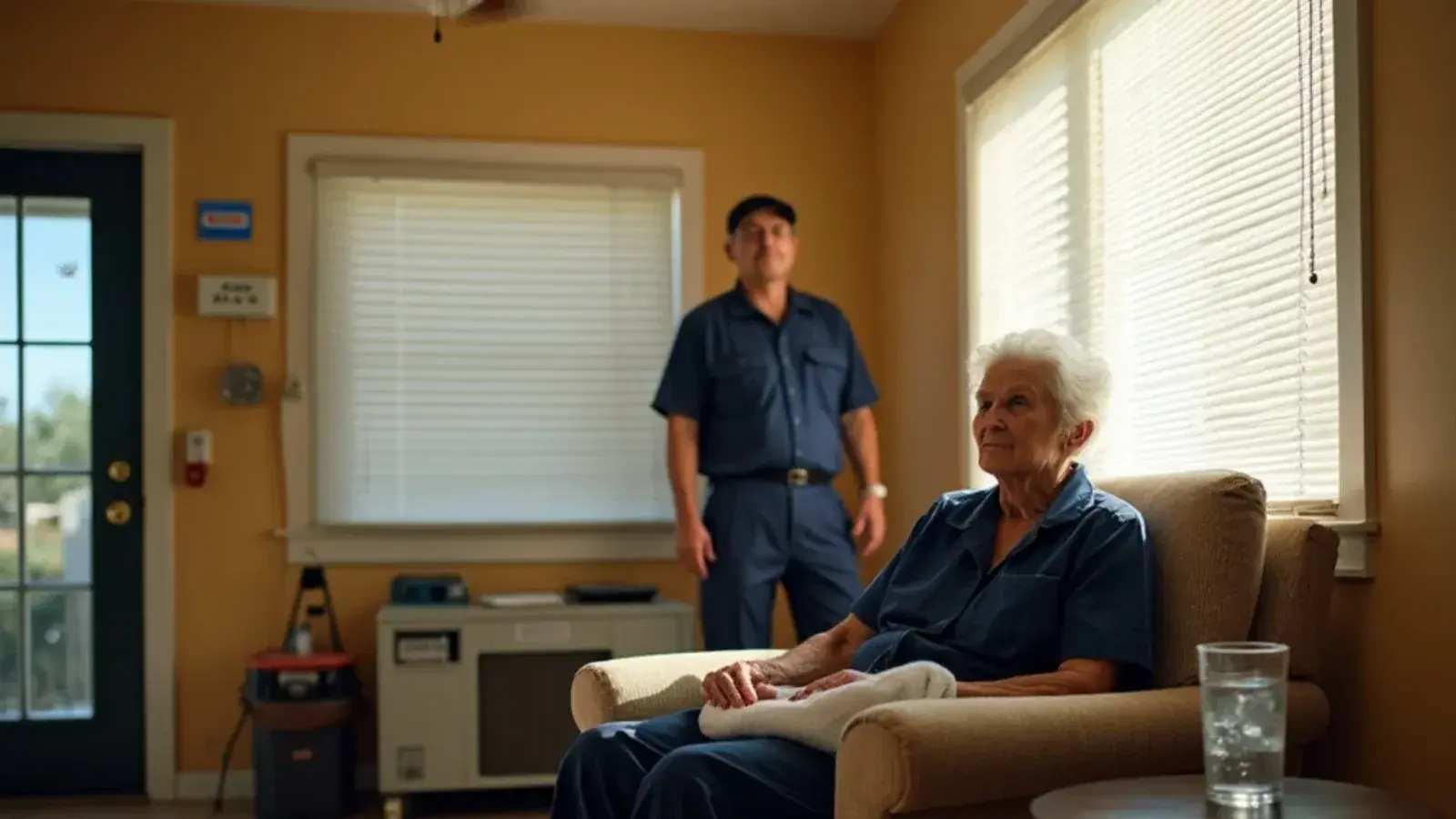
When your AC stops working in a heat wave, protect people first: move anyone elderly, very young or ill to the coolest room, and call 911 for heat-stroke signs. Then check the thermostat, reset a tripped breaker once, confirm the outdoor disconnect, and look for a clogged filter or ice. No cold air after that? Switch it off and call.
In Starr County, summer afternoons regularly sit near or above 100°F, and a block or manufactured home with no cooling can climb past 85 degrees fast. This guide walks through each step in the right order, from the safety checks to the moment you should stop troubleshooting and pick up the phone.
Put people first while the house heats up
A broken system is an inconvenience for most adults. For an older parent, a baby, someone pregnant, or anyone with heart disease, diabetes or kidney problems, it can become dangerous within hours. Some common medications, including certain blood pressure pills and diuretics, also make it harder for the body to handle heat.
Start with the most vulnerable person in the home:
- Move them to the coolest room, usually an interior room on the north or east side.
- Give them water often, even before they say they are thirsty. Skip alcohol and sugary drinks.
- Cool the skin directly with damp towels on the neck, wrists and armpits, or a lukewarm shower.
- If a relative, neighbor or nearby store has working air conditioning, go there for the hottest part of the day. Cooling a person is more important than staying with the house.
Health agencies, including the CDC, warn that an electric fan alone does not prevent heat illness once indoor air reaches the high 90s. A fan helps when paired with water on the skin, but it is not a substitute for a cooler place.
Call 911 for heat stroke signs
Confusion, slurred speech, fainting, a seizure, or hot skin with a very high body temperature are signs of heat stroke, a medical emergency. Call 911, move the person somewhere cooler, and cool them with water and wet cloths while you wait. Do not give fluids to someone who is not fully alert.Five checks before you pick up the phone
These steps are safe for any homeowner and clear a surprising number of no-cooling calls. Work through them in order.
1. Look at the thermostat
Make sure it is set to Cool, the set point is below the room temperature, and the fan is on Auto. A blank screen often means dead batteries or a power problem at the indoor unit. Replace the batteries if it uses them.
2. Check the breakers once
Your system usually has two breakers: one for the indoor air handler or furnace and a larger double breaker for the outdoor unit. If one has tripped, push it fully off, then back on. Reset it one time only. If an AC breaker tripped again shortly after, leave it off. Repeated tripping points to a short, a failing compressor or a bad fan motor, and forcing it can damage wiring or the equipment.
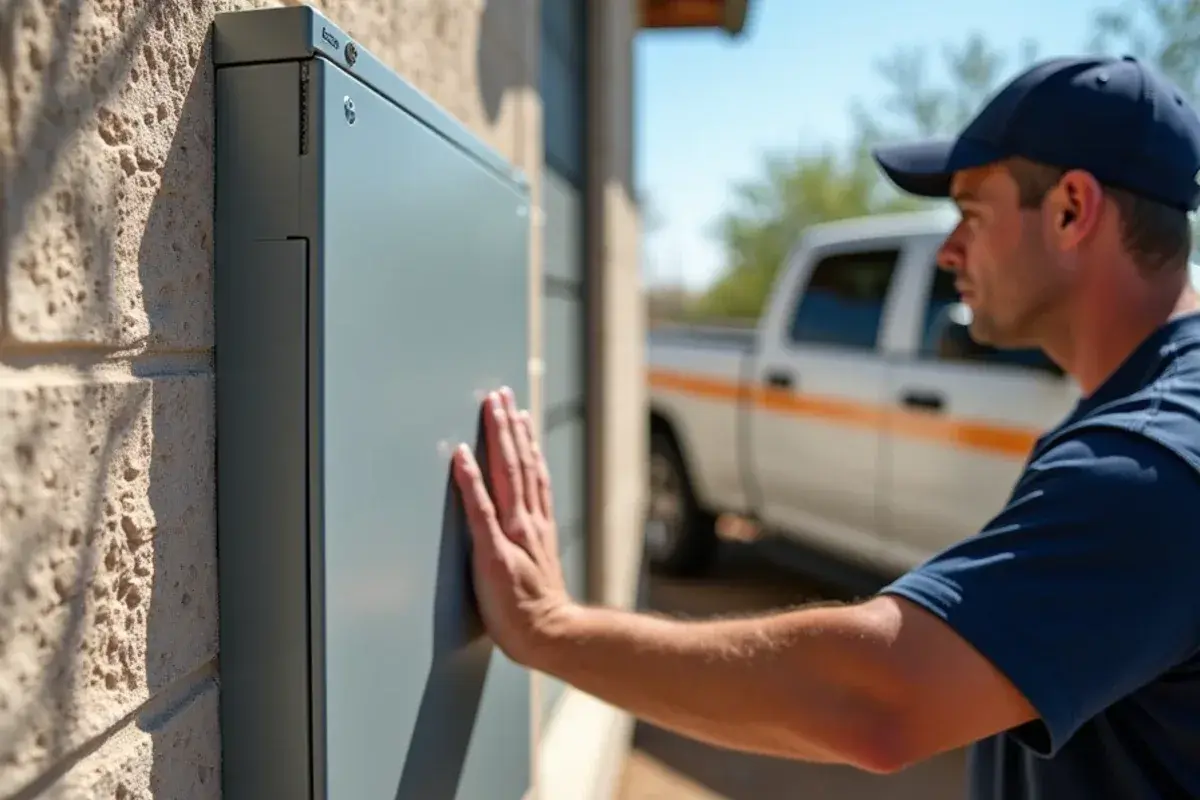
3. Confirm the outdoor disconnect is in
The gray box on the wall beside the condenser has a pull-out block or a lever. Kids, yard work or a previous service visit can leave it half seated. Do not open it if it is wet, rusted through or shows burn marks.
4. Inspect the filter and the indoor drain
A filter packed with dust can choke airflow until the coil freezes. Many systems also have a float switch on the drain line or pan that shuts the unit off when condensate backs up. If you see standing water in the pan, the system may be protecting itself from an overflow.
5. Look for ice
Frost on the copper line at the outdoor unit, or ice on the indoor coil, means the system cannot shed cold properly. Turn cooling off at the wall and leave only the blower running so the ice melts. Running it frozen can damage the compressor.
What the clues are telling you
| What you notice | Likely meaning | Safe next step |
|---|---|---|
| Thermostat screen is blank | Dead batteries, tripped indoor breaker or a float switch shutdown | Swap batteries, check breaker, look at the drain pan |
| Indoor fan runs, outdoor unit silent | Tripped outdoor breaker, pulled disconnect, failed capacitor or contactor | Reset the breaker once; call if it stays silent |
| Outdoor unit hums but the fan blade won't spin | Weak capacitor or seized fan motor | Switch cooling off at the wall and call |
| Air blows but it is warm, lines are iced | Airflow restriction or low refrigerant | Set to Off with fan On to thaw, then call |
| Breaker trips again right after reset | Electrical short or compressor trouble | Leave it off and request an emergency visit |
| Burning smell or crackling at either unit | Overheated wiring or motor | Shut off the breakers and call right away |
Keeping the house cooler without AC
Until a technician arrives, slow down how fast the home gains heat:
- Close blinds and curtains, especially on west-facing windows after noon. A blanket over the glass works in a pinch.
- Set ceiling fans to spin counterclockwise so they push air down.
- Do not use the oven or dryer. Cook outside or eat cold meals.
- Open windows only after sunset if the outdoor air is cooler than the indoor air, then close them by mid-morning.
- Keep interior doors to unused rooms shut so you are only fighting heat in the rooms where people are.
When it can wait and when it can't
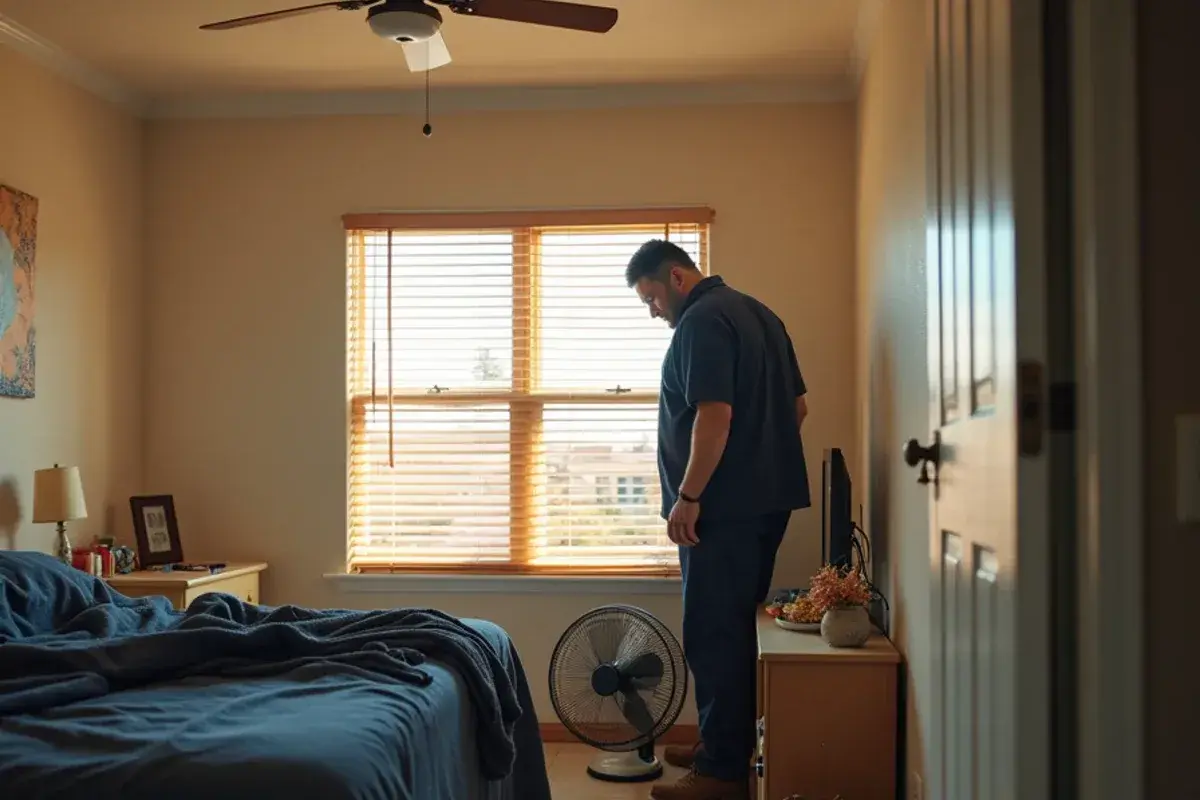
If the thermostat batteries or a single tripped breaker fixed the problem and the system is now cooling normally, keep an eye on it and book a regular AC repair visit if it acts up again. A system that quit once for an electrical reason often gives warning signs before the next failure.
Treat it as urgent when grandparents, infants or anyone with a chronic health condition live in the house, when the indoor temperature keeps climbing past what you can manage, or when you see any of the danger signs in the table above. That is the moment for emergency AC repair, described clearly on the phone: what the thermostat shows, what the outdoor unit is doing, and whether anyone at home is at risk.
What a technician does when they get there
A good visit starts with confirming power at the disconnect, then testing the capacitor, contactor and fan motor, because those parts fail most often in long stretches of extreme heat. The technician will check the breaker and wiring if it was tripping, look at refrigerant pressures if the coil froze, and clear the drain if a float switch shut things down.

We work out of Rio Grande City and cover homes across Starr County, from the US-83 corridor out to rural colonias along the county roads. Upriver in Roma, about 25 minutes away, older brick and sandstone homes hold heat for hours after sunset, so getting cooling back before evening makes a real difference. Many repairs wrap up on the first visit, often the day you call if the schedule has room, and the technician will tell you what failed and why before doing the work.
A technician's view: what the readings usually show
Most heat-wave no-cool calls come down to a short list of parts, and the order of testing matters more than any single reading.
Capacitors and contactors go first
The run capacitor gives the compressor and outdoor fan motor the push they need to start. It is rated in microfarads, and a meter reading well below the number printed on its label means it is weak, even if it looks fine. Heat speeds that decline, which is why capacitors are the most common failure in a long triple-digit stretch. The contactor, the switch that sends power to the outdoor unit when the thermostat calls, gets checked for pitted or burned contacts at the same time.
Airflow is confirmed before refrigerant
A technician who hooks up gauges before checking the filter, blower and coil can misread the charge, because low airflow makes pressures look low too. The usual sequence is airflow first, then the temperature split (the difference between the air going into the return and the air coming out of a supply vent), then compressor amp draw compared with its nameplate rating, and only then refrigerant pressures. If the charge is low, there is a leak somewhere, and topping it off without finding it only buys a few days or weeks.
Where the homeowner should stop
The checks earlier in this guide all happen at the thermostat, the breaker panel, the filter slot and the outside of the disconnect. Inside the outdoor unit, a capacitor stays charged well after the breaker is off, and its terminals sit beside live wiring. That panel is the line. Swapping a capacitor yourself also removes the chance to learn why it failed, whether from age, a weak fan motor or a compressor drawing too much current.
A healthy system can still lose ground
Equipment is sized for the area's typical design temperature, not record afternoons. With full sun on the west wall, a working unit may run nonstop and drift a few degrees above the setting until evening. Cool air at the vents and a spinning outdoor fan usually mean it is doing its job.
A short plan for the next heat wave
Write down which breakers serve your AC, keep spare thermostat batteries in a drawer, and change the filter on a schedule before summer peaks. Know which friend, relative or store you can go to if the house gets too hot. A spring AC maintenance visit that tests the capacitor and contactor and washes the dust out of the outdoor coil catches many of the parts that fail first in July. Those small steps make the next breakdown far less stressful and keep the most vulnerable people in your home safe while the equipment gets sorted out. If your system has quit and the checks above did not bring the cold back, call (213) 423-7827 and tell us the town, what the outdoor unit is doing and who is at home.