
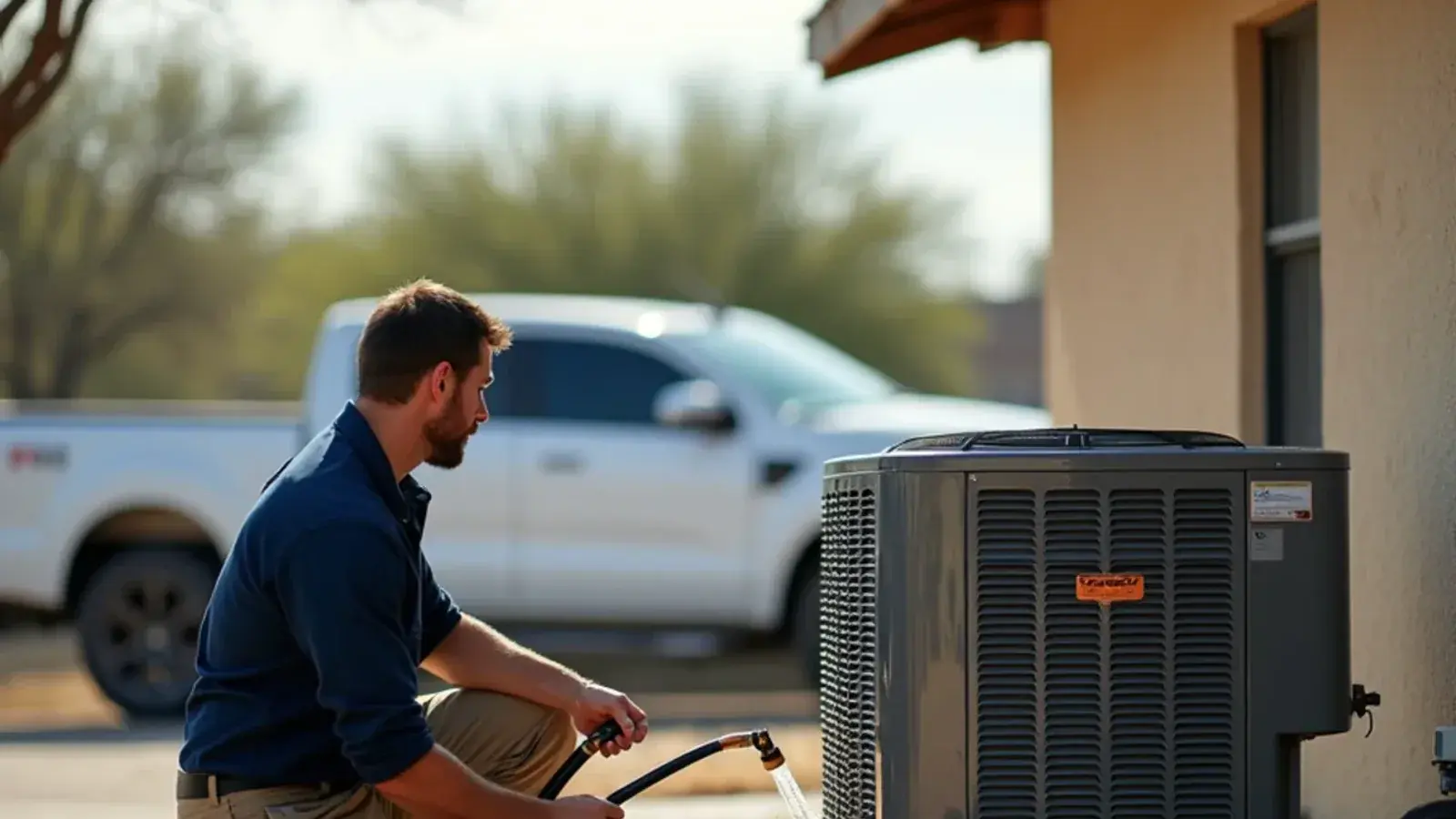
An air conditioner in Rio Grande City works harder than most. It starts cooling in spring, runs through summer afternoons near or above 100°F, and keeps going well into fall. Regular AC maintenance, with the caliche dust washed out of the coil, is how you keep that workload from turning into a breakdown in July.
AC maintenance is one of the services 956 Multi Service handles most often for homes and small businesses across Starr County. A tune-up is not a quick look and a sticker. It is a hands-on visit that cleans, measures and tests the parts that fail most in our heat and dust, then tells you plainly what shape the system is in.
What a tune-up visit covers, part by part
Split systems, package units and mini-splits all get the same core checklist:
- A coil wash on the outdoor unit and a fin check.
- Meter tests on the capacitor, contactor, wiring and motor amps.
- A refrigerant pressure and line-temperature reading.
- A condensate drain flush and a filter check.
- An indoor coil, blower and thermostat check.
- Dated written notes on what is worn, failing or fine.
Outdoor unit
The condenser gets washed from the inside out so caliche dust, grass clippings and mesquite leaves come out of the fins instead of being pushed deeper. We straighten bent fins where we can, clear the base of debris, and look for ant nests in the electrical compartment.

Electrical parts
Capacitors, the contactor and the wiring are tested with a meter. Heat is hard on capacitors, and a weak one is a common reason a unit hums but will not start. We also read the amp draw on the compressor and fan motor to see whether either is straining.
Refrigerant circuit
Gauges go on the service valves, and pressures are compared with line temperatures and the weather that day. Refrigerant is not topped off as a routine step. If the charge is low, that points to a leak, and we explain what finding and fixing it would involve.

Indoor side
The condensate drain is flushed, the filter is checked, and the evaporator coil and blower are inspected. The thermostat is tested to confirm it calls for cooling when it should.

The visit in order
- Ask first. You tell us what changed since last summer: run times, the bill, water, noises.
- Shut down safely. Power goes off at the disconnect before any panel opens.
- Clean. Dirt comes out of the coil from the inside, and the drain gets flushed.
- Measure. With the system back on, we read capacitors, amps, pressures and how much the air cools across the indoor coil.
- Report. Readings come in plain terms, safety items apart from things that can wait.
- Approve or file it. Repairs happen only after you say yes. One well-kept central system takes about an hour; neglected or extra units take longer.
Spring, fall or both: choosing a service rhythm
The right schedule depends on how hard your system runs and what surrounds it.
| Schedule | Who it suits | What it catches |
|---|---|---|
| Once a year, early spring | Newer systems in sheltered yards | Weak capacitors and dirty coils before peak heat |
| Spring and fall | Older units, homes near dirt roads or the river | Summer wear, drain algae, heat strip or heat pump problems before cold snaps |
| Maintenance plan | Households and businesses with several systems | Both visits scheduled for you, plus plan benefits |
If you would rather not keep track yourself, our HVAC maintenance plans put both visits on the calendar automatically.
Coil washing, plans and inspections in one place
AC maintenance is the umbrella. Three related services sit under it, and each one handles a specific need.
Deep coil cleaning
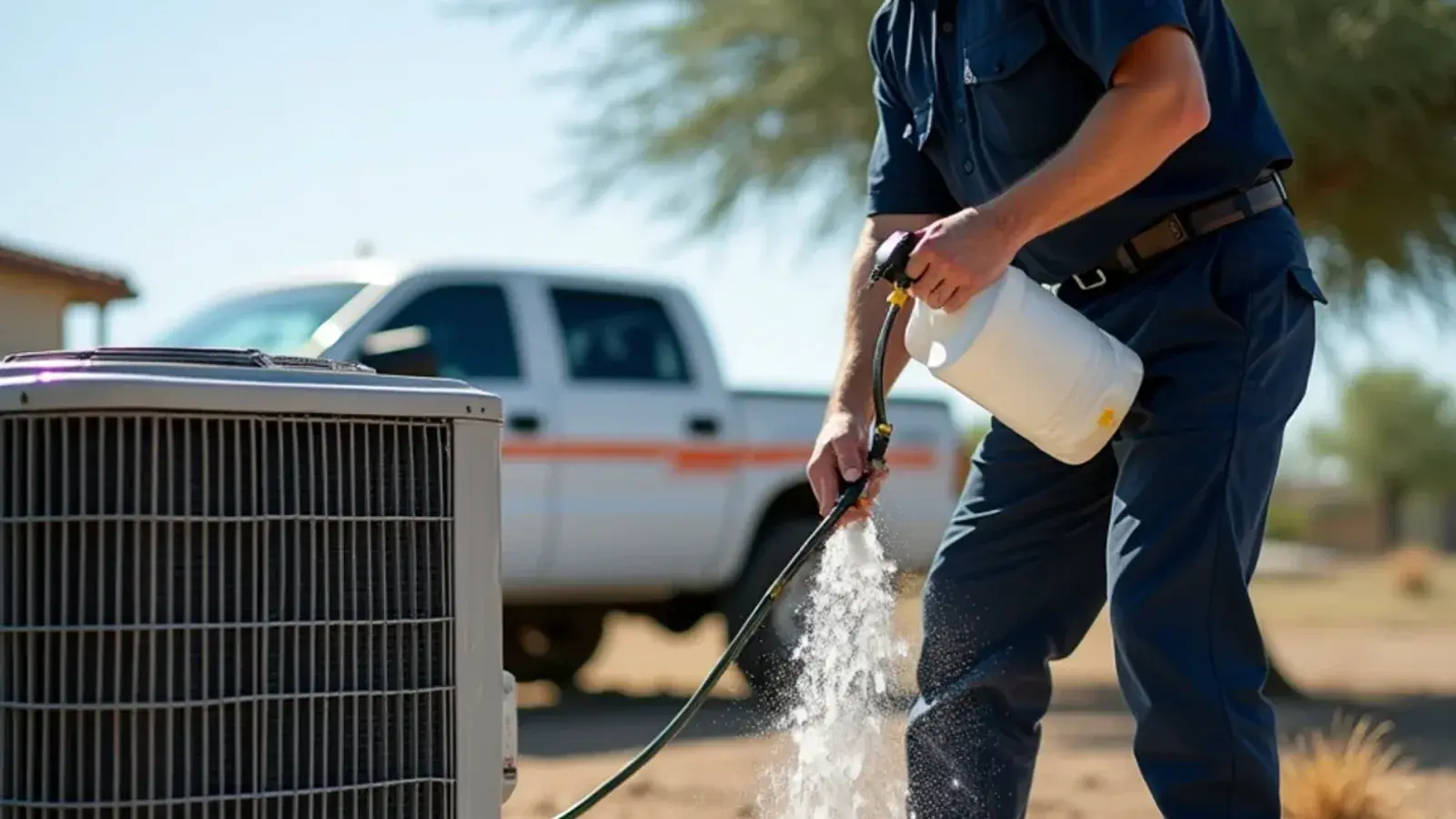
A standard tune-up includes a condenser rinse. When the coil is matted with dust or the indoor coil is coated, a chemical wash is the next step. Our AC coil cleaning and unit wash page explains when that is worth doing and how both coils are handled.
Scheduled care
The maintenance plan page explains how the plan is set up: two visits a year, priority on the schedule, and discounts on repairs. Current terms are explained when you call.
Written evaluations
Buying a house, or wondering whether a replacement quote is fair? An HVAC inspection with a written report gives you photos and findings you can act on.

What does regular maintenance actually prevent?
Most summer service calls trace back to four problems a tune-up targets.
- Capacitor failure. Caught by testing, a weak capacitor is a quick swap. Missed, it can leave you without cooling on the hottest day of the week.
- Frozen evaporator coils. Dirty filters and low airflow let the coil drop below freezing. Ice blocks airflow and water spills when it melts.
- Drain overflows. Algae grows fast in drain lines during long humid run seasons. A clog can stain a ceiling or trip a safety switch that shuts the system off.
- Compressor overheating. A dirty condenser coil cannot shed heat, so pressures climb and the compressor runs hot. That is the most expensive part in the system.
Signs your system is overdue
A unit that needs attention usually warns you first. The electric bill climbs at the same thermostat setting, run times stretch, one room never catches up, the outdoor unit hums before its fan starts, or water appears around the indoor unit after a humid week.
Local conditions speed that up. Yards beside dirt roads or brush feed caliche dust and mesquite litter into the condenser on every windy afternoon. Near the river, humid stretches grow slime in condensate lines, and fire ants move into warm electrical compartments. If last spring passed with no one opening the panels, book before the first week near 100°F.
If something has already stopped working, that is a job for AC repair rather than a tune-up, and we can usually handle both in the same trip.
Cost factors for air conditioning maintenance in Starr County
We quote maintenance once we know what you have. The things that change the price are:
- How many systems, condensers and mini-split heads are on the property.
- System type and access: an attic air handler, a rooftop package unit or a closet unit each take different time.
- How dirty the coils are, and whether a rinse is enough or a chemical clean is needed.
- Drain condition, if the line is already clogged and needs to be cleared rather than flushed.
- Any repairs found, which are always quoted separately before work starts.
- Heat pump or heat strip checks added to a fall visit.
Servicing every system on one property in a single trip takes less total time than separate visits, so mention each condenser and mini-split head when you call.
Where a tune-up ends and repair begins
A maintenance visit cleans, tests and reports. It does not include replacement parts, refrigerant leak repair, duct repair or new equipment. When we find something, you get a plain explanation of what it is, why it matters and what it would take to fix, and you decide what happens next.
Refrigerant rules and TDLR licensing
Refrigerant work falls under EPA Section 608, which bars venting refrigerant and requires certification for anyone opening the sealed circuit. A/C contracting in Texas is licensed by TDLR, the state's licensing department, and its rules say whoever services equipment under a contractor must be a registered or certified technician; homeowners working on their own house are exempt. Search any contractor's licence on the TDLR website before you book.
Booking maintenance with 956 Multi Service
Our crew opened for business in July 2024, and the 41 Google reviews customers have left us average 5.0. Tune-up slots run six days a week, Monday through Saturday, during our 8 AM to 7 PM hours; Sundays we are closed. A call in February or March gets the widest pick of spring days.
One small local crew washes, measures and explains. When a worn part turns up, the fix is often done that day if the schedule allows. Cash, Visa, MasterCard, American Express and Discover are all accepted, and financing can cover a larger repair.
AC Maintenance: pick the service you need
AC Coil Cleaning
Caliche dust packs Starr County coils fast. AC coil cleaning for condensers and evaporators, plus a full unit wash.
Learn more
HVAC Maintenance Plans
HVAC maintenance plans for Rio Grande City houses and storefronts: two tune-ups a year, first call on the schedule.
Learn more
HVAC Inspection
Buying a home or want a second opinion? HVAC inspection in Starr County with written findings and photos.
Learn moreGoogle reviews that mention work like ac maintenance
5.0 out of 5 from 41 Google reviews
“A top-notch service for mini-split cleaning! They truly take their time to leave each unit spotless. I've been a customer for quite some time, and they consistently exceed my expectations. My air conditioners always work much better after their visit. Completely satisfied!”
“Have used them twice for mini split maintenance and cleaning. Super communicative and does good work. They’re my go-to people for mini split services now 👍🏼”
“They cleaned out my grandparents ac units, both men were quick and respectful. Thank you!”
What do Rio Grande City homeowners ask about AC tune-ups?
How often should an AC be serviced in Rio Grande City?
At least once a year, ideally in early spring before the long cooling season starts. Because systems here run most months and pull in a lot of dust, many households do better with two visits: a cooling tune-up in spring and a lighter check in fall that also covers heat strips or a heat pump. Homes near the river or beside dirt roads usually need the condenser washed more often.
What is included in your AC tune-up?
A condenser wash, a fin check, electrical testing of the capacitor, contactor and wiring, amp readings on the compressor and fan motors, a refrigerant pressure and temperature check, a condensate drain flush, a filter check, a look at the indoor coil and blower, and a thermostat test. You get notes on anything worn or failing, and repairs are only done after you approve them.
Does regular maintenance keep my manufacturer warranty valid?
Many manufacturer warranties expect the equipment to be maintained, and some ask for proof if a major part fails. The exact rules differ by brand, so read your warranty papers or check the manufacturer's site. Keeping dated service records from each tune-up is the simplest way to be ready if you ever need to file a claim.
Can you service several units in one visit?
Yes. Homes with a central system plus mini-splits, duplexes, rental properties and small shops are common, and doing every unit in one trip saves you a second appointment. Tell us how many systems and heads you have when you call so enough time is set aside on the schedule.
What AC maintenance can I do myself between visits?
Yes, a few things. Change the filter on schedule, keep grass, mesquite litter and stored items clear of the outdoor unit, and pour a cup of water into the drain cleanout now and then to confirm it flows. Leave the electrical panel closed and never add refrigerant; capacitors hold a charge even with the power off.
Still have a question about ac maintenance? Ask us directly.
Call (213) 423-7827Where we handle ac maintenance
- AC Maintenance in Las Lomas, TXDust off the low caliche hills and unpaved streets packs condenser fins quickly.
- AC Maintenance in El Chaparral, TXThornscrub all around means leaf litter in coils and fire ants in contactor boxes.
- AC Maintenance in Roma, TXOlder homes on the bluff often run aging systems that need a spring capacitor test.
- AC Maintenance in Escobares, TXHomes pairing a central unit with newer mini-splits get every system serviced in one trip.
- AC Maintenance in La Grulla, TXHot attic ducts in older frame houses lose cooling quietly, so the air handler gets a close look.
- AC Maintenance in Mikes, TXManufactured homes with belly ducts need filter, blower and airflow checks every season.
- AC Maintenance in San Carlos, TXHarvest dust from nearby fields settles on condensers, so a fall rinse pays off.
- AC Maintenance in Alton, TXNewer subdivision systems are due for first tune-ups and dated records for warranty claims.
- AC Maintenance in Cuevitas, TXSingle-unit riverside homes near Sullivan City can go years between service, and a spring tune-up heads off a mid-summer breakdown.