

When the house won't warm up on the one cold week of the year, you want the problem found fast and explained in plain words. Our heater repair service in Rio Grande City handles the three kinds of heat common in the Valley: electric heat strips inside the air handler, heat pumps, and gas furnaces.
We start by finding out what changed. Did it work last winter? Did someone install a new thermostat? Does the breaker trip right away or after a few minutes? Those answers usually point us to the right part of the system before the panels even come off.
A heater repair visit can reach any part of the heating side:
- Electric heat kits: elements and their built-in thermal fuses, sequencers, heat relays and limit switches.
- Heat pumps in heating mode: reversing valve, defrost board and sensor, outdoor fan and the refrigerant circuit.
- Gas furnaces: hot surface ignitor, flame sensor, pressure switch, inducer motor and flue.
- The heat circuit: breaker, disconnect, wire size and lugs back to the panel.
- Controls: thermostat heat, auxiliary and emergency wiring.
Heater blowing cold air or not running at all?
Use this table to match what you're seeing with the most likely cause. It isn't a replacement for testing, but it helps you describe the problem when you call.
| What you notice | Likely cause | How urgent |
|---|---|---|
| Fan runs, air is cool or room temperature | Burnt heat strip, failed sequencer, open limit switch, heat breaker off | Soon, especially before a freeze |
| Breaker trips when heat starts | Shorted element, worn breaker, loose or scorched wire | Stop resetting it; call now |
| Heat runs a few minutes, then shuts off | Overheating from a clogged filter or blocked return, weak limit switch | Change filter, then call if it repeats |
| Emergency heat setting does nothing | Thermostat wiring, heat relay, strips not connected | Soon; you have no backup heat |
| Heat pump runs but house won't warm | Stuck reversing valve, low refrigerant, defrost fault, strips not helping | Soon |
| Furnace clicks or glows, then quits | Dirty flame sensor, cracked ignitor, pressure switch, venting | Soon; check CO alarm |
| Burning-dust smell that fades | Normal first-use burn-off | Not urgent |
| Hot plastic or electrical smell | Overheated wiring or component | Turn it off now |

Why heaters fail in Starr County homes
Heating equipment here has an odd life. It sits unused through a long, hot summer, then gets asked to run hard for a few days at a time. That pattern causes its own set of failures.
Idle parts and heavy loads. A 10 kW bank of strips pulls roughly 40 amps at 240 volts, more than almost anything else in the house. Contacts inside sequencers and relays can stick or pit after months of no use. Heat strip coils expand and contract every time they fire, and over the years they get brittle and snap. When several elements fire at once on a cold night, any weak breaker or connection in the circuit gets pushed past its limit.
Airflow problems. A filter clogged with summer dust or caliche grit cuts airflow over the strips. The high-limit switch, a safety that shuts heat off when the air gets too hot, trips over and over. Eventually it fails or a one-time thermal fuse opens.
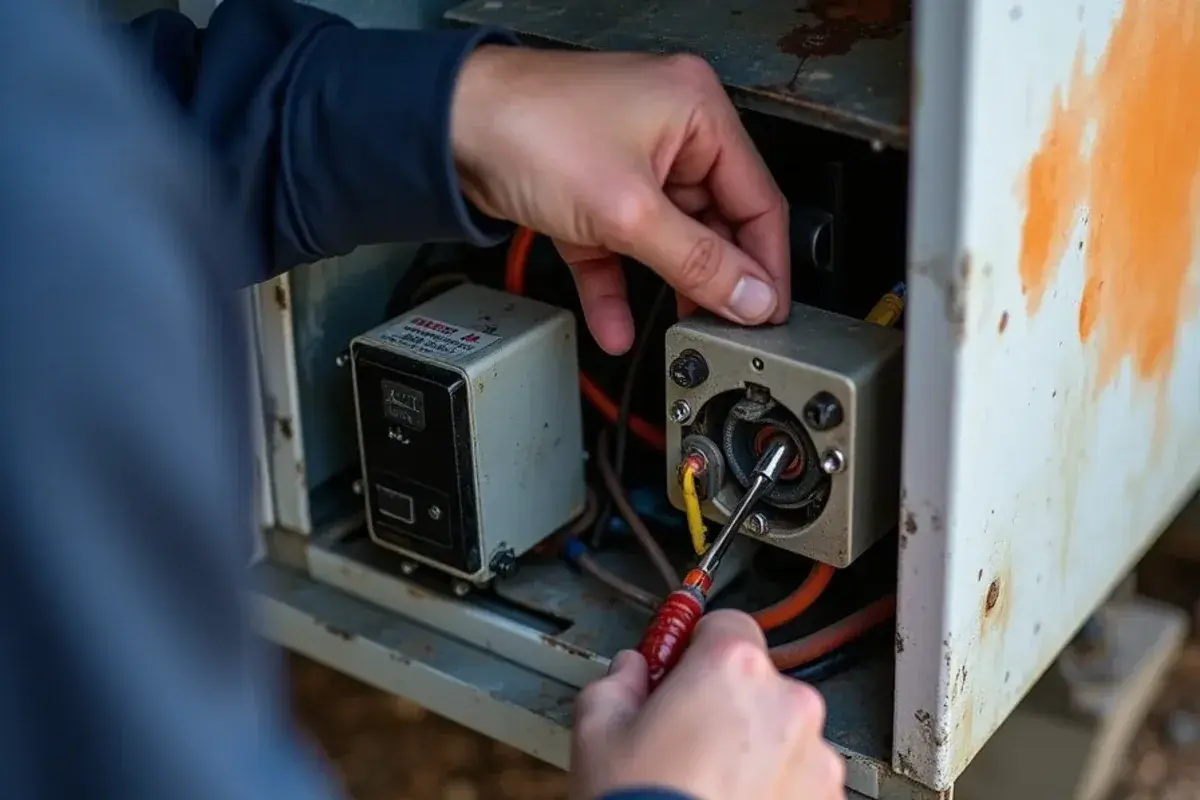
Thermostat changes. A smart thermostat installed during the summer often gets wired for cooling only. Nobody notices until the first cold front, when the heat terminal turns out to be disconnected. Our thermostat service page covers how heat and auxiliary wiring should look.
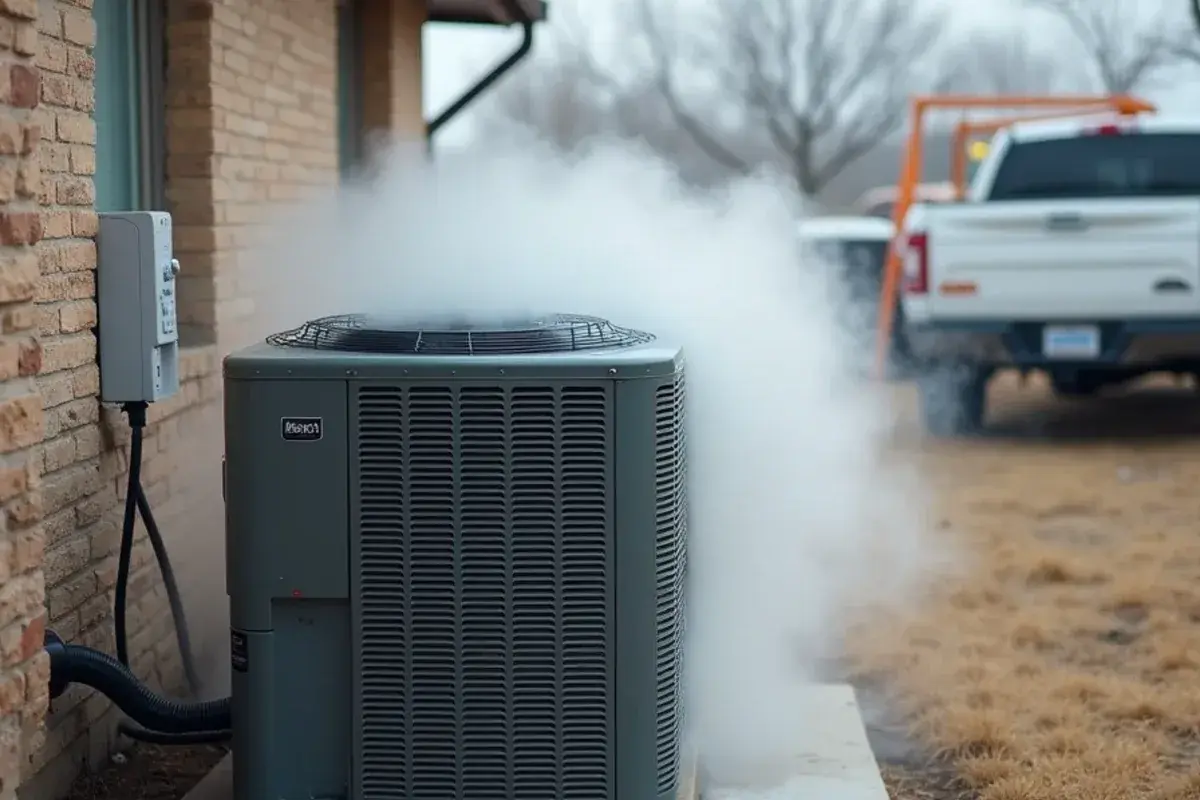
Heat pump trouble. The reversing valve that switches a heat pump between cooling and heating can stick after months in one position. Defrost sensors and boards also fail, leaving ice on the outdoor coil. Our heat pump repair page goes deeper into those systems.
Freezes. During Winter Storm Uri in February 2021, many Valley systems ran on backup strips for days straight, and power outages left electric heat useless. Hard freezes still expose every weak link at once.
How we track down a heating fault
Confirm the call for heat
We check the thermostat mode, the wiring at the thermostat and air handler, and whether the heat signal is actually reaching the equipment. Many no-heat calls end right here.
Test the electrical side
Breakers and the disconnect come next. With the heat running we read voltage at the kit and current draw on each element, then test continuity on elements, limit switches and fuses with the power off.

Check the heat source
For heat pumps, we watch the reversing valve shift, test the defrost controls, and read refrigerant pressures. Refrigerant work falls under EPA Section 608 rules for handling and recovery. For gas furnaces, we watch the full ignition sequence and check the flame sensor signal, pressure switch, inducer and flue.
From your call to a warm house
- You describe it on the phone. Thermostat reading, cold rooms, any breaker trip, so likely parts get loaded first.
- Safety first on arrival. Power off, a look for scorched wire, and a gas and CO check on furnaces.
- The fault gets pinned down. The tests above run in order, including the fusible link inside each element, which can open and make a good strip look dead.
- You choose the fix. You see the burnt coil or the meter reading, and each option is priced before a part goes in.
- The repair is made. Common parts are often swapped the same visit; uncommon ones may need ordering.
- A full heat cycle proves it. Every stage runs, the temperature rise is read at a supply vent, and the filter is left clean.
Repair options and the trade-offs
Once the failed part is found, there is usually more than one way to fix it. We explain each option and let you choose.
- Single element or whole heat kit. Replacing one burnt coil costs less today. If the kit is old and others look brittle, a new kit can save a second call next winter.
- Clean or replace the flame sensor. A coated sensor often cleans up well. A cracked or worn one should be replaced.
- Reset or replace the limit. A limit that tripped because of a dirty filter may be fine once airflow is restored. A limit that trips with good airflow is worn and gets replaced.
- Fix the connection or upgrade the circuit. A scorched lug can be cleaned and re-terminated. If the wire is too small for the heat kit, the circuit itself needs correcting.
When elements, limits and controls keep failing on an aging system, it may be time to compare repair against heating system installation. Manufacturer parts warranties sometimes apply, so we check the model and serial number before ordering parts.
If you smell gas
A rotten-egg odor near a furnace, water heater or range means leave the house right away. Don't touch light switches or start a car in an attached garage. Call the gas utility or 911 once you're outside. If a CO alarm goes off, or people feel headachy, dizzy or sick when the heat runs, get to fresh air and call 911.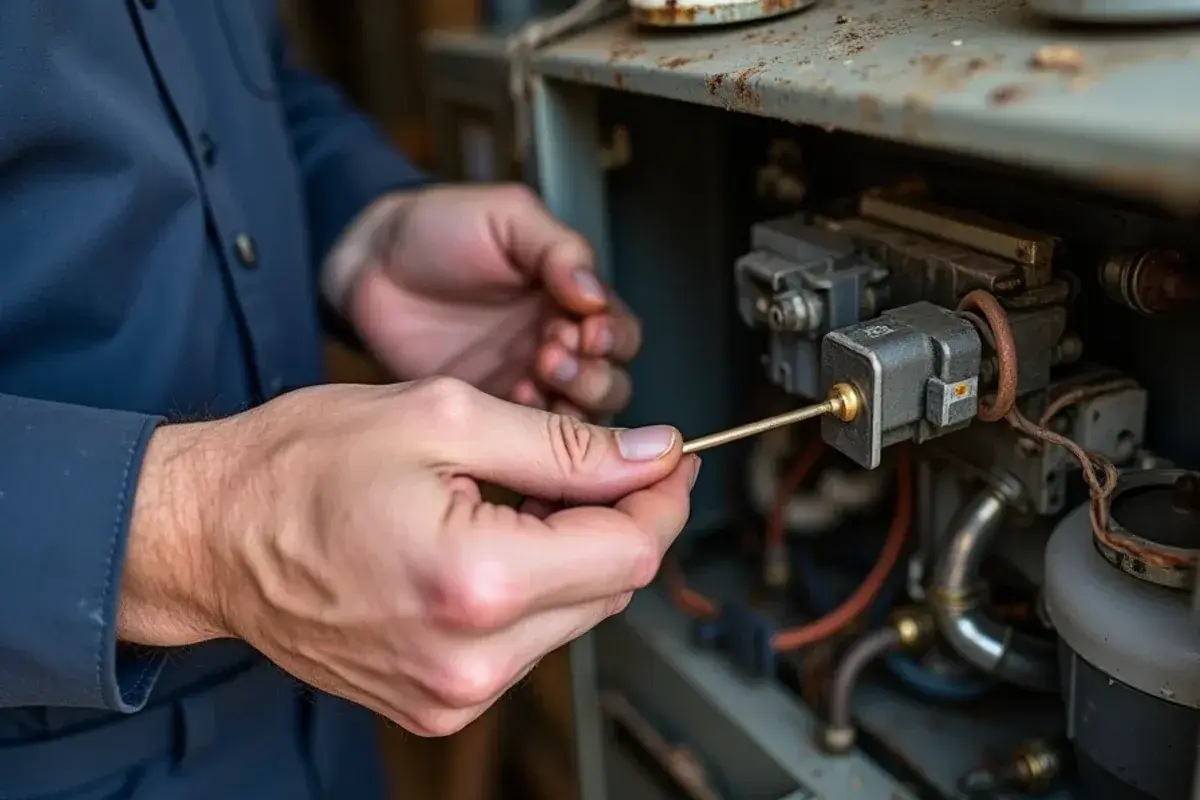
What changes the price of a heater repair
Every repair is quoted after diagnosis, and the main things that move the number are:
- Which part failed. A limit switch, an element, a defrost board and a furnace inducer motor are very different parts.
- How many stages. A larger heat kit means more elements and controls to test and possibly replace.
- Access. Air handlers in tight attics take longer than those in a hall or laundry closet.
- Refrigerant work. Heat pump repairs that involve opening the refrigerant system add recovery, repair and recharge time.
- Age of the equipment. Older or discontinued models can mean special-order parts.
- Timing. Calls during a hard freeze, when everyone needs heat at once, may land after normal hours. See emergency heater repair for how those work.
Heater repair rules: TDLR, EPA 608 and heat-circuit wiring
Paid heating repair in Texas is a state-licensed trade overseen by TDLR, the state licensing department, and its online search lets you check a contractor's licence by name or number.
TDLR also runs the state electrician program. Under its exemptions, a licensed A/C contractor may make the electrical connections to heating equipment and its own disconnect, but a new circuit or a panel change for a larger heat kit is work for a licensed electrician. The equipment nameplate lists the minimum circuit ampacity and the largest breaker the heat kit was built for, so a wire or breaker that doesn't match gets flagged. On heat pumps, EPA Section 608 requires refrigerant to be recovered rather than vented.
What you get when 956 Multi Service fixes your heat
956 Multi Service opened its Rio Grande City doors in July 2024 and is still a small crew that picks up its own phone.
- Short drives. Starr County and western Hidalgo County calls are close, and when the schedule allows, the heater is often running again the day you call.
- Plain answers. Our 41 Google reviews average 5.0, and customers keep mentioning technicians who explain the process.
- Set hours. Weekdays and Saturdays from 8 in the morning until 7 at night; Sundays off.
- Payment options. Cash, Visa, MasterCard, American Express and Discover, plus financing on larger repairs.
Google reviews that mention work like heating repair
5.0 out of 5 from 41 Google reviews
“Both gentlemen arrived punctually and were exceptionally well mannered and explained the whole process. They diligently completed the service I needed and delivered an exceptional job! I will definitely reach out to them again for any future work I may need. Highly recommend!”
Response from the owner: Thank you 💯
“Great service!! They were very responsive and helpful, and they were able to resolve my issue quickly. I would definitely recommend this company to others.”
“Great work, very detailed, clean and efficient job well done. 10/10 would recommend anyone needing minisplit work or any other work around the house.”
What do Starr County homeowners ask before a heater repair?
Why is my heater blowing cold air?
On an electric system, cold air with the blower running usually means the heat strips aren't energizing: a burnt element, a failed sequencer, a tripped limit switch or a breaker that's off. On a heat pump, it can be a defrost cycle, a stuck reversing valve or low refrigerant. A gas furnace blowing cold has often failed to light. Check that the thermostat is set to heat and the filter is clean, then call.
Why does my heat keep tripping the breaker?
Heat strips are one of the biggest electrical loads in a home, so any weakness shows up as a trip. Common causes are a shorted element, a breaker that has worn out from years of heavy current, a loose or burnt wire connection, or a circuit that was undersized for the heat kit. Repeated trips are a warning sign, so stop resetting it and have the circuit tested.
Can you repair a gas furnace's ignitor or flame sensor?
Yes. A furnace that clicks, glows and then shuts off often has a dirty flame sensor that can be cleaned, while one that never glows may need a new hot surface ignitor. We test both, plus the pressure switch, inducer motor and venting, because those can produce the same symptom. If anyone notices a gas odor, the house should be emptied and the gas utility called first.
Should I replace one heat strip or the whole heat kit?
It depends on what the rest of the kit looks like. If one element burned open and the others read normal resistance with clean wiring, a single element is the sensible repair. If the kit is old, several coils sag or look brittle and the sequencer contacts are pitted, a new kit often costs less than two separate calls. You see the readings before choosing.
How quickly can you restore heat during a cold front?
We are a small local crew, so speed depends on how many calls come in when the front arrives. If our schedule has room, the fix is often finished the same day. Common parts like elements, sequencers and ignitors can usually be swapped on the first visit. Older or uncommon equipment may need a part ordered. Calling at the first sign of trouble helps.
Still have a question about heating repair? Ask us directly.
Call (213) 423-7827Where we handle heating repair
- Heating Repair in Starr CountyIdle summers then short January freezes leave sequencers and strip coils failing on night one.
- Heating Repair in Roma, TXHistoric-district homes often heat with ductless heat pumps, whose defrost parts fail in damp cold.
- Heating Repair in Las Lomas, TXCaliche grit in filters overheats strips and wears out limit switches early.
- Heating Repair in Escobares, TXA summer smart-thermostat swap can leave the heat wire unconnected until the first front.
- Heating Repair in La Grulla, TXAttic air handlers in older frame houses make heat strip repairs slower to reach.
- Heating Repair in Mikes, TXTight manufactured-home closets mean a blocked return trips the high-limit switch.
- Heating Repair in East Alto Bonito, TXExposed higher ground takes the full north wind, so every heat stage runs at once.
- Heating Repair in Valle Vista, TXSpread-out homes on caliche roads make a clear phone description worth the effort.
- Heating Repair in Sullivan City, TXThe first Hidalgo County city on US-83 is a short run for heater calls.