
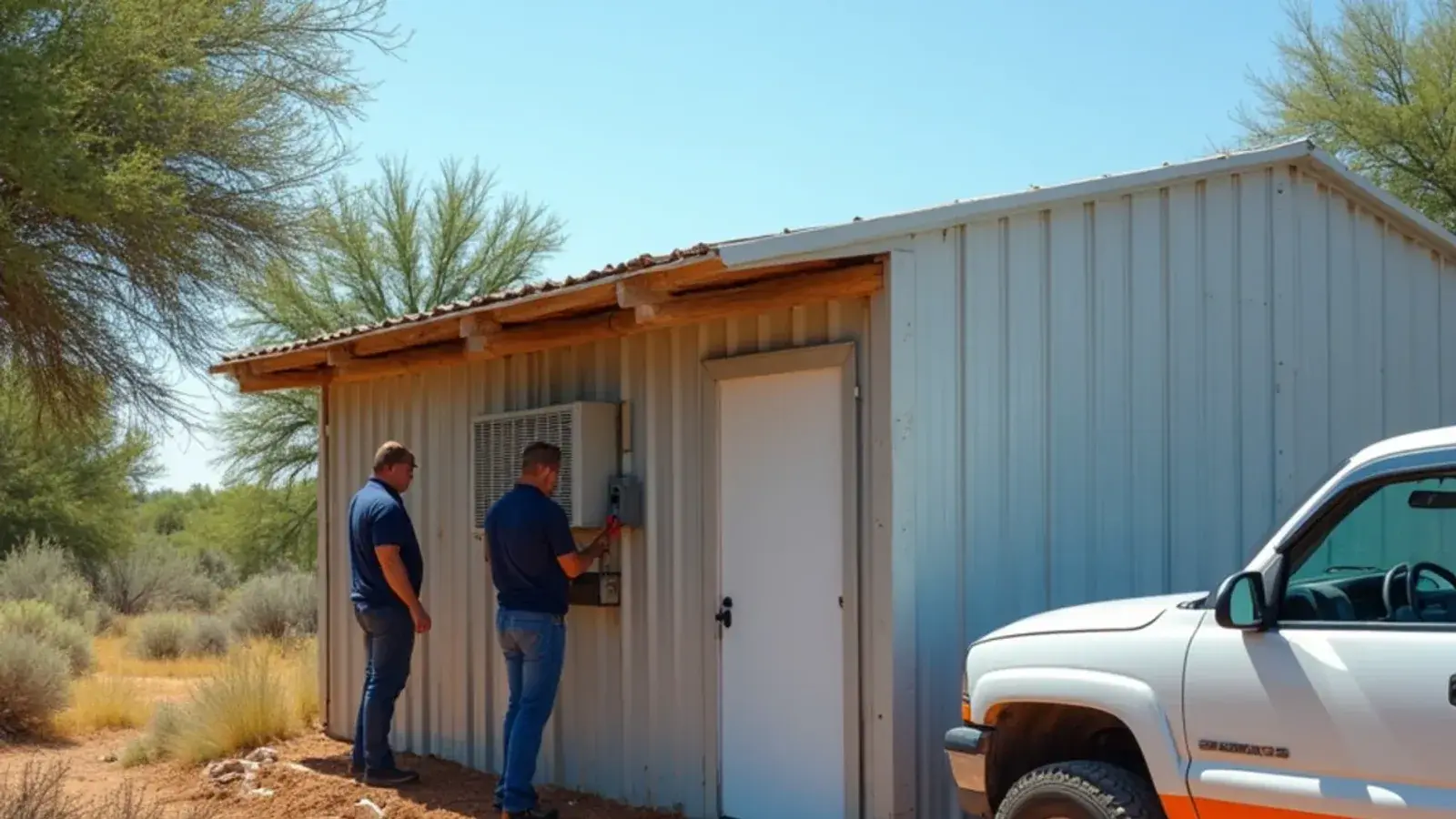
A good cold room lets a ranch hang deer through a warm November afternoon, keeps a grower's harvest crisp for market, and gives a small shop space that a few reach-ins never could. 956 Multi Service handles walk in cooler installation in Rio Grande City and the ranch country around it, including CoolBot refrigerated rooms that we have set up for customers. Whether it is a deer cooler, a produce room or a cuarto frío for a meat counter, the planning starts with what you need to keep cold and how much of it.
We also repair walk-ins that already exist, from CoolBot rooms that stopped holding temperature to factory-built boxes with their own refrigeration system. This page belongs to our broader commercial HVAC section.
What the work can include:
- Planning and sizing for deer coolers, produce rooms and meat-counter cuartos fríos.
- Framing and insulating a new room or part of a shed.
- CoolBot installation: AC mounted through the wall, controller wired, sensors placed.
- Concrete pads or slabs for the room or its equipment, poured by the same crew.
- Repairs on CoolBot rooms and on walk-ins with their own condensing unit.
- Door and envelope fixes: gaskets, latches and wet or crushed insulation.
CoolBot room, commercial walk-in or walk-in freezer?
The first decision shapes everything after it. Three common routes, each with honest trade-offs:
| Option | How it cools | Good fit | Limits |
|---|---|---|---|
| CoolBot cold room | Standard window-style AC plus a CoolBot controller in an insulated room | Deer camps, produce growers, seasonal or moderate use | Holds roughly 34–38°F, slower recovery with a warm load, cannot freeze |
| Commercial walk-in cooler | Refrigeration condensing unit and evaporator on a panel box or built room | Restaurants, meat markets, daily heavy door traffic | Higher up-front cost, needs refrigeration service |
| Walk-in freezer | Low-temperature condensing unit, evaporator with defrost, heated door frame | Frozen meat and product storage | Highest cost and power draw, needs a true freezer system |
A CoolBot walk-in cooler is often the practical choice for ranches and growers, because the AC is easy to find and replace and the room can be built to fit an existing shed or barn. Businesses opening and closing the door all day, or holding food for sale, usually get better results from a commercial system. If you need to freeze, a walk-in freezer is the only route; a CoolBot is designed for cooler temperatures only.
How a CoolBot convinces an air conditioner to run cold
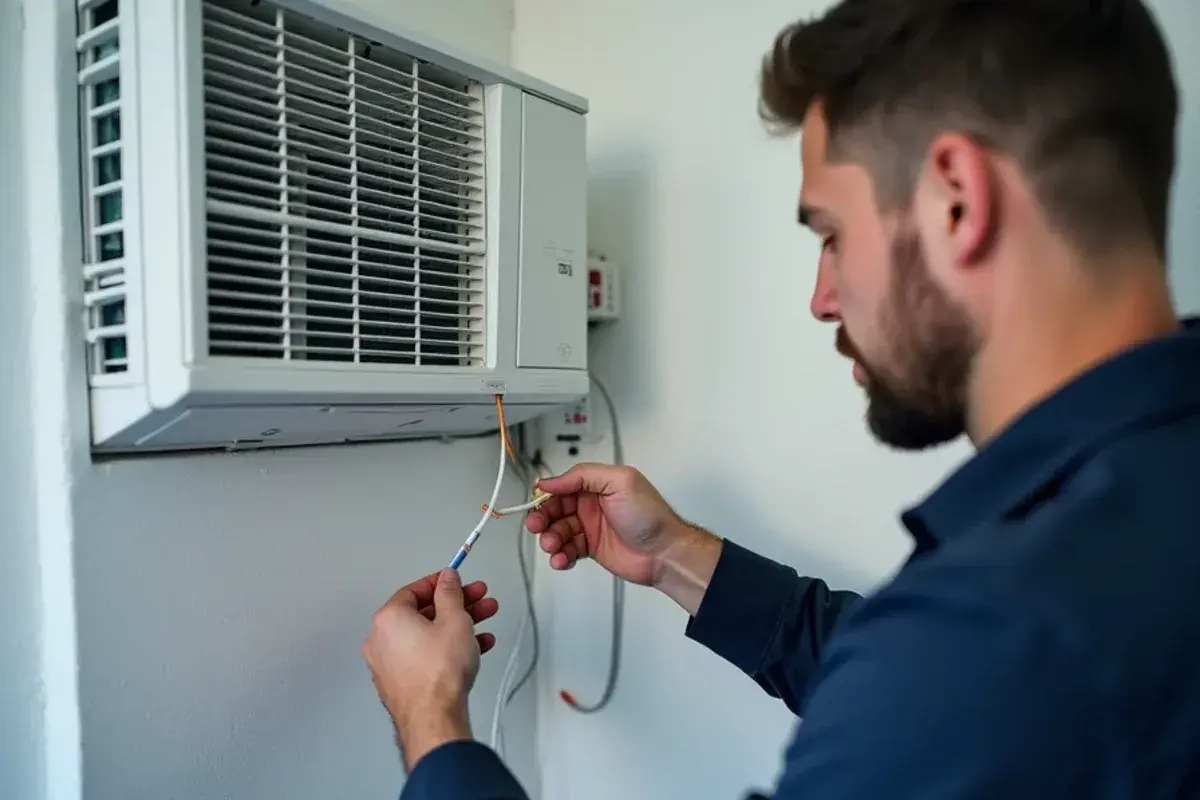
A window AC normally stops cooling once the room reaches its lowest setting, which is far warmer than a refrigerator. The CoolBot gets around that by gently warming the AC's own temperature sensor. The AC thinks the room is still warm and keeps running, while the controller watches the real room temperature and decides when to stop.
The danger in running an AC that cold is ice. Left alone, the indoor coil would frost over and block airflow. The CoolBot uses a second sensor on the AC's fins to back the unit off before that happens, then lets it resume once the coil clears. Sensor placement is a big part of whether the setup works well, and we install and test it before handing the room over.
Sizing a deer cooler or produce room before you build
A hunting ranch cooler in Starr County, or out toward Jim Hogg County and Brooks County, sees its heaviest use on a handful of weekends when every hunter in camp brings something in. Plan for that peak.

For a deer cooler
Count the deer you expect to hang at the same time and how they will hang. Whole carcasses need ceiling height and a sturdy rail; quartered meat on shelves needs less height but more shelf space. Leave a gap between carcasses so cold air reaches every side, and keep enough floor to walk in without brushing against meat.
For a produce cooler
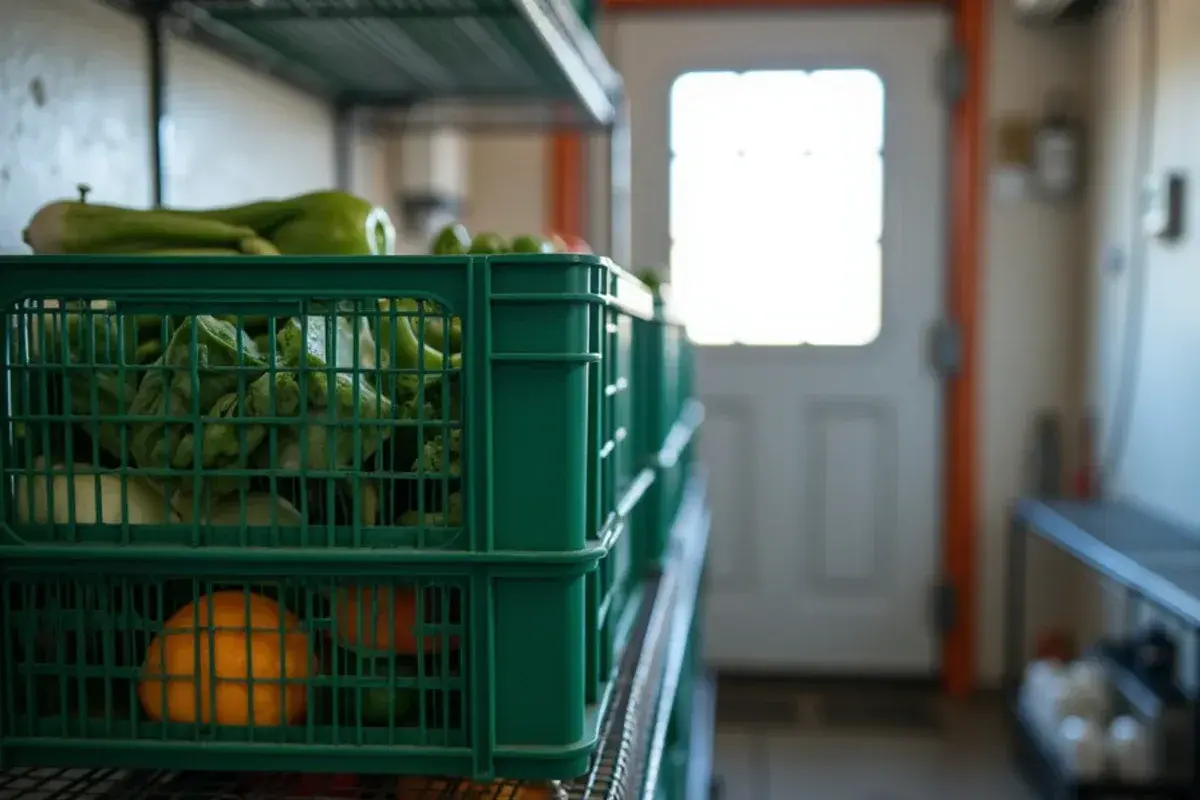
Think in crates or pallets, plus walking room and the size of your door. Shelving should leave air space around each crate. Different crops prefer different temperatures and humidity, so tell us what you grow or sell.
Matching the AC to the room
Room size, insulation, how often the door opens and how warm the product is going in all set how large the AC needs to be. Building much bigger than you need wastes cooling and money. CoolBot sizing charts assume a tight, well-insulated room opened no more than about six times an hour (Johnny's Selected Seeds compatibility guide). A shop door swinging all afternoon breaks that assumption.
Building a cuarto frío, start to finish
From the first call to a room you can load:
- Phone talk-through: what you are storing, how much at the peak, and where the room will go.
- Site walk: power, shade on the AC's hot side, floor and door swing.
- Framing and insulation: layered rigid foam, taped seams and a vapor barrier.
- Door and cooling: insulated door, AC through the wall, controller and sensors wired.
- Pull-down test: the empty room taken to temperature and checked with a separate thermometer.
- Handover: reading the controller, outage recovery, and loading so air keeps moving.
Walk the site
We look at the shed, barn or room you have in mind, where the AC will mount, how much shade its hot side gets, the floor, the door swing and the electrical supply. If the room needs a slab or a sturdy base outside, our concrete work can be part of the same project.
Frame and insulate

Walls, ceiling and ideally the floor get thick rigid foam insulation with sealed seams and a vapor barrier. Gaps and thin spots are where warm air and moisture sneak in. Small-farm cooler guides aim for about R-25, roughly 4 inches of rigid closed-cell foam, layered over the studs so the framing does not leak heat. Under a sheet-metal barn roof, the ceiling takes the most sun.
Door, AC and controller
An insulated door with a tight seal goes in, the AC is mounted through the wall, and the CoolBot and its sensors are wired and placed.
Pull-down test
We run the room down to temperature, confirm it with a separate thermometer, and show you how the settings work. For shops holding food for sale, the FDA Food Code generally calls for cold-holding time-and-temperature-sensitive food at 41°F or below.
Permits, wiring and refrigerant rules
Inside Rio Grande City, Roma or another city's limits, ask the city whether a new structure or circuit needs a permit; on rural land, check with Starr County, especially for a lot in a mapped floodplain. Electrical work in Texas falls under TDLR's electrician licensing program, and the AC often needs a dedicated circuit. Walk-ins with their own refrigeration system fall under TDLR's air conditioning and refrigeration contractor licence, and any opening of a sealed refrigerant circuit is covered by EPA Section 608 recovery rules. A shop selling food out of the room also answers to the DSHS Texas Food Establishment Rules.
Already have a walk-in that's running warm?

Walk in cooler repair starts with the room, not just the machine. Torn door gaskets, a door that no longer latches, and insulation that has soaked up water are common reasons a room cannot hold temperature. On CoolBot rooms we check the AC itself, the controller and whether a sensor has shifted out of place. On commercial walk-ins we check the condensing unit, evaporator fans, defrost and refrigerant charge, with refrigerant recovered under EPA Section 608 rules. For reach-in and display equipment, see our commercial refrigeration repair page.
What sets the cost of a cold room
Every room is different, so we talk through factors instead of quoting blind:
- Room size and ceiling height.
- Insulation. Type, thickness and whether the floor is insulated.
- New room or conversion. Building inside an existing shed often saves framing.
- Cooling method. CoolBot with an AC, or a commercial refrigeration system.
- Door. A purpose-built insulated door costs more than a modified one, and seals better.
- Power and base. A new circuit, a pad or a roof over the AC adds scope.
- Distance. Ranches a long drive from Rio Grande City add travel time.
The AC and the controller each come with their own manufacturer warranty. Payment by cash or card works, and a bigger build can be financed if that helps.
Why ranches and growers call 956 Multi Service for cold rooms
CoolBot refrigerated rooms are already part of the work our crew has done, and the same small Rio Grande City team that wires the controller can pour the pad, frame the walls and service the AC in later seasons. The business started in July 2024 and holds a 5.0 average from 41 Google reviews.
Calls are taken six days a week, 8 AM to 7 PM, with Sundays off, so a deer camp planning around opening weekend should call well before the season. A warm room with product inside is often repaired the same day when the calendar has an opening.
Google reviews that mention work like walk-in coolers & coolbot rooms
5.0 out of 5 from 41 Google reviews
“Excellent, fast and reliable service. Thank you for fixing our mini split issues quickly and helping set up the coolbot for the refrigerator room.”
“After my mr. Cool Mini split ac went out nd Mr. Jesus Cantu was notified for Assistance, he suggested and advised on a confort AC mini split 2 ton Unit to cool off my living Quarters. Awesome results , Quick installation and proficient professional job . Very efficient and professional your man . Would recommend to Rio Grande Vally Whole..heartedly. don't fight the heat notify Jesus Cantu.”
“Very great customer service! Talked to them over the phone to explain my A/C situation I was having, and they knew what the problem was right away! Came to fix the problem in a timely manner! Recently I purchased a new unit and they went for an installation the same day! Highly recommended!”
What should you know before building a cold room?
What is a CoolBot and how does it turn an AC into a cooler?
A CoolBot is a small controller that works with a standard window-style air conditioner. It warms the AC's temperature sensor slightly so the unit keeps running well below its normal lowest setting, and a second sensor on the AC's coil backs it off before ice builds up. In a well-insulated room, that combination can hold roughly 34 to 38 degrees.
How big should a deer cooler be for a hunting camp?
Size it for the busiest weekend, not an average one. Count how many deer you expect to hang at once, decide whether they hang whole or get quartered onto shelves, and leave space for air to move between them and for a person to walk in. Ceiling height matters for hanging. A larger room also needs a larger AC, so avoid building far beyond what you use.
Can you repair an existing walk-in cooler?
Yes. On CoolBot rooms we check the AC, the controller and its sensors, the door seal and the insulation. On walk-ins with a true refrigeration system we look at the condensing unit, evaporator fans, defrost, controls and refrigerant charge. Many warm-room complaints trace back to a door that does not seal or insulation that has gotten wet, so we check the room as well as the equipment.
What does a CoolBot cold room cost compared to a commercial walk-in?
A CoolBot room usually costs less up front because it uses an off-the-shelf AC and controller instead of a refrigeration condensing unit and evaporator. A commercial walk-in costs more but is built for constant cold duty and recovers faster after the door opens. The final cost of either depends on room size, insulation, the door, power and how far the site is from Rio Grande City.
What kind of air conditioner works with a CoolBot?
A window-style unit with a digital display and automatic restart after a power loss, according to University of Vermont Extension guidance; portable units are a poor match. A window AC loses capacity when it is pushed that cold, so it needs margin over the room's load. On remote ranch land around Starr County, the auto-restart matters after every brief outage.
Still have a question about walk-in coolers & coolbot rooms? Ask us directly.
Call (213) 423-7827Where we handle walk-in coolers & coolbot rooms
- Walk-In Coolers & CoolBot Rooms in Starr CountyDeer season fills ranch camp coolers here, often with several carcasses at once.
- Walk-In Coolers & CoolBot Rooms in San Isidro, TXNorthern Starr County hunting camps need deer coolers whose AC restarts itself after outages.
- Walk-In Coolers & CoolBot Rooms in Jim Hogg CountyHunting camps around Hebbronville rely on walk-in deer coolers, booked by appointment.
- Walk-In Coolers & CoolBot Rooms in Brooks CountyRanch deer coolers along US-281 need a check before the first heavy weekend.
- Walk-In Coolers & CoolBot Rooms in Zapata CountyLodges and ranches near Falcon Reservoir sit idle for weeks, so cold rooms need testing before loading.
- Walk-In Coolers & CoolBot Rooms in Garciasville, TXFarm shops in this riverside community call for occasional cold-room work.
- Walk-In Coolers & CoolBot Rooms in La Grulla, TXGrowers in the irrigated river farmland use small produce rooms to hold a harvest.
- Walk-In Coolers & CoolBot Rooms in Olivia Lopez de Gutierrez, TXLarger lots off farm roads leave space for a detached cold room.
- Walk-In Coolers & CoolBot Rooms in Valle Vista, TXSpread-out caliche-road properties mean common parts ride along to finish repairs in one trip.
- Walk-In Coolers & CoolBot Rooms in Pharr, TXCold-storage distributors around the produce port of entry depend on steady walk-ins.