

A rooftop unit that stops cooling usually announces itself through the people downstairs: shoppers fanning themselves, staff propping doors open, a ceiling tile stained with water. 956 Multi Service handles rooftop unit repair in Rio Grande City and across Starr County, plus routine RTU maintenance and full replacement when a unit has reached the end of its life. Plenty of rooftop fixes wrap up on the first visit, frequently on the day you phone if the calendar allows.
Rooftop and package equipment is the backbone of strip centers, small offices, churches and stand-alone stores along US-83. It is part of our wider commercial HVAC service for local businesses.
Package unit basics: why one cabinet changes the repair
A package unit puts everything a split system spreads across two locations into a single cabinet: the compressor, the outdoor coil, the indoor coil, the blower, the controls and often a heating section. Air from the building travels up through ductwork into the unit, gets cooled, and drops back down through supply ducts. The cabinet sits on a curb, which is a sheet-metal frame sealed into the roof, or on a concrete slab beside the building.
Having it all in one box makes package unit repair efficient in some ways and tricky in others. Every component is within reach, but every component also bakes on a roof that runs much hotter than the air at ground level. Electrical parts age faster, belts dry out, and a small refrigerant leak at a vibrating joint has nowhere to hide from the heat.
Some units are electric-only, with heat strips or a heat pump for winter. Others are gas/electric, with a burner section that needs its own safety checks.
Rooftop trouble signs and their usual causes
| What you notice | Likely cause | How urgent |
|---|---|---|
| Warm air from every vent | Failed capacitor or contactor, compressor not starting, low refrigerant | Same day if possible |
| Weak airflow, unit runs constantly | Clogged filters, slipping or broken blower belt, dirty indoor coil | Soon, before the compressor overheats |
| Water dripping through ceiling tiles | Plugged condensate drain, cracked drain pan, failed curb seal | Soon, to protect ceilings and stock |
| Breaker keeps tripping | Shorted motor, failing compressor, loose high-voltage wiring | Stop resetting it and call |
| Squeal or rumble on start-up | Worn belt, dry blower bearings | Schedule a visit |
| Hot, humid air near the vents on mild days | Economizer damper stuck open, letting outside air in | Schedule a visit |
| No heat on the first cold morning | Ignition, flame sensor or inducer fault on a gas unit, failed heat strips | Same day in a cold snap |
Dust from caliche lots and nearby fields is a constant in Starr County. It packs into rooftop condenser coils over a summer and raises head pressure, which is the pressure the compressor works against. A unit with a choked coil runs hotter and longer until a weak part gives out.
RTU repair, step by step on the roof
A good diagnosis follows the same order every time, so nothing gets skipped.
Safe access and power off
We reach the roof by hatch or ladder, shut off the unit's disconnect and lock it before opening any panels. A roof in July is hot enough to burn skin, so the work is paced and organized.
Airflow first
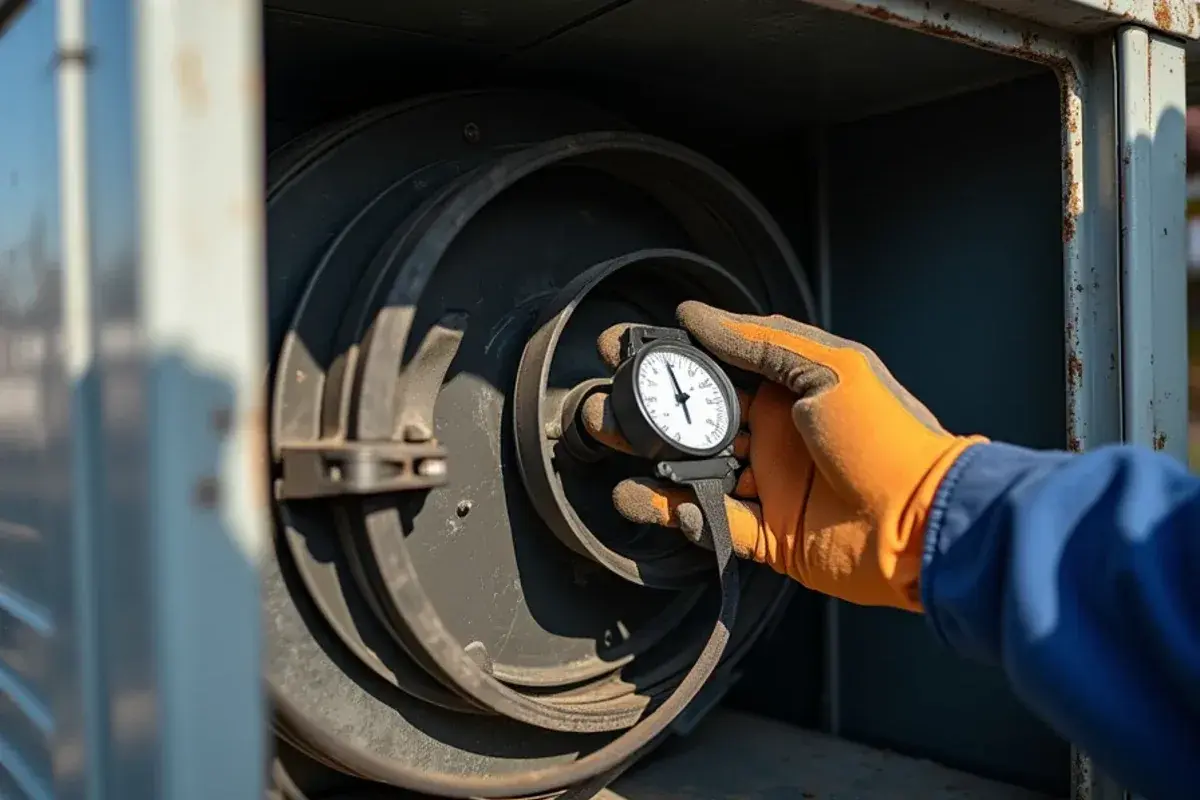
Filters, belt condition and tension, pulley wear and blower bearings come first, because poor airflow causes many of the symptoms that look like refrigerant trouble. We also look at the indoor coil for dirt and ice.
Electrical and refrigerant checks
We test capacitors and contactors, measure amp draw on the compressor and fan motors, and read refrigerant pressures, superheat and subcooling. Those readings tell us whether the charge is right or whether a leak or restriction is at work. Leaks are found and repaired before any refrigerant is added, and recovery follows EPA Section 608 rules.
Heating section and controls
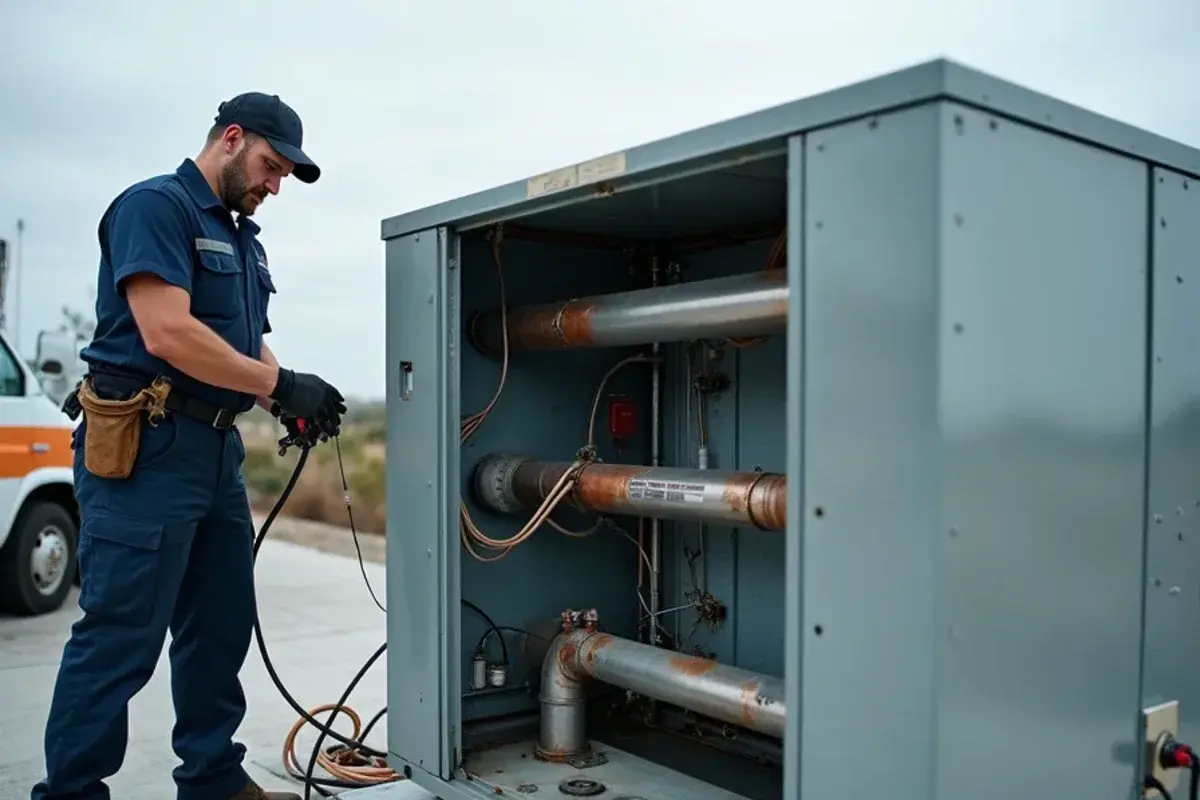
On gas/electric units we check ignition, the flame sensor, the inducer motor and the heat exchanger. We also confirm the thermostat or building controls are calling correctly and that the economizer damper opens and closes as it should.
Water and roof seal
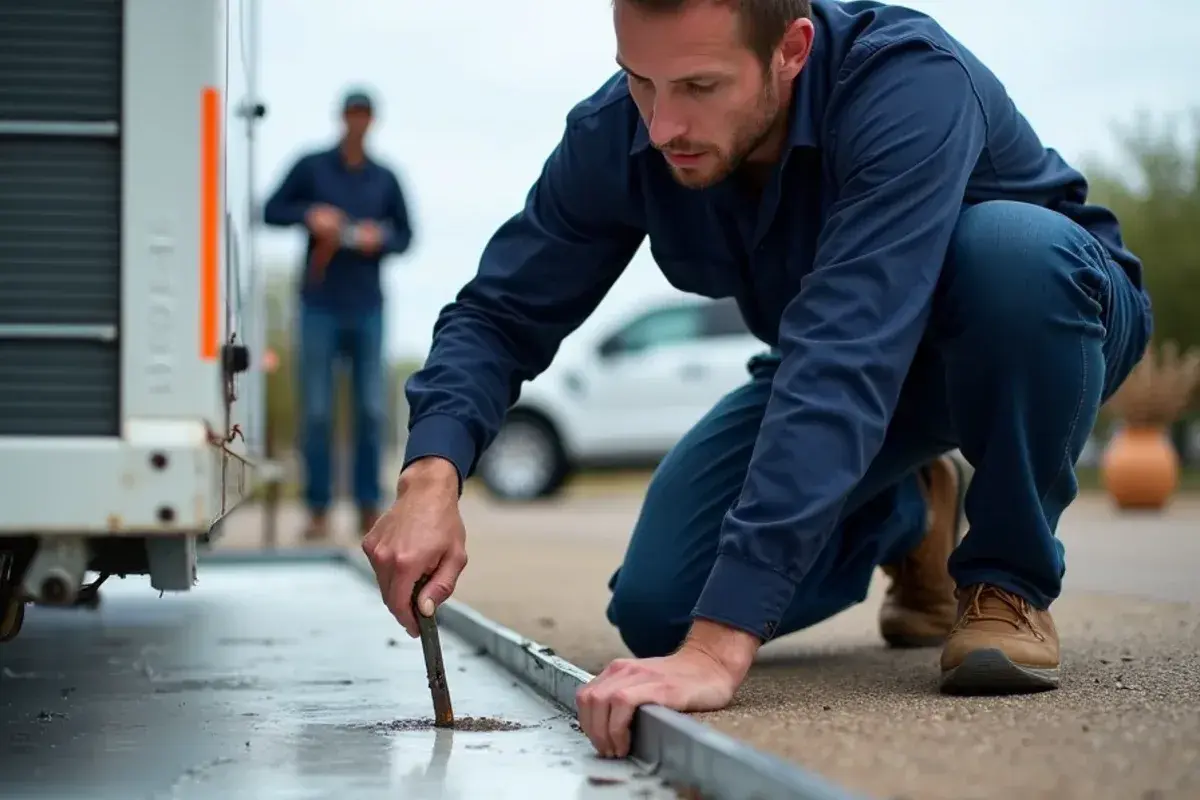
We clear the condensate drain and trap, check the drain pan, and look at the curb seal where the unit meets the roof. Before we leave, you get an explanation of what failed, what we fixed and anything that should be watched.
Why owners call 956 Multi Service for roof units
We are a Starr County crew in business since July 2024, and our Google profile stands at 5.0 from 41 reviews that often mention punctual, courteous technicians. The phone is answered from 8 AM to 7 PM except Sundays. When the truck has the part, a rooftop repair can often be finished the same visit, schedule permitting,. Cash, Visa, MasterCard, American Express, Discover and financing all work for a replacement.
When rooftop AC replacement is the smarter spend
Some units are worth repairing for years. Others reach a point where each fix buys only a few months. Replacement deserves a serious look when:
- The compressor fails on an older unit with a rusted cabinet or corroded coils.
- A gas/electric unit has a cracked heat exchanger.
- The system runs on R-22, which has not been produced in the US since 2020, and needs a large recharge.
- Repair calls keep stacking up during the same season.
Newer equipment is moving to lower-GWP refrigerants such as R-454B and R-32, and efficiency standards have risen, so a new unit will usually use less electricity than a worn one doing the same job.
Planning a crane set
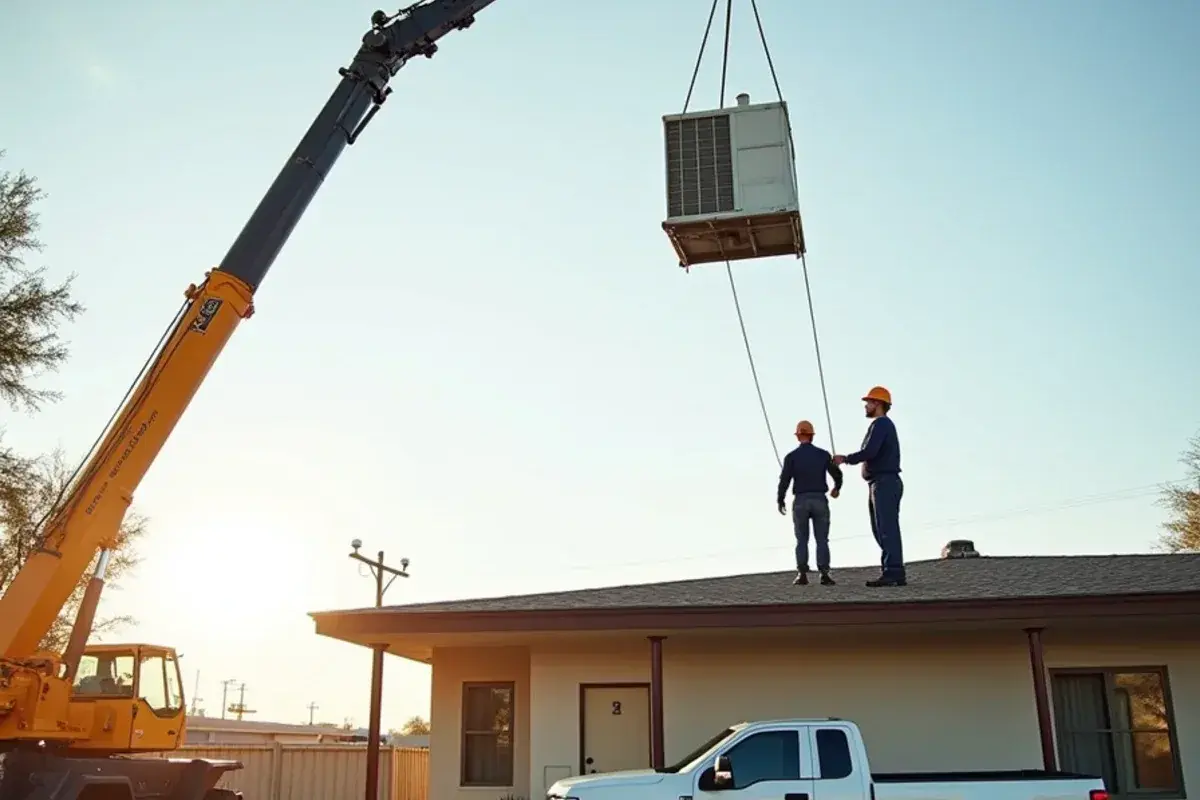
Commercial package unit installation starts on paper. We measure the existing curb, confirm the tonnage the space needs, and check the electrical supply and gas line. If the new unit's footprint differs, a curb adapter bridges the gap. The rooftop unit crane set is scheduled once the unit and adapter are on hand, ideally for a slower day or early in the morning. Swap day runs in this order:
- Shut down and lock out power and, on gas/electric units, close the gas supply.
- Recover the refrigerant from the old unit into a recovery cylinder, as EPA Section 608 requires.
- Disconnect and lift the old unit off the curb with the crane.
- Seal the curb with new gasket, setting the adapter first if the footprint changed.
- Set and reconnect the new unit: power, gas, condensate drain with a proper trap, and controls.
- Start up and test pressures, amp draw, airflow, burner operation and the economizer. Ask your city whether a permit is required; requirements vary by jurisdiction.
Is your RTU maintenance schedule keeping up?
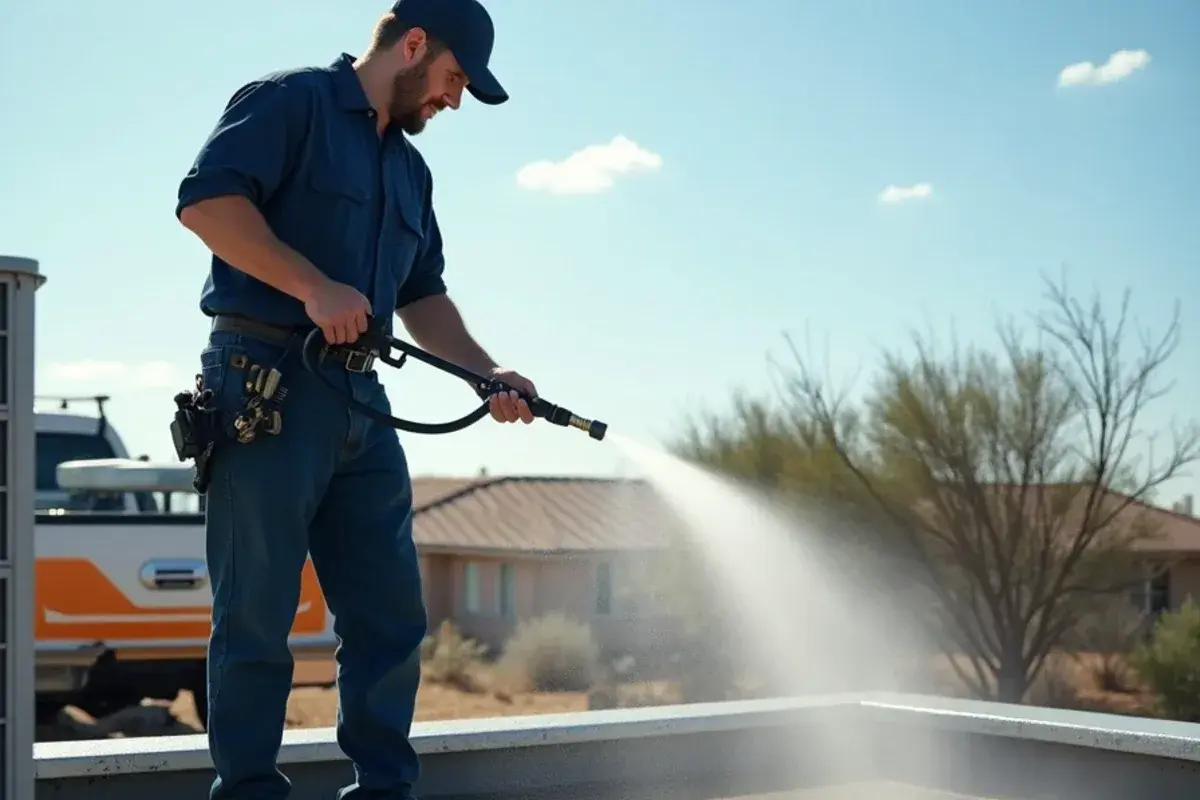
A roof is out of sight, which is exactly why rooftop equipment gets neglected. A regular schedule should cover filter changes, belt inspection, coil rinsing, drain cleaning, electrical checks, refrigerant readings and a heating test before winter. Businesses in La Grulla, Roma and Rio Grande City that sit beside dusty lots or fields often benefit from extra coil cleaning mid-summer. A written maintenance plan keeps multiple units on track.
What drives the cost of RTU work
We explain the factors before work starts rather than guess at a number:
- Unit size and type. Tonnage, and whether it is electric-only or gas/electric.
- Roof access. A low roof with a fixed ladder is simple; a tall building or tight parapet adds time and equipment.
- Crane and curb adapter. Replacements need a lift, and a mismatched footprint needs an adapter.
- Refrigerant. R-22 units are costly to recharge; newer refrigerants have their own handling requirements.
- Parts. Common motors and capacitors are quick to source; brand-specific boards, compressors or heat exchangers may take longer.
- What surrounds the unit. A leaking curb, damaged duct connection or worn disconnect adds scope.
Manufacturer warranties on new equipment are registered at installation, and we can check warranty status on an existing unit before parts are ordered.
Permits, roof safety and licensing rules for RTU work
Commercial A/C work in Texas is licensed by TDLR, and the class matters on a roof: a Class B licence is limited to units of 25 tons cooling or less, while Class A covers any size. Check both on TDLR's website. Refrigerant must be recovered under EPA Section 608, and EPA's 2024 HFC rule brought leak repair duties to equipment holding 15 or more pounds of HFC refrigerant. Model mechanical and electrical codes call for permanent roof access when equipment sits more than 16 feet up and a service outlet within 25 feet of the unit. Ask your city's building office about permits before a change-out, and keep the work clear of unprotected roof edges.
Google reviews that mention work like rooftop units
5.0 out of 5 from 41 Google reviews
“Both gentlemen arrived punctually and were exceptionally well mannered and explained the whole process. They diligently completed the service I needed and delivered an exceptional job! I will definitely reach out to them again for any future work I may need. Highly recommend!”
Response from the owner: Thank you 💯
“Great service!! They were very responsive and helpful, and they were able to resolve my issue quickly. I would definitely recommend this company to others.”
“Great work, very detailed, clean and efficient job well done. 10/10 would recommend anyone needing minisplit work or any other work around the house.”
What do Valley building owners ask about RTU service?
How often should rooftop units be serviced in South Texas?
Plan on at least two visits a year: one in spring before the long cooling season and one in fall that also checks the heating side. Filters usually need changing more often than that. Units over restaurant kitchens or next to dusty lots and fields may need quarterly coil and filter attention to keep working through a Starr County summer.
Can you replace a rooftop unit without a long shutdown?
That is the goal of good planning. We measure the curb, confirm power and gas, and have the new unit and any curb adapter on hand before the old one comes off, so the building is usually without that unit for the swap day itself. Weather, crane availability and surprises under the old unit can change the timeline, and we will tell you if they do.
Do you service gas/electric package units?
Yes. A gas/electric package unit cools like any other rooftop unit and heats with a gas burner section. We check ignition, the flame sensor, the inducer motor and the heat exchanger along with the cooling side. If we see a cracked heat exchanger or a gas concern, we shut that section down and explain why before going any further.
Why is my rooftop unit leaking water into the building?
If it drips only when the AC runs, the usual cause is a plugged condensate drain or a trap that is too shallow. The blower pulls suction on the drain pan, so a short trap holds water in the pan until it overflows. A cracked pan does the same. If it leaks only when it rains, look at the curb seal and roof flashing instead.
Still have a question about rooftop units? Ask us directly.
Call (213) 423-7827Where we handle rooftop units
- Rooftop Units in McAllen, TXMcAllen retail and office space runs on rooftop package units.
- Rooftop Units in Pharr, TXDistributors near the Pharr bridge pair rooftop cooling with refrigeration.
- Rooftop Units in Edinburg, TXEdinburg strips and rentals near the university need documented RTU repairs.
- Rooftop Units in Mission, TXMission shops on sun-baked flat roofs carry extra winter-Texan traffic.
- Rooftop Units in La Grulla, TXField dust near La Grulla packs rooftop condenser coils over a summer.
- Rooftop Units in Roma, TXOlder Roma storefronts near the bridge often keep package units on slabs out back.
- Rooftop Units in Las Lomas, TXWind-blown caliche dust in Las Lomas clogs RTU coils and filters faster than most owners expect.
- Rooftop Units in La Puerta, TXRoadside businesses on US-83 in La Puerta often run one package unit, no backup.
- Rooftop Units in Starr CountyChurches, halls and strip centers across Starr County rely on rooftop units that sit out of sight.