
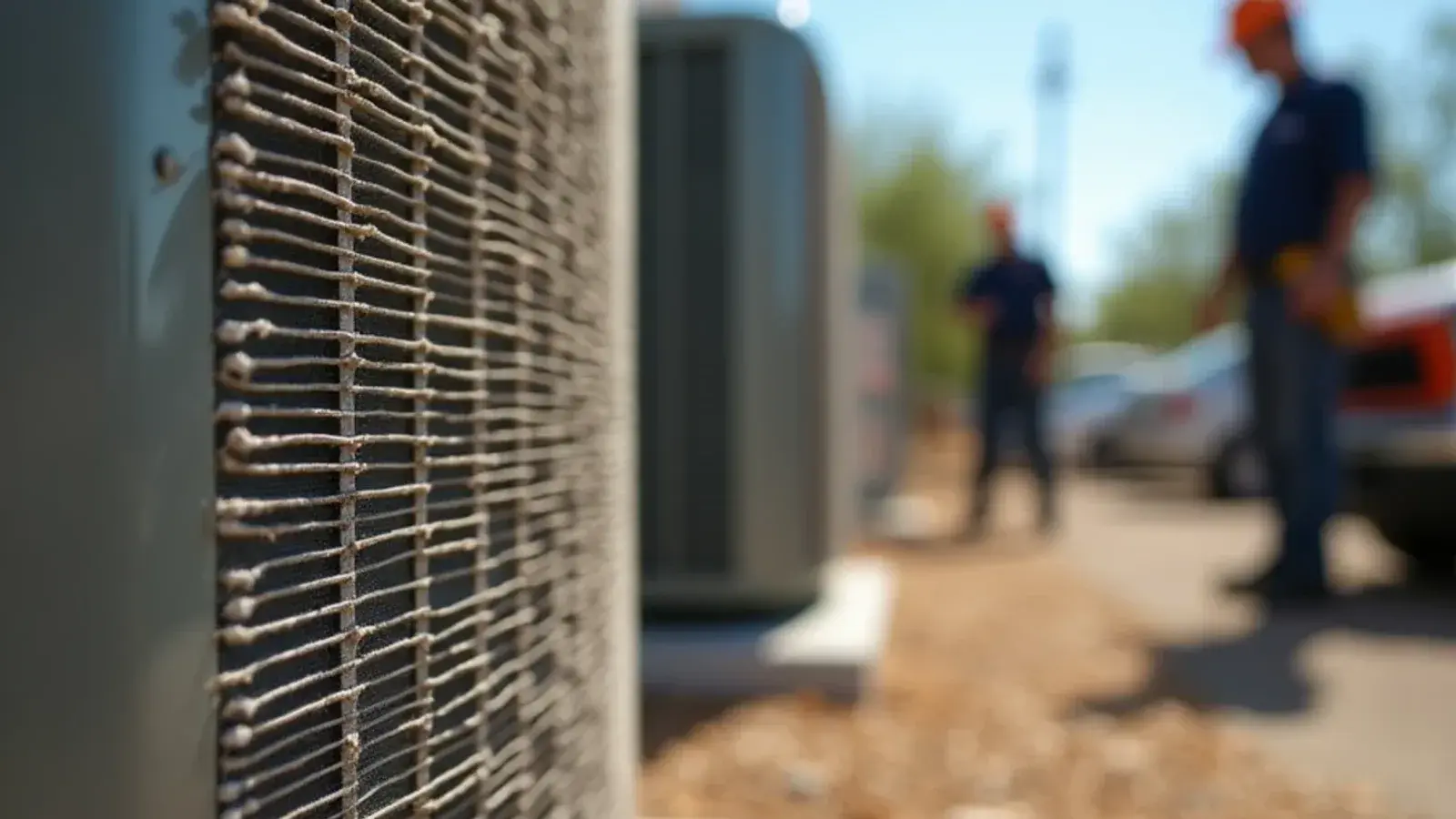
A dirty AC condenser coil makes your system run hotter, longer and weaker. In Starr County, pale caliche dust from roads and bare yards packs the fins, the unit cannot shed heat, and pressure and power use climb. A spring coil wash from the inside out, plus clear space around the unit, fixes it.
When a Starr County air conditioner struggles in July, that coil is very often behind it. The outdoor unit's job is to throw away the heat your system pulls out of the house, and it does that by blowing air through thousands of thin aluminum fins. When those fins fill with caliche dust, dry grass and mesquite litter, the heat has nowhere to go.
Most homeowners never look closely at the condenser until it stops cooling. By then, the coil has usually been working against a layer of dirt for months.
Why caliche country is hard on outdoor units
Across much of Starr County the ground is caliche, a chalky, calcium-rich soil layer that turns to fine pale dust when it dries and is driven over. Caliche roads, unpaved driveways and bare yards feed that dust into the air every time a truck passes or the wind picks up. The Tamaulipan thornscrub around town adds its own debris: mesquite leaflets and pods, huisache blooms, blackbrush and windblown grass.
A condenser fan pulls a large volume of air through the coil every minute it runs. That turns the unit into a very effective dust collector. Fine caliche particles stick to fins that are slightly damp from morning humidity or from condensate splashing nearby, and over a season they bake into a crust.
In hilly spots like Las Lomas, a community of caliche rises bordering Rio Grande City, outdoor coils on the windward side of a house collect a visible tan film within weeks. In El Chaparral, named for the brush around it, mesquite and huisache often grow right up against the outdoor unit.
What a clogged coil does to your system
A blocked condenser does not usually fail in one dramatic moment. It slowly pushes the whole system out of its comfort zone.
| What happens | Why it happens | What you notice |
|---|---|---|
| Higher refrigerant pressure | Heat cannot leave the coil, so the refrigerant stays hotter | Longer cycles before the thermostat is satisfied |
| Higher amp draw | The compressor works against higher pressure | Bigger electric bills in peak months |
| Hotter compressor and capacitor | Extra current and outdoor heat stack together | Capacitor failures, hard starts, clicking |
| High-pressure trips | Safety switch shuts the unit off to protect it | AC stops on the hottest afternoons, restarts later |
| Less cooling capacity | System moves less heat per hour | Warm rooms, especially late in the day |
Starr County afternoons routinely reach 100°F or more. A condenser already fighting that outdoor temperature has little margin left when the coil is also dirty. That is why so many breakdowns cluster in the worst heat waves.
Brush, pests and the space around the unit
The coil is only half the picture. Air has to reach it from all sides, and hot exhaust has to escape from the top.
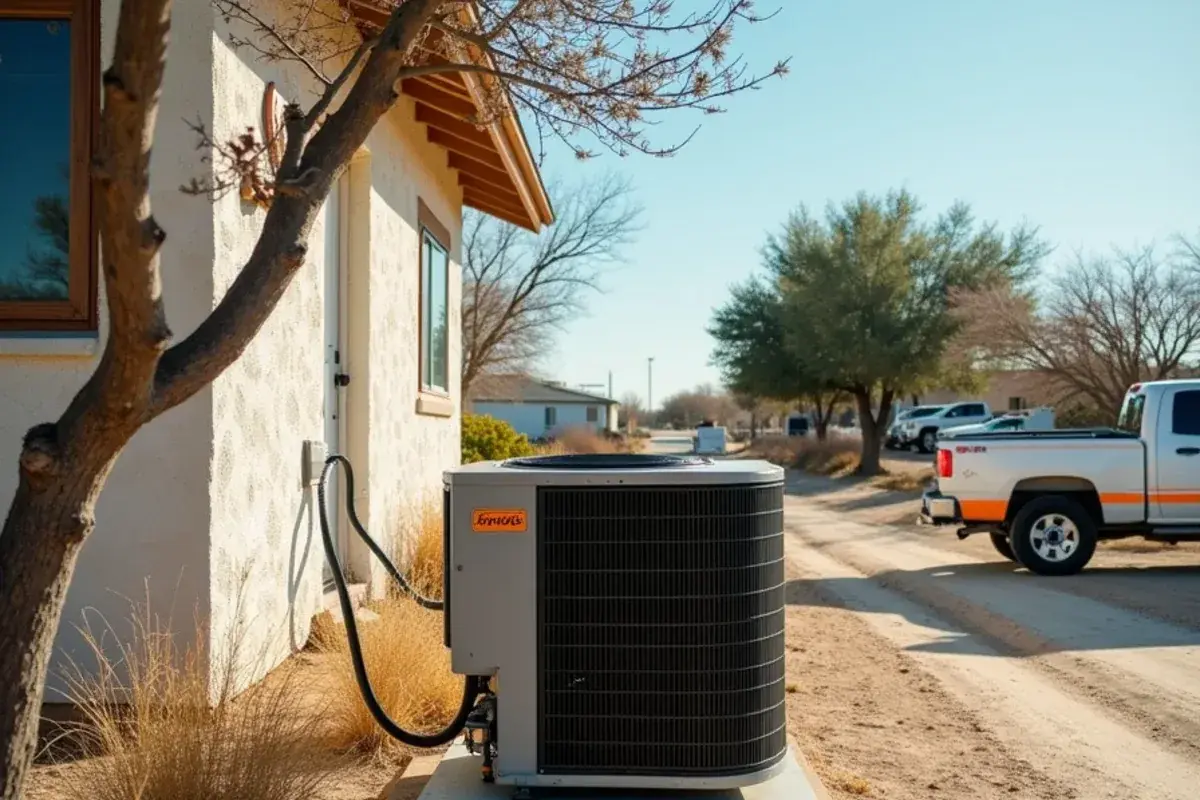
- Clear brush and grass. Follow your manufacturer's clearance guidance, which commonly calls for a couple of feet around the sides and open space above the fan.
- Point mowers and trimmers away. Clippings blown into the fins are a fast way to clog a coil.
- Watch for fire ants. Fire ants seem to seek out live electrical contacts, and a colony packed into a contactor can keep it from closing. If ants have already jammed it, AC repair means cleaning out the compartment and replacing a pitted contactor; bait the yard or call a licensed pest control company to keep them from coming back.
- Check the pad. A sinking or tilted pad lets dirt and water collect against the coil. Level AC condenser pads keep the unit up and out of runoff.
How a proper coil wash works
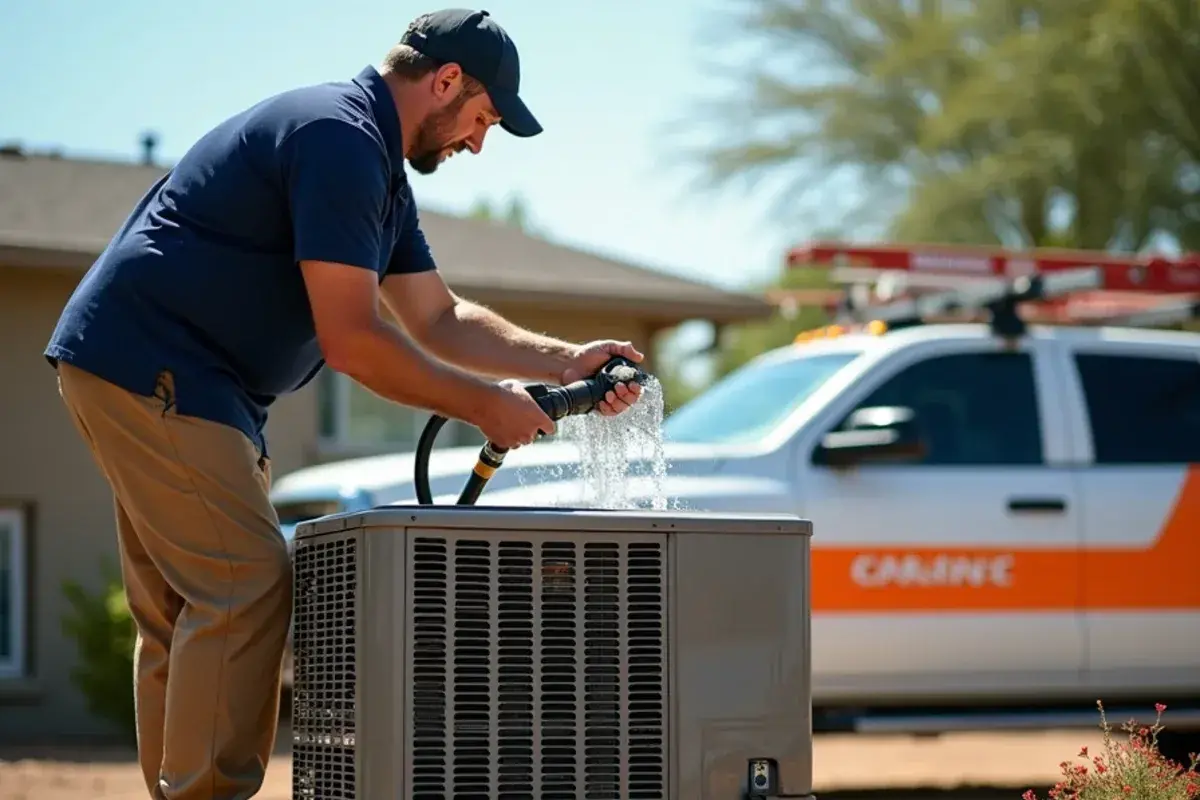
A garden-hose rinse from outside the unit helps, but dust that has been pulled into the coil for months needs more than a spray across the face. A professional AC coil cleaning follows a set routine.
Power down and protect
The disconnect is pulled and the power confirmed off. The technician checks electrical parts for ant debris or corrosion before getting anything wet.
Clear the outside face
Leaves, pods and loose debris are brushed or vacuumed off the fins so they do not wash deeper into the coil.
Apply cleaner and rinse from the inside
A coil cleaner suited to the coil type goes on and sits briefly to loosen dirt. Next the fan top comes off and is set aside, and low-pressure water goes through the coil from inside the cabinet, pushing caliche back the way it came in.
Straighten fins and check performance
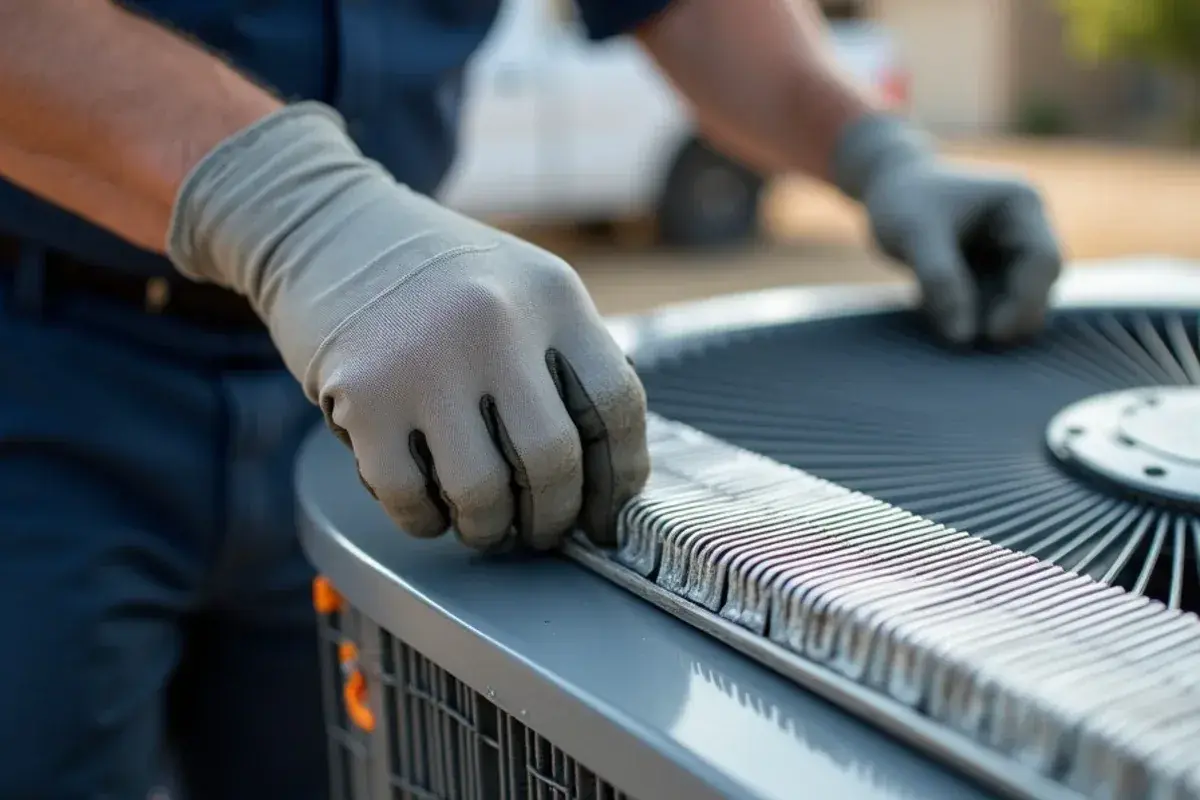
Bent fins are combed straight. After reassembly, the system is run and checked for normal operation so you can see the difference a clean coil makes.
Power off first, always
Never hose down a condenser while it is running or before the disconnect is pulled. Water and line voltage are a deadly combination, and spraying the electrical compartment can damage the contactor and control board.Dirt or something worse? How a technician tells the difference
A dusty coil and a failing compressor can look the same from the yard: a unit that runs all afternoon and never catches up. Before and after a wash, a technician takes a few readings to sort out which one you have.
- Condensing temperature against outdoor air. Gauges on the service valves give the temperature at which refrigerant is condensing in the coil. On a clean coil it sits a set number of degrees above the outdoor air, depending on the equipment. A much wider gap points to a dirty coil, a weak fan motor or too much refrigerant.
- Compressor amps. A clamp meter on the compressor wire shows how hard it is working. Readings that drop after a wash confirm the dirt was the problem. Readings that stay high on a clean coil point toward the compressor, the capacitor or the charge.
- The condenser fan. A fan that turns slowly because of a weak capacitor or worn bearings moves too little air, and no wash will help. Its speed and amp draw get checked too.
- Fin condition. Fins that crumble or flake when touched have corroded, not just clogged. At that point cleaning restores little, and the conversation shifts to the coil or the condenser.
The honest trade-off is in the cleaner. Caliche crust is largely calcium carbonate, and acid-based coil cleaners dissolve it quickly. They also attack thin aluminum fins, and repeated use thins them over the years. Many newer condensers use all-aluminum microchannel coils, where equipment makers commonly call for plain water only, at low pressure. A slower rinse with the right product for the coil keeps it working longer, even if it takes more time.
Fitting coil care into a maintenance routine
Coil washing works best as part of regular AC maintenance, where the technician also checks the capacitor, contactor, drain line and refrigerant operation. A spring visit catches a season of winter dust before the heat arrives. Homes on caliche roads or near open brush often benefit from a second wash mid-summer.
Between visits, glance at the coil every few weeks. If you can no longer see light through the fins on the side facing the road or prevailing wind, it is time to wash it.
Clean fins, steady cooling
Caliche dust is part of life in Starr County, and you cannot stop it from reaching the outdoor unit. What you can control is how long it stays there. Keep brush trimmed back, keep clippings away, and get the coil washed before the hottest months, and the system will cool more steadily, use less power and stay clear of avoidable breakdowns. If your outdoor unit is wearing a tan coat already, call 956 Multi Service at (213) 423-7827, tell us your road and town, and we will set up a coil wash.