
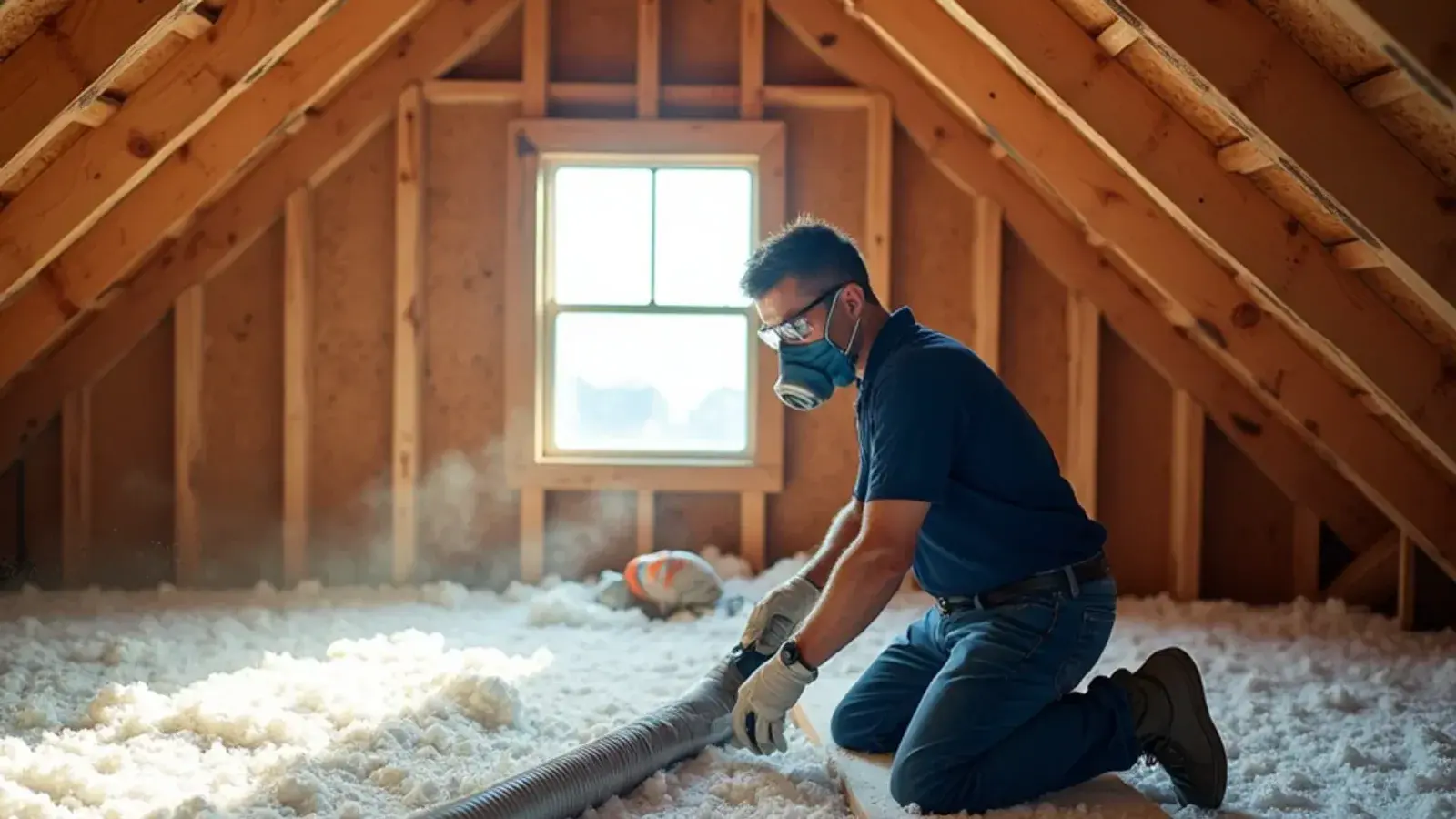
Attic insulation in Rio Grande City has an easy test: on a July afternoon, put your hand flat on the ceiling of a back bedroom. If it feels warm, heat from an attic that can climb well past the outdoor temperature is soaking straight through into the room, and your air conditioner is fighting it all day. Adding insulation, sealing the leaks under it, and dealing with roof heat directly are some of the most practical ways to make the house easier to cool.
We blow in new insulation over existing layers, air seal the attic floor first, install radiant barrier and fit solar or electric attic fans where they make sense. Because ducts in most local homes run through the attic, we also look at their condition while we are up there.
How much insulation is enough for a South Texas attic?
Insulation is rated in R-value, a measure of how well it slows heat. Rio Grande City sits in a hot climate zone, and the Department of Energy recommends roughly R-30 to R-60 in attics for zones 2 and 3. Homes that already have a few inches would add around R-25 to R-38 on top.

The quickest check is visual. If you can see the tops of the ceiling joists, the layer is too thin. Loose fill also settles over time, and areas disturbed by roof leaks, rodents, or past electrical and AC work are often bare in patches.
| What you see in the attic | What it likely means |
|---|---|
| Joist tops visible, insulation thin and gray | Well below the recommended range, top-up needed |
| Even layer above the joists, but bare spots near the hatch or air handler | Fill the voids, then add depth |
| Wet, stained or crushed insulation | Fix the roof or drain leak and remove damaged material first |
| Droppings, tunnels or nesting | Pest cleanup before new material goes in |
Prep work before the first bag is blown
New insulation over a leaky ceiling only does half the job. Warm attic air leaks into the house through gaps around wires, plumbing vents, light fixtures, wall tops and the attic hatch. Sealing those first keeps that air out.

Before blowing, we also:
- Install baffles at the eaves so insulation does not bury the soffit vents.
- Keep required clearance around recessed lights not rated for insulation contact, flues and any fuel-burning appliance.
- Make sure bathroom exhaust fans vent outside rather than into the attic.
- Weatherstrip and insulate the attic hatch or pull-down stairs.
- Staple depth markers to the trusses so the finished level can be checked later.

Leaky ductwork spotted during the inspection is easier to reach now, so duct sealing is best done before the new layer buries the joints.
How an insulation day runs
- Inspection. Current depth gets measured in several spots, wet or pest-damaged patches are noted, and the ducts and air handler get a look.
- Written plan. Target R-value, material, sealing scope and any removal, priced before the work is booked.
- Early start. Work begins in the cooler morning hours, with drop cloths under the hatch and walk boards laid across the joists.
- Seal and prep. Top plates and penetrations are sealed, then baffles, clearances and depth markers go in.
- Blow to depth. Material goes in evenly to the target, checked against the markers, with extra over spots that tend to run thin near the eaves.
- Close out. The hatch is weatherstripped and insulated, the house is cleaned up, and you get a receipt listing area, depth and R-value.
Blown fiberglass or cellulose for the attic floor
Both materials are blown through a hose to an even depth over the ceiling. The choice comes down to the attic and your preferences.
| Blown fiberglass | Blown cellulose | |
|---|---|---|
| Made from | Spun glass fibers | Recycled paper treated for fire and pests |
| Depth needed for a given R-value | More | Less, it is denser |
| Settling | Less | More, so it is blown a little deeper |
| Moisture | Does not soak it up | Can absorb water from a roof leak |
| Weight on the ceiling | Lighter | Heavier |
Batts still make sense for small areas such as a knee wall or a new room addition before the drywall goes up.
Radiant barrier: where it pays off
A radiant barrier is a reflective foil sheet installed on the underside of the roof rafters or decking, facing an air space. On a sunny day the roof deck radiates heat down into the attic, and the foil reflects much of it back before it reaches the insulation and ducts.

It helps most in hot, sunny climates like ours and in homes where the air handler and ductwork live in the attic. It is not a replacement for insulation, and foil laid flat on top of the insulation loses effectiveness as dust collects on it, so the rafter install is the one we recommend.
Solar and electric attic fans, used carefully
Attic fans push hot air out through the roof or a gable. A solar fan runs off its own small panel while the sun is out and needs no wiring. An electric fan runs on house power, usually with a thermostat that turns it on above a set attic temperature.

Fans are not always the right answer. If the attic floor is leaky, a fan can pull cool air up out of the house through those gaps, and in homes with a gas water heater or furnace it can interfere with venting. The attic also needs enough intake at the soffits to feed the fan. That is why we seal and insulate first, then decide whether a fan adds anything over good passive ventilation.
What sets the price of an insulation job?
We quote after looking at the attic, because the job depends on:
- Attic square footage and how far the current depth is from the target R-value.
- Whether old, wet or pest-damaged insulation has to come out first.
- How much air sealing the attic floor needs.
- Baffles, hatch insulation and access, including low-pitch roofs with little headroom.
- The material chosen and the radiant barrier area.
- Fan type, and wiring for an electric model.
Attic work is scheduled early in the day when the space is cooler. Material warranties come from the manufacturer. If you are planning to replace your AC soon, insulating first lets the new system be sized for the improved house.
Why homeowners hand the attic to 956 Multi Service
Insulation sits right on top of your ductwork, and 956 Multi Service, a Rio Grande City crew since July 2024, works on both.
- HVAC eyes in the attic. A leaking duct joint, a sweating air handler or a full drain pan gets noticed while we're already up there.
- One crew for the follow-up. The same people patch a stained ceiling or repaint the hatch trim afterward.
- Morning slots. We're open six days a week, 8 to 7 except Sundays, and attic jobs go into the cooler early hours.
- Track record. Forty-one Google reviews so far, averaging 5.0.
- Payment. Pay by cash or by Discover, American Express, MasterCard or Visa; larger projects can be financed.
Insulation codes, receipts and safety rules
Your receipt. The Federal Trade Commission's R-value Rule requires insulation installers to hand over a dated, signed receipt. For blown-in material it must show the area covered, the installed depth, the minimum depth after settling, the R-value and the number of bags, so you can check the job against the quote.
The energy code. Texas's statewide residential energy code is built on the energy chapter of the 2015 International Residential Code, which calls for R-38 ceiling insulation in climate zone 2, the zone covering the Valley. It is written for new homes and additions, and it makes a sensible floor for a top-up too.
Electrical clearances. Recessed lights not rated for insulation contact need open space around them, and a powered attic fan needs its own wiring, which in Texas is work for a TDLR-licensed electrician unless you do it in the home you live in.
Insulation used to qualify for the federal 25C credit, but that credit closed at the end of 2025; your electric utility may still run an efficiency program worth asking about.
Google reviews that mention work like attic insulation
5.0 out of 5 from 41 Google reviews
“Both gentlemen arrived punctually and were exceptionally well mannered and explained the whole process. They diligently completed the service I needed and delivered an exceptional job! I will definitely reach out to them again for any future work I may need. Highly recommend!”
Response from the owner: Thank you 💯
“Great service!! They were very responsive and helpful, and they were able to resolve my issue quickly. I would definitely recommend this company to others.”
“Great work, very detailed, clean and efficient job well done. 10/10 would recommend anyone needing minisplit work or any other work around the house.”
Attic insulation questions from Rio Grande City homeowners?
How much attic insulation does a Rio Grande City home need?
Rio Grande City is in a hot climate zone, and the Department of Energy recommends roughly R-30 to R-60 for attics in zones 2 and 3. For a home that already has a few inches, DOE suggests adding about R-25 to R-38 on top. If the tops of your ceiling joists are visible above the insulation, you almost certainly have less than that.
Does a radiant barrier help in South Texas?
It can, especially in homes where the ductwork or air handler sits in the attic. A radiant barrier reflects much of the sun's heat coming off the roof deck, so the attic runs cooler and the ducts gain less heat. It works best installed under the rafters with an air space facing it, and it supplements insulation rather than replacing it.
How long does it take to blow in attic insulation?
For a typical single-story home, the blowing itself usually takes a few hours. Air sealing, baffles and hatch work add time, and removing old wet or pest-damaged insulation can stretch it into a longer job. We start early because by midafternoon a Rio Grande City attic gets too hot to work in safely for long stretches.
Do I need to remove old insulation before adding more?
Usually not. Dry, clean insulation stays put and new material goes right on top, adding its R-value to what is already there. Old insulation comes out when it is wet from a roof or drain leak, moldy, or soiled by rats or other pests, because covering it traps the problem. Those patches are cleared and the leak fixed first.
Will better insulation let me use a smaller AC?
Possibly, when it is time to replace the system. A better-insulated, better-sealed attic lowers the cooling load that a Manual J calculation measures, and that can mean a smaller unit next time. It is not a reason to replace a working system early. If a replacement is coming soon, insulating first lets the new unit be sized for the improved house.
Still have a question about attic insulation? Ask us directly.
Call (213) 423-7827Where we handle attic insulation
- Attic Insulation in Starr CountyAttics above block and frame homes here climb far past 100°F in summer, so insulation and radiant barrier pay off.
- Attic Insulation in La Puerta, TXSingle-story homes along the US-83 corridor take full afternoon sun, and thin attic layers let it straight through.
- Attic Insulation in West Alto Bonito, TXOwner-built additions often end up with less ceiling insulation than the original rooms, so back rooms run hot.
- Attic Insulation in East Alto Bonito, TXHomes on exposed higher ground take full afternoon sun, so a deeper attic layer cuts AC runtime and bills.
- Attic Insulation in La Grulla, TXOlder frame houses with attic ductwork gain the most when duct sealing and new insulation go in together.
- Attic Insulation in B and E, TXHomes that grow room by room often have uneven insulation from one addition to the next.
- Attic Insulation in Mission, TXOlder citrus-era homes often have settled insulation sitting well below today's recommended depth.
- Attic Insulation in Perezville, TXAging flex duct in hot attics drags down airflow, and a top-up after duct repair keeps the gains.
- Attic Insulation in Palmhurst, TXLarger custom homes with long attic duct runs benefit most from radiant barrier under the roof deck.