
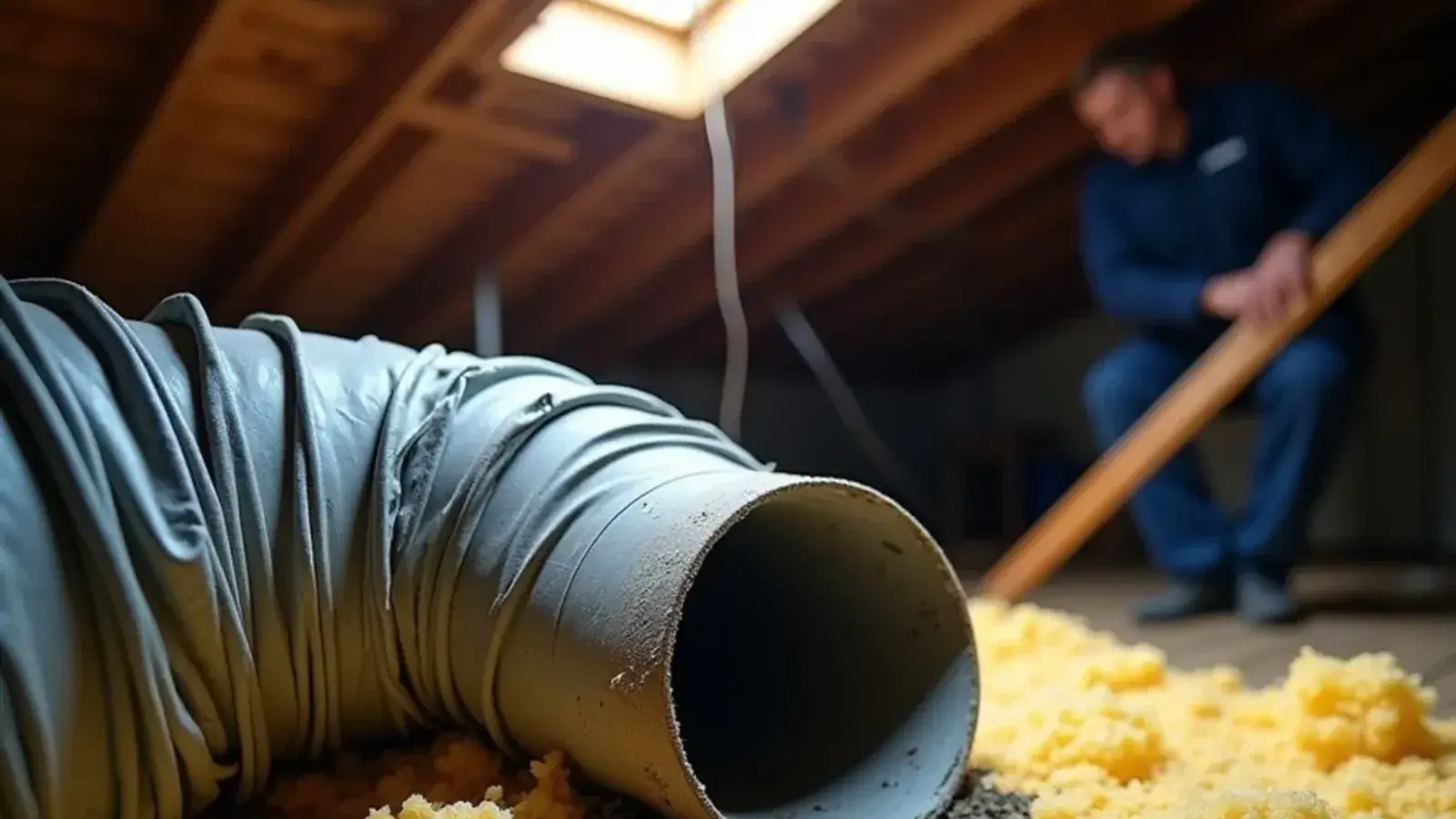
The clearest signs your ductwork is leaking cool air into the attic are rooms that never reach the thermostat setting, weak airflow at some vents, dust that returns quickly, dark streaks on attic insulation near duct joints, and summer bills that keep creeping up. Three or more together usually mean it is time for a duct leakage test.
Those signs are easy to blame on something else. A hot back bedroom seems like bad luck, a high summer bill feels like the weather, and dust seems like part of living in South Texas. But in many Valley homes, the ducts run through an attic that's far hotter than the outdoors on a summer afternoon. When those ducts leak, the air you paid to cool escapes before it reaches the room.
ENERGY STAR estimates that in a typical house, about 20 to 30 percent of the air moving through the duct system is lost to leaks, holes and poor connections. Here's how to tell whether your home is one of them.
Warning signs you can notice from inside
You don't have to go into the attic to suspect a duct problem. Look for these patterns:
- Hot rooms in the house that never match the thermostat, usually at the end of the longest duct runs.
- Weak airflow from some vents while others blow strong.
- High electric bills that climbed over a few summers without a change in how you use the AC.
- Dust that comes back fast after cleaning, or a filter that turns gray in a couple of weeks.
- An AC that runs nearly nonstop on hot afternoons yet the house feels muggy.
- Musty or attic smells when the system starts.
- Sweating or dirty marks on the ceiling around supply registers.
One sign alone may have another cause. Three or four together point strongly at the ducts.
Why attic ducts leak in Valley homes
Leaky air ducts are rarely one big hole. More often it's dozens of small gaps and a few large failures, built up over years.
Flex duct pulled loose
Most Valley homes use flexible duct, a plastic inner liner wrapped in insulation and an outer jacket. It's attached to metal collars with plastic straps. Heat, settling and people moving through the attic can loosen those connections until a duct slips off entirely and blows straight into the insulation.
Tape that has failed
Cloth-backed duct tape dries out and lets go in attic heat. Many older systems were taped instead of sealed with mastic or properly rated foil tape, so seams that were tight on day one open up over time.
Damage from pests, storms and remodels
Rodents chew through duct jackets. Roof leaks after heavy storms can soak and collapse ducts. Owner-built additions often tie into existing ductwork with improvised connections. In older farm-area homes, like many around Perezville, aging flex duct is a frequent cause of weak airflow.
Gaps at the air handler and plenum
The plenum is the sheet-metal box where air leaves the air handler and splits into ducts. Gaps there, or around the return box, leak large amounts of air because pressure is highest close to the blower.
A safe look at your attic
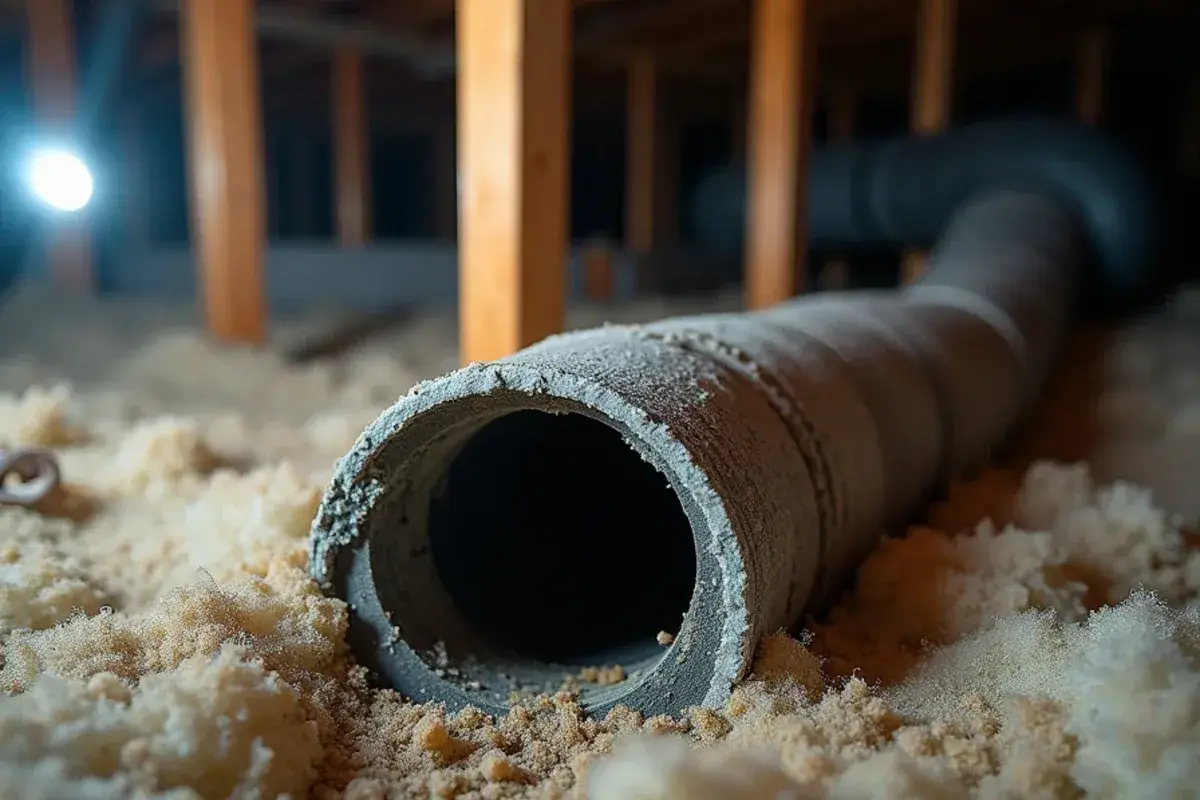
If you can get into your attic safely, a quick visual check tells you a lot. Go early in the morning when it's cooler, wear long sleeves and a dust mask, and step only on joists or boards.
Look for:
- Ducts that have fallen off their collars or sag to the attic floor.
- Torn outer jackets or exposed inner liners.
- Dark, dirty streaks in the insulation around joints.
- Loose or peeling tape at seams.
- Ducts flattened over trusses or pinched by stored items.
If the attic is very hot, has no flooring, or you're unsure of your footing, skip it and leave the inspection to a technician.
How a technician tests for duct leaks
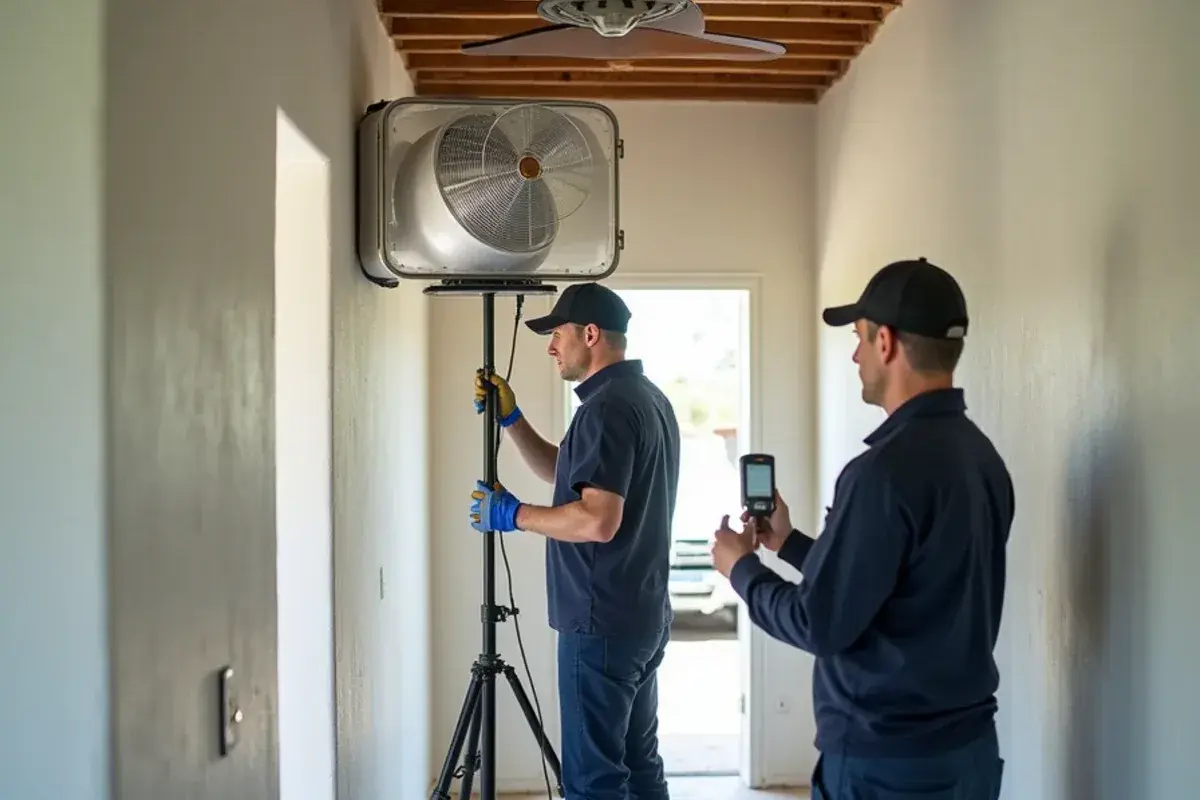
A visual check finds the obvious failures. A duct leak test measures the rest. The technician seals the supply registers and return grilles, attaches a calibrated fan to the system, and pressurizes the ducts. A gauge shows how much air the fan has to push to hold pressure, which tells you how leaky the system is overall. The same test can be repeated after repairs to confirm the improvement.
| What you notice | Likely duct problem | Typical fix |
|---|---|---|
| One room much hotter than the rest | Disconnected, crushed or undersized branch duct | Reconnect, reroute or replace that run |
| Weak airflow at several vents | Leaky plenum or main trunk, restricted flex | Seal plenum and trunk, straighten runs |
| Dust and fast-clogging filters | Return leaks drawing in attic air | Seal return box, joints and filter grille |
| High bills with long run times | Overall leakage plus thin duct insulation | Seal and re-insulate or replace ductwork |
| Sweating around ceiling vents | Cold duct or boot exposed to humid attic air | Seal and insulate the boot and register |
What the readings tell a technician, and which fix is worth it
A duct test produces a number, and that number only helps if you know what to compare it to. Here is how the results usually get read.
- Total leakage vs. leakage to the outside. A basic test measures all the air escaping the ducts. Paired with a blower door, which depressurizes the whole house, the test can separate leaks into the attic from leaks into rooms you already cool. Attic leaks are the expensive ones.
- A benchmark from the energy code. Texas adopted the 2015 International Energy Conservation Code, with state amendments, for new single-family homes in September 2016. For new duct systems it sets total leakage at no more than 4 cubic feet per minute per 100 square feet of floor area at the test pressure, and R-8 insulation on ducts in the attic. Older Valley homes often test well above that, which shows how much room there is to improve.
- Static pressure. A reading across the blower shows whether the ducts are too small or too restricted. Sealing a system that is already starved for airflow can raise pressure further, so this reading decides whether sealing alone is enough.
- Temperature at the register vs. at the plenum. If air leaves the air handler cold and arrives at the far bedroom several degrees warmer, the duct is leaking, uninsulated or lying on a sun-baked roof deck.
The fix then depends on what the numbers and the visual check show:
| Method | Strength | Limit |
|---|---|---|
| Mastic paste on seams and fittings | Long-lasting, handles attic heat, fills irregular gaps | Messy, needs access to each joint |
| UL 181 listed foil or flex-duct tape | Fast and clean on accessible seams | Fails on dusty or oily surfaces |
| Aerosol sealing from inside the ducts | Reaches hidden gaps behind walls and ceilings | Cannot reattach a fallen duct or open a crushed one |
| Section or full replacement | Fixes undersized, torn or poorly routed runs | More attic work and a larger job |
The honest answer is that sealing does not fix a duct that is the wrong size or routed badly. If static pressure is high and one room is starved, the right move may be a larger branch or a new return, not more mastic.
Attic duct repair: seal, insulate or replace
Our duct sealing and insulation work covers the most common fixes:
- Reconnecting and strapping loose ducts to their collars.
- Sealing seams at the plenum, fittings and boots with mastic or listed foil tape.
- Adding or replacing insulation on ducts that have lost their jacket.
- Rerouting ducts that are kinked, pinched or far longer than needed.
When ducts are torn throughout, wrongly sized or falling apart, replacement makes more sense. Our ductwork services page explains when sections or full systems get replaced.

What changes the cost of sealing
There's no single price for duct work, because every attic is different. The main factors are:
- How easy the attic is to reach and move around in.
- How many runs are leaking or damaged.
- Whether ducts need sealing only, or new insulation or replacement too.
- Whether leakage testing is done before and after.
- The size and layout of the home, including additions.

Where we see this most
From our Rio Grande City base, leaky attic ducts are common in older frame houses with long duct runs, like the farm-area homes in La Grulla, about 20 minutes away. They're just as common in newer homes where flex duct was installed loosely or where an addition was tied in later.
Next steps if you suspect a leak
Start with what you can see: note which rooms are hot, check the filter more often, and take a careful look in the attic if it's safe. If several warning signs line up, a duct inspection and leak test will show where the air is going. Sealing the worst leaks and fixing disconnected runs is often the fastest way to make a hot room comfortable again and stop paying to cool the attic. Call 956 Multi Service at (213) 423-7827, tell us which rooms run hot and how old the ducts are, and we will explain what a duct inspection would cover.