
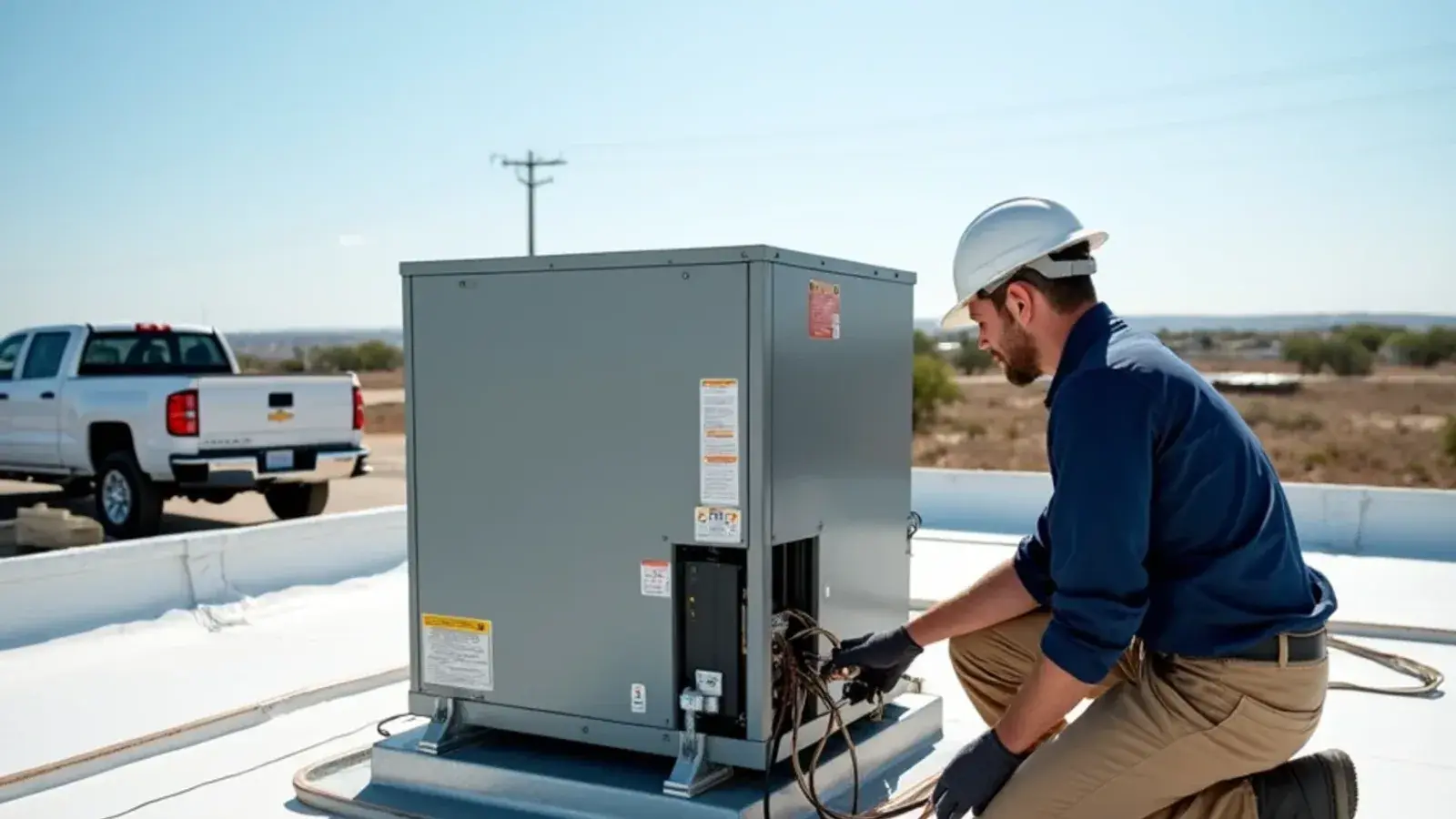
Most rooftop unit problems trace back to six things: a slipping or broken blower belt, dirty coils, an economizer damper stuck open, worn electrical starting parts, low refrigerant charge, and a clogged drain or leaking curb. Each one warns you first, with squealing, weak airflow, a muggy room, a humming cabinet or a stained ceiling tile.
Those problems tend to show up on the worst possible afternoon: a full lunch rush, a packed waiting room, or a sales floor at 100°F outside. Knowing what each failure looks and sounds like on a packaged rooftop unit, sometimes called an RTU or package unit, lets you describe it clearly and keep a small issue from turning into a commercial HVAC breakdown.
This guide is written for owners and managers of shops, offices, clinics and restaurants across the Valley, from strip centers in McAllen to downtown storefronts in Rio Grande City.
How a package unit is put together
A rooftop unit holds the whole system in one cabinet: compressor, outdoor condenser coil and fan, indoor evaporator coil, a blower that pushes air down into the ducts, filters, controls, and often a gas heat section or electric strips. It sits on a curb, a raised frame sealed into the roof, with supply and return openings cut through below it.
Because everything lives outside in the sun, wind and dust, the cabinet takes far more abuse than a home split system. Roof surfaces in a South Texas summer run well above the air temperature, while the unit pulls heat from kitchens, lighting and crowds below.
The failures that show up most on Valley roofs
Belts and blower motors
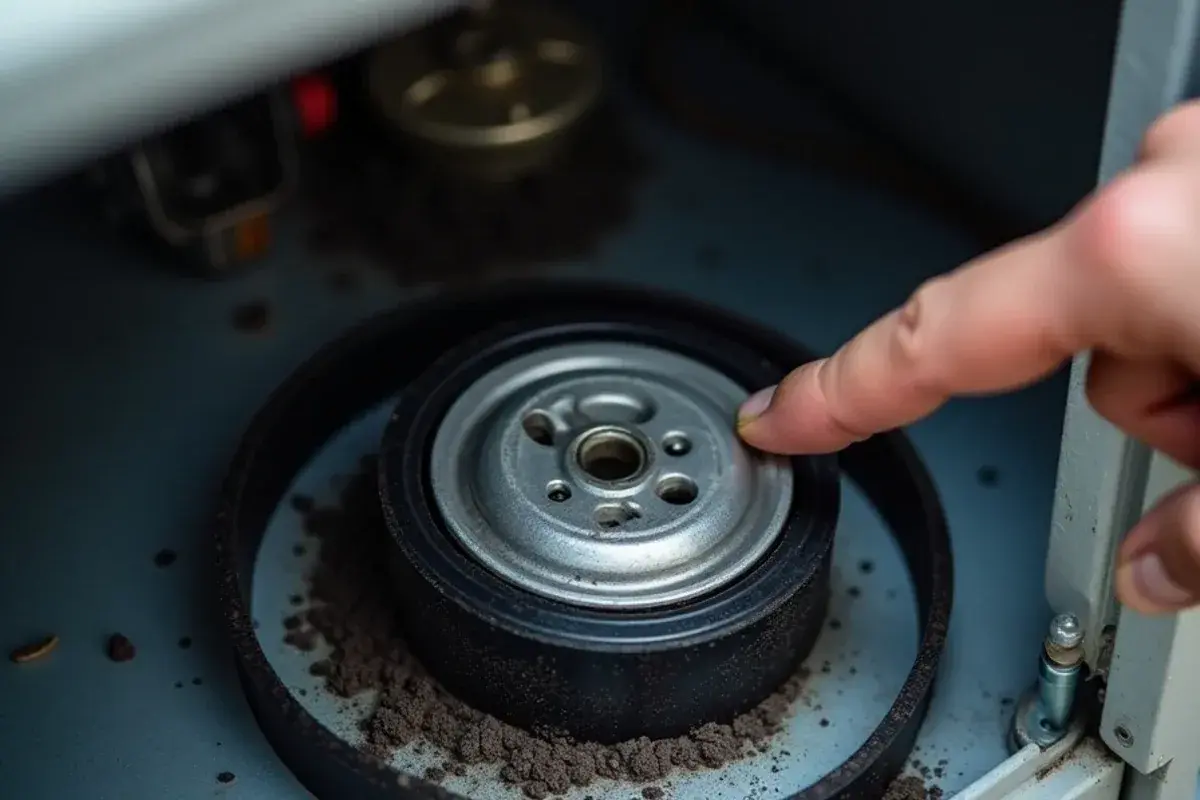
Many older and mid-size units drive the blower with a V-belt that stretches, glazes and cracks with heat. A slipping belt squeals at startup; a broken one leaves the compressor running while almost no air reaches the building. Worn bearings and loose pulleys cause similar airflow loss with a rumble.
Dirty condenser and evaporator coils
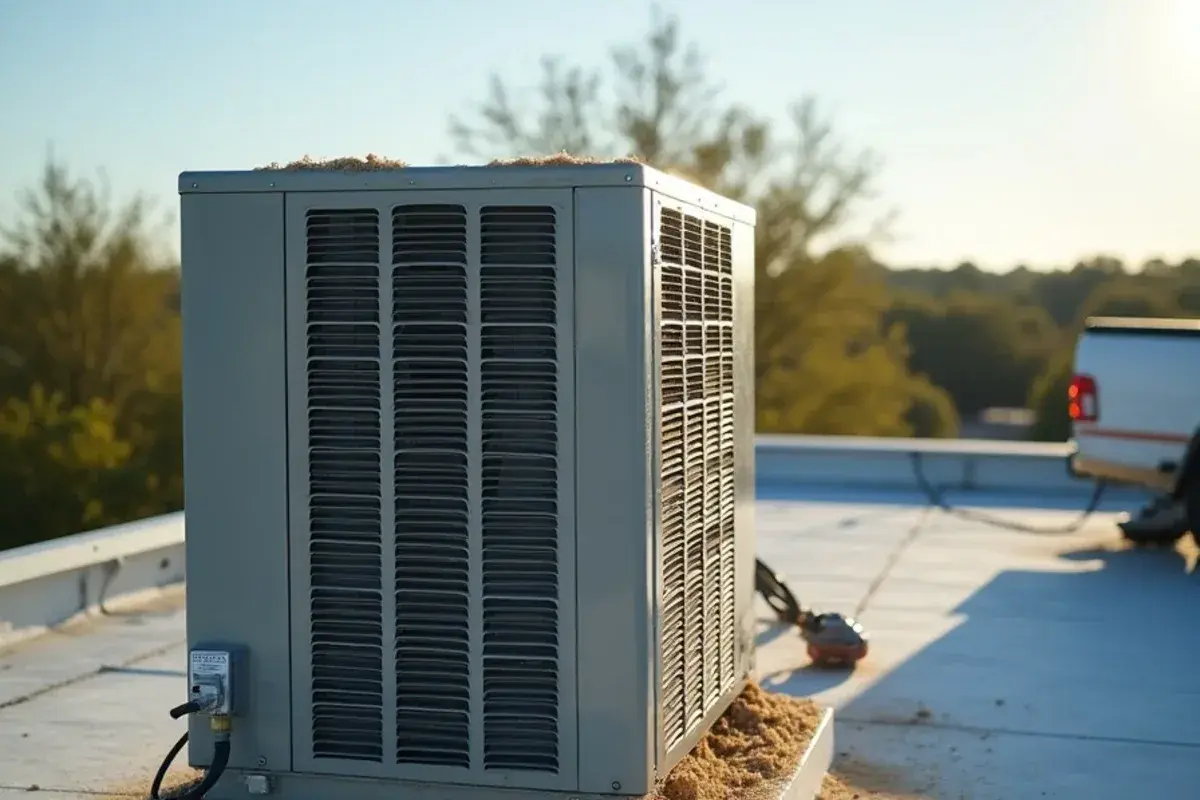
The outdoor coil rejects heat from the building. When it is packed with dust, seed fluff, leaves or kitchen grease, the system cannot shed heat, pressures climb, and capacity drops right when the afternoon peaks. Units trip on high-pressure safeties or run nonstop. Indoor coils clog from missed filter changes and grow slime that blocks the drain.
Economizer faults
Many commercial units have an economizer, a set of dampers that brings in outside air when it is cool and dry enough to help. In the Valley that window is short. If the damper actuator fails or a linkage sticks open in summer, the unit drags hot, humid outdoor air straight into the space. Symptoms: the building feels muggy, the unit never shuts off, and the supply air is cool but not cold.
Electrical parts: contactors, capacitors, controls
Contactors, the relay that powers the compressor and outdoor fan, pit and burn. Capacitors (the parts that give motors a starting kick) weaken in heat. Thermostats, relays and control boards fail after power surges, and summer storms in the Valley produce plenty of those. A unit that hums but will not start, or starts and drops out, often points here.
Low refrigerant charge and iced coils
A rooftop unit that is short on refrigerant rarely announces it. No alarm sounds; the unit simply runs longer, the supply air warms a few degrees, and on a bad day the indoor coil ices over and airflow collapses. Frost on the suction line at the cabinet, or water pouring from the unit after it shuts off, are the visible clues. Low charge always means a leak somewhere, often at a brazed joint, a vibrating capillary tube or a corroded coil, so adding refrigerant without finding it only buys a few weeks.
Refrigerant leaks and compressor strain
Vibration on a roof works fittings loose and rubs tubing. A slow leak shows up as gradually weaker cooling, ice on the suction line, or a compressor that runs hot. Refrigerant work requires EPA Section 608 handling and should be done by a TDLR-licensed contractor; you can search any company's licence on the TDLR website.
Roof leaks and condensate
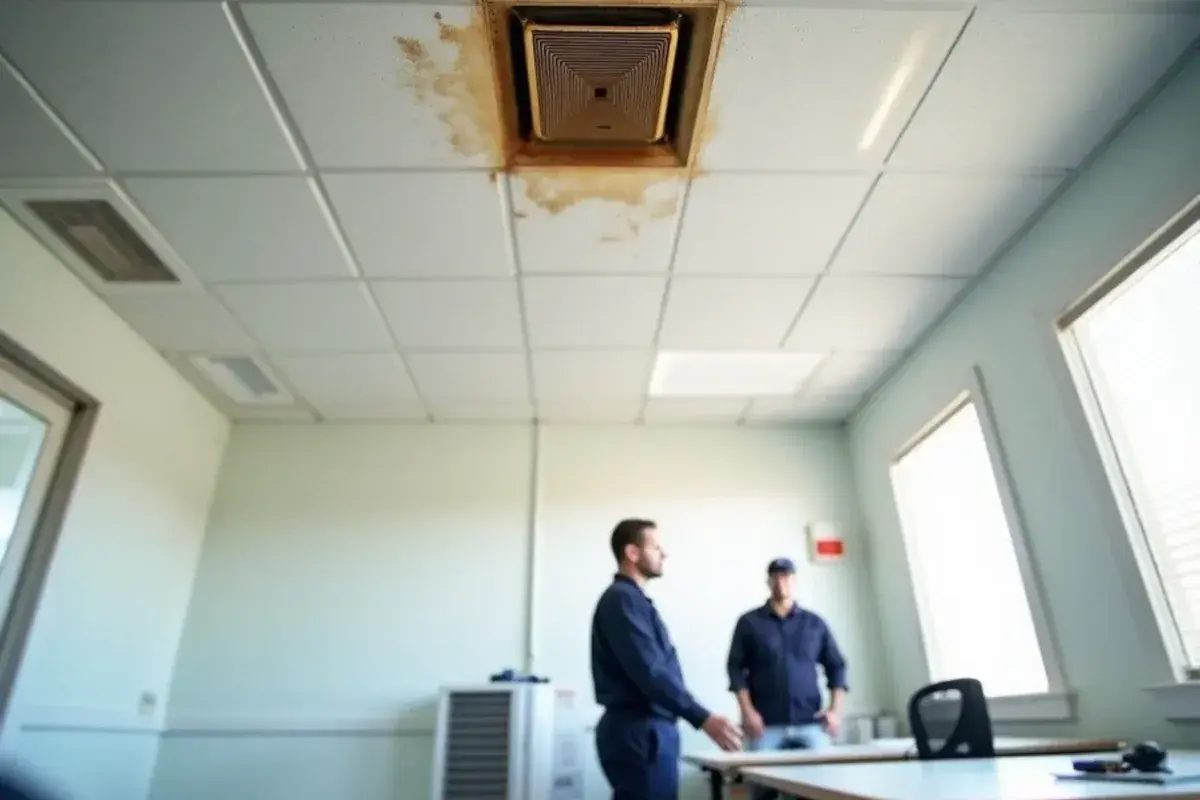
Water inside the building near a unit usually comes from one of three places: a failed curb seal or flashing, a clogged condensate drain overflowing the drain pan, or rain blown in through a missing panel. Act before mold and roof decking damage follow.
Symptom guide for rooftop units
| What staff notice | Likely cause | How soon to act |
|---|---|---|
| Air coming out but not cold, unit runs nonstop | Dirty condenser coil, low refrigerant, economizer stuck open | Within a day or two |
| Very weak airflow at the vents | Broken or slipping belt, clogged filter, failed blower motor | Same day; compressor can freeze |
| Squealing at startup | Glazed or loose belt | Schedule soon |
| Unit hums but won't start | Weak capacitor, burned contactor | Same day; motors can overheat |
| Building feels sticky and damp | Economizer fault, oversized unit, fan set to run continuously | Within the week |
| Water stain or drip under the unit | Clogged condensate drain, curb or flashing leak | Promptly, before ceiling damage |
| Burning or electrical smell | Failing motor or wiring | Shut off and call now |
Checks an owner or manager can do
Useful information starts below the roof.
- Thermostat: confirm cool mode, the setpoint, the fan setting and that no schedule was changed.
- Breakers: see whether a breaker for the unit has tripped. A single reset is fine; a second trip means leave it alone and call.
- Filters: check the log for the last change; overdue filters drive many airflow complaints.
- Vents and returns: make sure stock, displays or furniture are not blocking return grilles.
- Notes for the technician: when the problem started, which zones are affected, and any sounds or smells.
With safe, permitted roof access, a look can confirm whether the outdoor fan spins and the coil is matted. Do not open electrical panels.
Why Valley conditions are harder on RTUs
Three local factors shorten the life of rooftop units here. Long cooling seasons age belts and capacitors faster than in milder climates. Caliche and field dust from open lots and farm ground load coils quickly, especially in the drier western Valley. And humid stretches near the river keep the evaporator pulling water, so drains and pans need regular attention.
Shopping centers and offices around McAllen tend to have rows of units on one roof, often of mixed ages. Older storefronts in smaller downtowns, along with buildings in eastern towns like Mercedes and the rest of Hidalgo County, may have a single aging unit carrying the whole space with no backup.
What does a technician actually measure on the roof?
A no-cool call on a rooftop unit is worked through in the order the unit runs: thermostat call, controls, blower, economizer, condenser fan, then compressor. Readings matter more than first impressions.
- Temperature split. Return air versus supply air at the unit. A narrow split says the unit is moving air but not removing enough heat.
- Amp draw. Blower, condenser fan and compressor amps against the nameplate.
- Refrigerant pressures, superheat and subcooling. These show whether the charge is right for the conditions that day. Logged readings from earlier visits make them far more useful.
- Economizer stroke test. The technician drives the damper actuator open and closed and watches the blades move. A damper that reads "closed" on the controller but hangs open on the roof is a common find.
- Static pressure and filters. A pressure reading across the filter bank and coil shows whether the blower is fighting a restriction.
- Drain and curb. Water in the pan, slime in the trap, and the condition of the curb gasket and flashing.
Honest trade-offs owners should hear
- Topping off is not a repair. Refrigerant handling falls under EPA Section 608 rules, and a recharge without a leak search means paying for the same refrigerant again later in the summer.
- Belt drive or direct drive. Converting an older belt-driven blower to a direct-drive motor removes the belt as a failure point, but only suits some units. Often a new belt, an aligned pulley and correct tension are the better call.
- Coil cleaning method. Heavily loaded coils need a coil cleaner and a low-pressure rinse from the inside out. A pressure washer flattens fins and can do more harm than the dirt did, especially on thin microchannel coils.
- Economizer lockout. In a climate with so few cool, dry hours, some owners ask to lock the outside-air damper at its minimum position. Fresh-air requirements for the building still apply, so that is a setting to discuss, not a shortcut.
Repair or replace an aging unit
A unit that keeps failing is not automatically a replacement. Factors that tip the decision:
- Age and refrigerant type: units still on R-22 depend on a shrinking reclaimed supply, which makes leak repairs harder to justify.
- Compressor or heat exchanger failure: these are the most serious repairs and the most common reasons owners move to replacement.
- Curb and roof condition: a new unit may need a curb adapter or roof work, which affects the timeline.
- Crane access: lifts are scheduled around opening hours, traffic and wind.
- Load changes: a space that changed from retail to restaurant or added equipment may need different capacity.
Ask for a written explanation of what failed and why, so you can compare a repair against rooftop unit service and replacement options with clear information.
Keeping the next breakdown off the calendar
The cheapest repair is the one caught on a scheduled visit. A solid rooftop AC maintenance routine covers filter changes, belt inspection and tensioning, coil cleaning, drain flushing, electrical checks, economizer testing, and a look at the curb and panels. For buildings with several units or mixed equipment, a broader commercial HVAC service arrangement keeps records in one place so patterns show up early.
If your unit is showing any of the warning signs above, write down what you are seeing and call before the next hot stretch. A clear description and a quick visit usually cost far less disruption than a unit that quits completely on a busy afternoon. Call (213) 423-7827, tell us the town, how many units sit on the roof and what your staff are noticing, and you will hear which part of the unit gets looked at first.