

To keep coolers and ice machines running in Valley heat, keep their condenser coils clean, give every unit room to breathe away from fryers and hot walls, replace weak door gaskets, descale ice machines on schedule, and log box temperatures daily. Most summer refrigeration failures start with heat the equipment cannot get rid of.
Commercial refrigeration maintenance in the Rio Grande Valley is mostly a fight against heat. Every cooler, freezer and ice machine moves heat from inside the box to the air around its condenser coil. When that surrounding air is already hot, or the coil is clogged, the equipment runs longer, wears faster and eventually cannot hold temperature. The habits below suit restaurants, convenience stores, meat markets, bakeries and produce businesses that cannot afford a warm box in July.
Why heat is the root of most refrigeration calls
Refrigeration equipment is rated to work within a range of room or outdoor temperatures. A self-contained reach-in parked beside a fryer, an ice machine squeezed under a counter with no airflow, or a condensing unit baking on a west-facing wall all operate near the edge of that range for months.
When condensing temperature climbs, the compressor works against higher pressure, uses more power and produces less cooling. Add a dusty coil or a blocked fan and the margin disappears. That is why the same cooler that runs fine in February starts struggling on a June afternoon.
Reach-in coolers and prep tables
Keep the condenser coil clean
Most reach-ins and prep tables have a small condenser coil behind a front or rear grille. In a kitchen, it collects grease, flour and lint quickly. With the unit unplugged, brush the coil gently in the direction of the fins and vacuum the debris. If it is caked with grease, have it cleaned properly rather than scraping fins flat.
Watch the gaskets
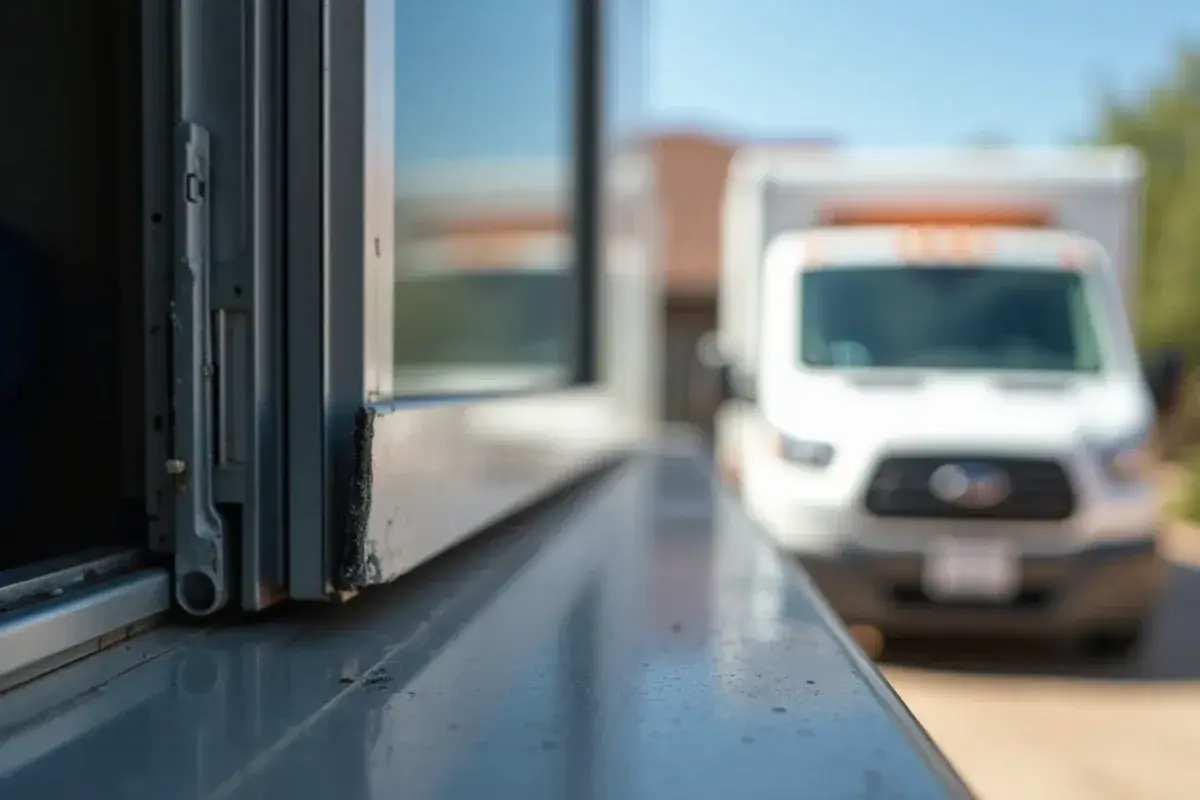
Door gaskets are cheap compared to the energy and product they protect. Close the door on a strip of paper at several points; if it slides out easily, the seal is weak there. Look for split corners, flattened sections and gaskets pulling away from the door.
Load for airflow
Do not pack product against the evaporator fan or block the air path inside the cabinet. A reach-in cooler not cooling evenly, cold at the top and warm at the bottom, often has its internal airflow choked by product.
Walk-in coolers and freezers
Walk-in cooler maintenance has three parts: the insulated box, the evaporator coil hanging inside it, and the condensing unit mounted out back or up top.
- Door and strip curtain: check that the door closes and latches on its own, the heater wire on freezer doors works, and strip curtains are complete.
- Evaporator: look for ice on the coil, check that all fans spin and that the drain line is clear and, in freezers, heated.
- Condensing unit: keep weeds, boxes and trash away; wash the coil on a schedule.
- Floor and panels: soft spots, ice on the floor, or sweating panels point to insulation or seal problems.
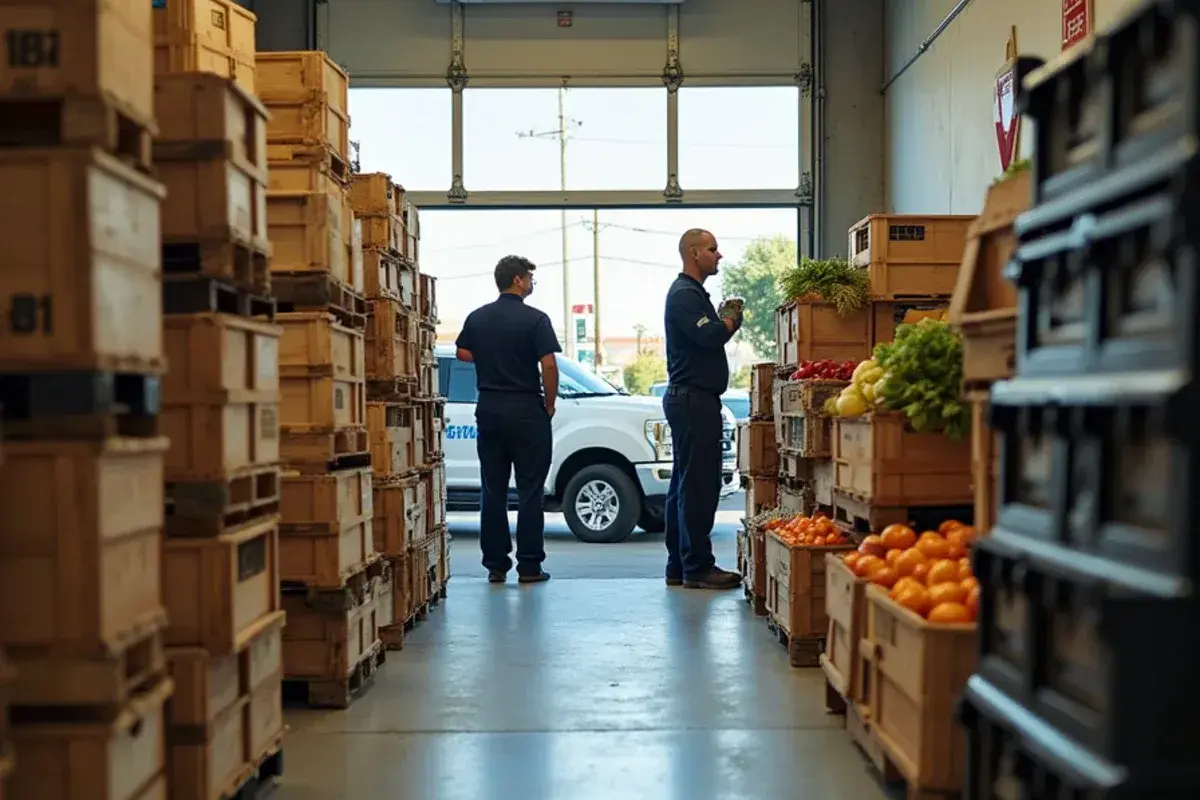
Produce walk-ins need extra thought. Different fruits and vegetables have different ideal temperatures and humidity, and some warm-climate produce is damaged by cold that suits leafy greens. Stack crates with gaps between them and leave space under the evaporator so cold air reaches the whole load.
Ice machines
Ice machine maintenance follows two tracks: the water side and the refrigeration side.
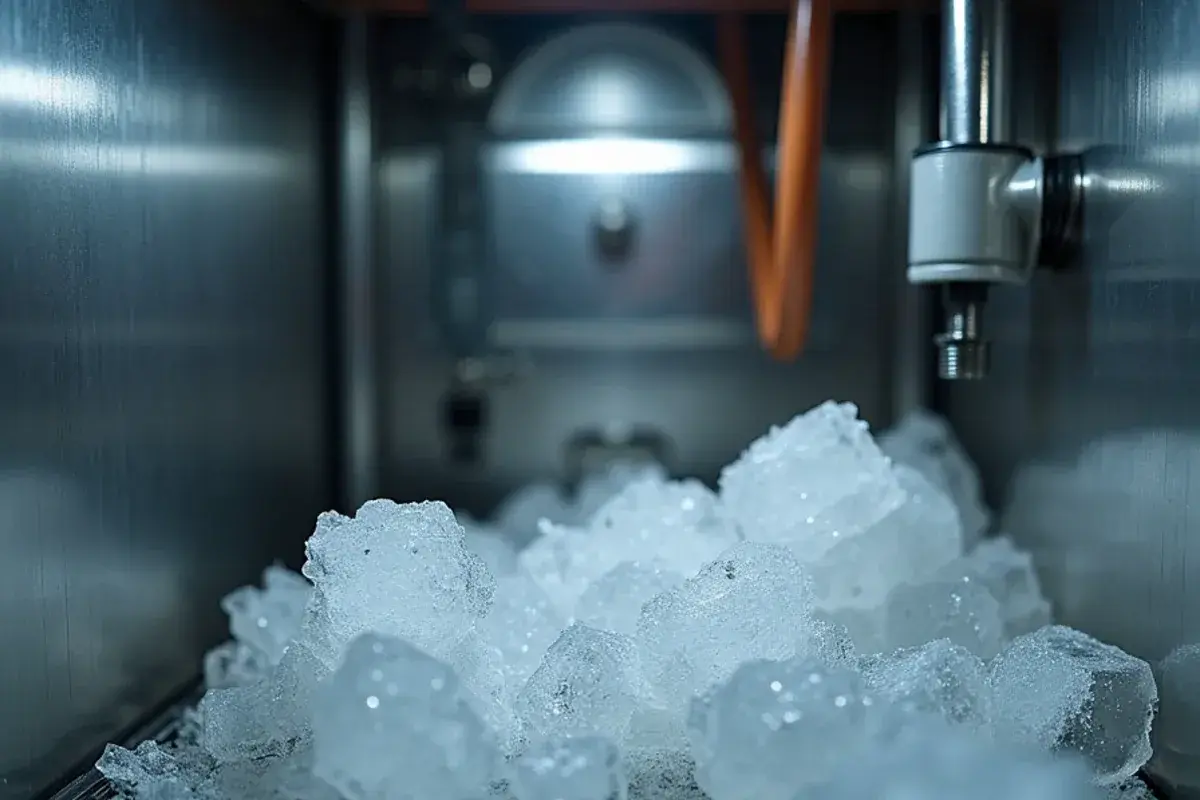
On the water side, minerals in the supply deposit scale on the evaporator plate and in the water distribution system. Scale slows ice harvest, makes thin or cloudy ice, and can trigger error codes. Many parts of South Texas have hard water, so a water filter matched to the machine and a regular descale-and-sanitize cycle are worth it. Slime and mold also grow in the bin and on surfaces the ice touches, so sanitizing is a food-safety task, not only a mechanical one.
On the refrigeration side, an air-cooled ice machine needs space around its intake and exhaust. Units shoved into tight cabinets or placed next to ovens produce much less ice on hot days. Check the air filter monthly and keep the condenser coil clean.
A maintenance rhythm that works
| How often | Reach-ins and prep tables | Walk-ins | Ice machines |
|---|---|---|---|
| Daily | Check thermometer, close doors fully | Check temperature, look for ice or water on floor | Look at ice quality and bin level |
| Weekly | Wipe gaskets, clear vents | Inspect strip curtain and door closer | Wipe bin door and scoop area |
| Monthly | Brush condenser coil in greasy kitchens | Check evaporator fans and drain | Clean air filter |
| Quarterly | Professional coil cleaning and electrical check | Condensing unit coil wash, refrigerant check | Inspect water filter, condenser |
| Twice a year or per manufacturer | Gasket replacement as needed | Defrost system and controls test | Full descale and sanitize |
Keep a temperature log by each unit. The FDA Food Code calls for cold holding of time- and temperature-sensitive food at 41°F or below, and a log shows a slow upward drift long before the box crosses that line.
Placement and shade for outdoor units
Where the condensing unit sits matters a great deal in Valley heat. Give it clear space on every side the manufacturer specifies, keep it off hot asphalt when you can, and avoid placing it where another unit's hot exhaust blows into its intake. A shade structure that does not block airflow helps on west walls. Rooftop condensing units should be clear of kitchen exhaust plumes.
Valley businesses that live on refrigeration
Produce distributors and cold-storage operations around the Pharr international bridge depend on large walk-ins that run hard year-round, and a slow loss of capacity there can affect a whole truckload. Restaurants, meat markets and corner stores near the bridge in Hidalgo mix reach-ins, display cases and ice machines in tight spaces where heat builds up quickly.
For businesses like these, regular commercial refrigeration service combined with a scheduled check of each walk-in cooler or cold room catches dirty coils, failing fans and torn gaskets while they are still cheap fixes.
What a refrigeration technician checks first on a warm box
A cooler that "won't keep up" can have a dozen causes, and a visit goes faster when the checks run in order. These are the measurements that usually settle it:
- Box temperature with a separate thermometer, not just the unit's display, plus a product temperature from the middle of a shelf.
- Air temperature at the condenser intake. If a reach-in is breathing its own exhaust or a fryer's heat, the intake reads far above room temperature and the fix may be placement, not parts.
- Condenser coil and fan. A matted coil or a fan motor turning slowly is the most common find in a Valley kitchen.
- Evaporator and defrost. Ice patterns on the coil, fan operation, defrost timer or heater, and a drain line that actually empties.
- Refrigerant pressures, superheat and subcooling, to tell a dirty coil from a low charge or a failing valve.
- Door heaters, gaskets and closers, because sweating frames and torn seals feed moisture and heat into the box.
Trade-offs owners should understand
- Rated output is not hot-kitchen output. Ice machine production is certified to AHRI conditions of 90°F air and 70°F water, and real output falls when the air or the water is hotter than that. A machine sized right on paper can fall short in a cramped, hot back room.
- Air-cooled or remote condenser. Moving an ice machine or walk-in condenser outside or to the roof takes heat out of the kitchen, but it adds line-set length, roof work and a unit that bakes in the sun. It pays off where the kitchen itself is the problem.
- Filtration or more descaling. A good water filter cuts scale, yet hard water still calls for cleaning on the maker's schedule. Skipping either shortens the machine's life.
- Repair or resize. A box that keeps losing ground in summer, even with clean coils and good seals, may simply be undersized for the door traffic and product load it now carries.
Refrigerant work on any of these systems falls under EPA Section 608 rules, so owner maintenance should stop at coils, gaskets, filters and logs.
Signs you need a technician now
- Box temperature climbing even with the door closed.
- Compressor running constantly or short-cycling on and off.
- Heavy ice on an evaporator coil.
- Water pooling inside a walk-in or under a reach-in.
- An ice machine making little ice, thin ice or no ice.
- Unusual noises: rattling fans, loud buzzing or clicking at startup.
In Texas, anyone opening the refrigerant circuit should hold EPA Section 608 certification and work under a TDLR refrigeration licence. Before hot weather sets in, clean what you can safely reach, write down your temperatures, and book a full inspection so the busiest months do not turn into the most expensive ones. Call (213) 423-7827, tell us the town and which box or machine is struggling, and we can set up a time before the next heat wave.