

Pick a CoolBot room for a small, seasonal space held in the upper 30s for produce, game or drinks, where the door stays shut most of the hour and a day of downtime is survivable. Pick a commercial walk-in when you need freezing, heavy daily loads, fast recovery after warm product, or a room that cannot quit.
The question comes up any time a farm, ranch, food truck or small shop needs cold storage without a big warehouse budget. Both options give you an insulated room you can walk into. The difference is in how they make the cold, how hard they can be pushed, and how long they last under heavy use.
How each system makes the cold
A CoolBot cold room
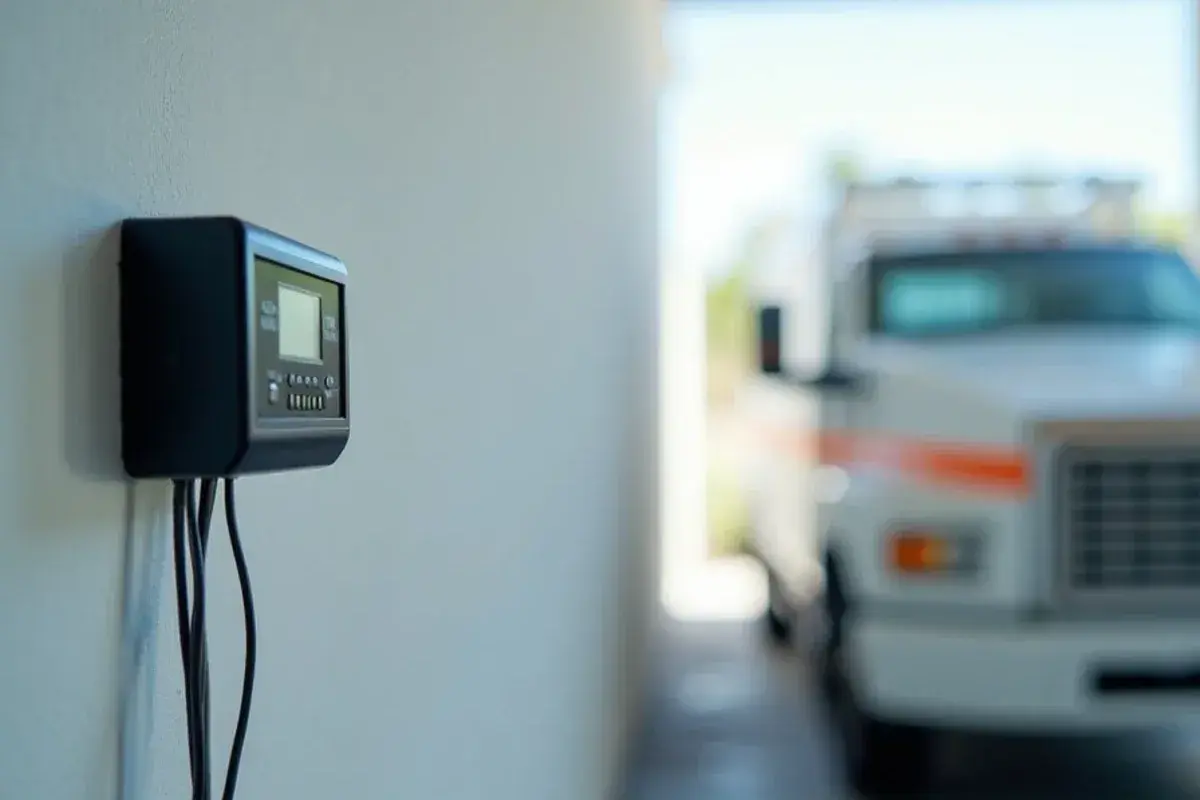
A CoolBot is a controller that works with a standard window air conditioner, or certain mini-splits, mounted in a well-insulated room. On its own, a window AC stops cooling once the room nears about 60°F, a limit built in to keep its coil from icing over. The CoolBot uses a small heater on the AC's temperature sensor so the AC keeps running, plus a room sensor and a sensor in the AC's fins. When the fin sensor sees ice starting, the controller lets the AC rest and thaw. The result is a room that can hold in the mid-to-upper 30s °F.
A commercial walk-in cooler
A commercial walk-in uses prefabricated insulated panels or a built box, an evaporator coil with fans hung inside, and a separate condensing unit placed outdoors or up top. The parts are built for refrigeration temperatures, with defrost controls, refrigeration-rated compressors and expansion devices. The same type of system can be configured as a freezer.

Side-by-side comparison
| Factor | CoolBot room with window AC | Commercial walk-in cooler |
|---|---|---|
| Lowest practical temperature | Mid-to-upper 30s °F | Cooler or freezer, depending on equipment |
| Upfront cost drivers | Controller, AC unit, insulation, door, building | Panels or box, refrigeration system, installation labor |
| Installation | Often owner-built; electrical work by code | TDLR-licensed contractor for the refrigeration side |
| Pull-down after a big load | Slower; limited by AC capacity | Faster; sized for product load |
| Hot-weather performance | AC strains as outdoor heat rises | Designed for higher condensing temperatures |
| Humidity in the room | Tends to run drier, which can dry out produce | Easier to manage with proper coil selection |
| Equipment lifespan under hard use | Window AC is a wear item; replace as needed | Longer-lived components, repairable parts |
| Repair when it fails | Swap or replace the AC unit | Diagnose and repair individual parts |
| Health inspection for food sales | Check with your local health department | Commercial equipment commonly expected |
Temperature range and product needs
Start with what you are storing. Most produce, hanging game and boxed beverages are happy in the mid-30s to low 40s. If anything needs to stay frozen, or you need fine control for specific crops, a commercial system is the only real option.
Think about how much heat goes in at once, too. A trailer of field-warm vegetables or three freshly skinned deer carry far more heat than a load of chilled cases from a distributor. Pulling that heat out fast protects quality, and that is where a sized refrigeration system pulls ahead of a single window unit.
Food going to customers adds rules. Under the FDA Food Code, refrigerated foods that need temperature control must be held at 41°F or colder; both systems can meet that when they are working properly. The concern is margin. On a heavy-load day in August, a CoolBot room has less reserve to recover than a properly sized walk-in.
Reliability, heat and the Valley summer
Window air conditioners are built for comfort cooling, not for running near freezing coil temperatures for months. Under a CoolBot, they work hard and wear faster than they would in a bedroom. Many owners treat the AC as a replaceable part and keep a spare on hand.
South Texas heat also matters. An AC mounted on a sunny wall, with its rear coil packed with dust, gives up cooling capacity on exactly the afternoons the room is working hardest. Commercial condensing units are designed for higher ambient temperatures, though they still need clean coils and shade to perform well.
Power use and electrical supply
CoolBot's maker says its system uses less energy than conventional refrigeration in many small rooms. Real use depends mostly on insulation, door openings, how much warm product goes in, and sun exposure. A poorly insulated room wastes power with either system.
Electrical service is a practical limit. A window AC may run on a standard or 230-volt circuit; a commercial condensing unit usually needs a dedicated 230-volt circuit and sometimes three-phase power. On a remote farm or ranch, the supply you already have can decide the question.
Which one fits your operation
A CoolBot room makes sense when
- The room is small, used seasonally or part-time.
- Product is produce, game or drinks that only need cooling.
- You can build or convert a well-insulated space yourself.
- Short downtime is tolerable while you swap an AC.
A commercial walk-in makes sense when
- You need freezing, or tight temperature control.
- The room is large or loaded heavily every day.
- You sell food and need equipment that meets inspection expectations.
- Downtime would cost more than the equipment.
In riverside farming communities like Garciasville, a small cold room often handles harvest from a few acres, where a CoolBot setup can be enough. Up in the ranch country around San Isidro, hunting camps and ranch houses weigh the same choice for deer season.

Where a CoolBot room hits its limits
The CoolBot's own distributor publishes a frank list of limits, and they match what a technician sees on service calls. Reading them before you build saves a lot of frustration.
- Pull-down slows near the target. A warm room drops into the 40s fairly quickly, then each degree below that takes longer, because a window AC moves far less air across a far smaller coil than a walk-in evaporator.
- Door traffic matters. The guidance flags rooms opened more than about six times an hour as a poor fit unless the AC is upsized and a strip curtain is added.
- Below 36°F gets hard. Holding 34°F takes an oversized AC, better than R-25 insulation and a door that rarely opens. Below freezing is out of reach entirely.
- Insulation standard. Walk-in coolers are typically built to about R-25, which takes roughly four inches of rigid foam, layered with seams staggered and run over the studs rather than between them.
- Power blinks. The controller restarts on its own after an outage, but not every window AC does. A unit without automatic restart can sit off after a summer storm until someone notices.
A technician's honest take on the choice
The most common CoolBot trouble is not the controller. It is a room with gaps at the ceiling line, a door without a real gasket, or an AC sealed into the wall with spray foam that cracked. Fix the envelope and many "weak" rooms hold fine.
A commercial walk-in brings different trade-offs. It recovers faster and lasts longer, but it needs an installer for the refrigerant side, a dedicated circuit, and periodic service on defrost, fans and the condensing unit. When it fails, parts can be diagnosed and replaced instead of swapping the whole cooling unit, but a repair may take a part order. A spare window AC on a shelf, by contrast, can have a CoolBot room running again the same afternoon.
The honest middle ground: a CoolBot room is excellent for what it was designed to do and frustrating when asked to act like a busy restaurant walk-in.
Questions to answer before you buy
- How many square feet of floor space do you really need at peak?
- What is the warmest product you will load, and how much at a time?
- How many times a day will the door open?
- What electrical service is available at the building?
- Can you live with a day of downtime in peak season?
Making either one last
Whichever you choose, insulation and door seals matter most. Insulate ceilings well, tape foam seams, shade the room, and fit a strip curtain. Clean the AC or condenser coil before every hot season, and log temperatures so drift shows up early.
We set up and service both CoolBot rooms and walk-in coolers, and handle the full refrigeration side through our commercial refrigeration service. If you are planning a new cold room, describe what you will store, how much, and how often the door opens. Those three answers usually point clearly to one system or the other. Call (213) 423-7827 with those details and the town where the room will sit, and we can talk through which system fits before you buy panels or an air conditioner.