

Repair your AC when the failure is a small electrical part on a sound system, such as a capacitor, contactor or fan motor. Replace it when an older unit loses its compressor or coil, an R-22 system leaks refrigerant, or repairs keep stacking up. Age, refrigerant type, repair history and comfort settle most Rio Grande City cases.
In Rio Grande City, the repair-or-replace question usually comes up on a 100°F afternoon with a technician standing in your yard. That is not the best moment to think it through, so it helps to know ahead of time which factors carry the most weight. Age, refrigerant type, the part that failed, the system's repair history and how well it has been keeping the house comfortable will settle most cases.
This guide walks through each factor, gives a simple decision table, and explains what to ask the technician before you choose.
Start with the part that failed
Not every breakdown is a major one. Many no-cooling calls trace back to inexpensive electrical parts, and fixing them on an otherwise healthy system is the obvious choice.
| Failure | Typical scale of repair | Leans toward |
|---|---|---|
| Run capacitor or contactor | Small | Repair |
| Thermostat or low-voltage wiring | Small | Repair |
| Clogged drain or float switch trip | Small | Repair |
| Condenser fan motor | Moderate | Repair on a healthy unit |
| Blower motor | Moderate | Repair on a healthy unit |
| Refrigerant leak at an accessible joint | Moderate | Repair, unless the system uses R-22 |
| Leaking indoor or outdoor coil | Large | Often replace on an older system |
| Failed compressor | Large | Often replace on an older system |
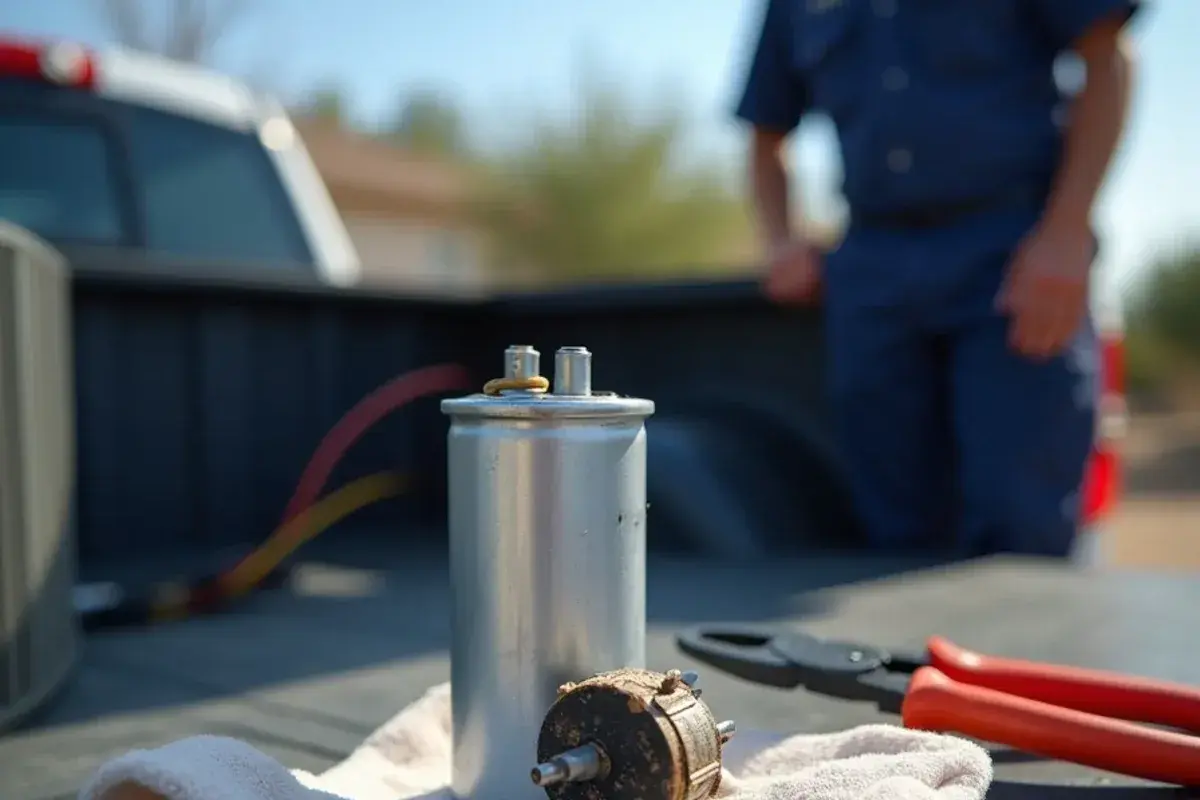
Ask the technician to explain the failure, show you the part if possible, and tell you whether anything else is close to failing. A unit that needs a capacitor today and has a weak compressor tomorrow is a different case from one that simply had a part wear out. For a clear picture of how repairs are diagnosed and quoted, see our AC repair service.
How old is the system?
Air conditioners in South Texas work far more hours each year than units in milder climates. Long, hot seasons, caliche dust packed into condenser fins and frequent starts on humid days all wear on coils and compressors. A system that would last many years up north may be tired sooner here.
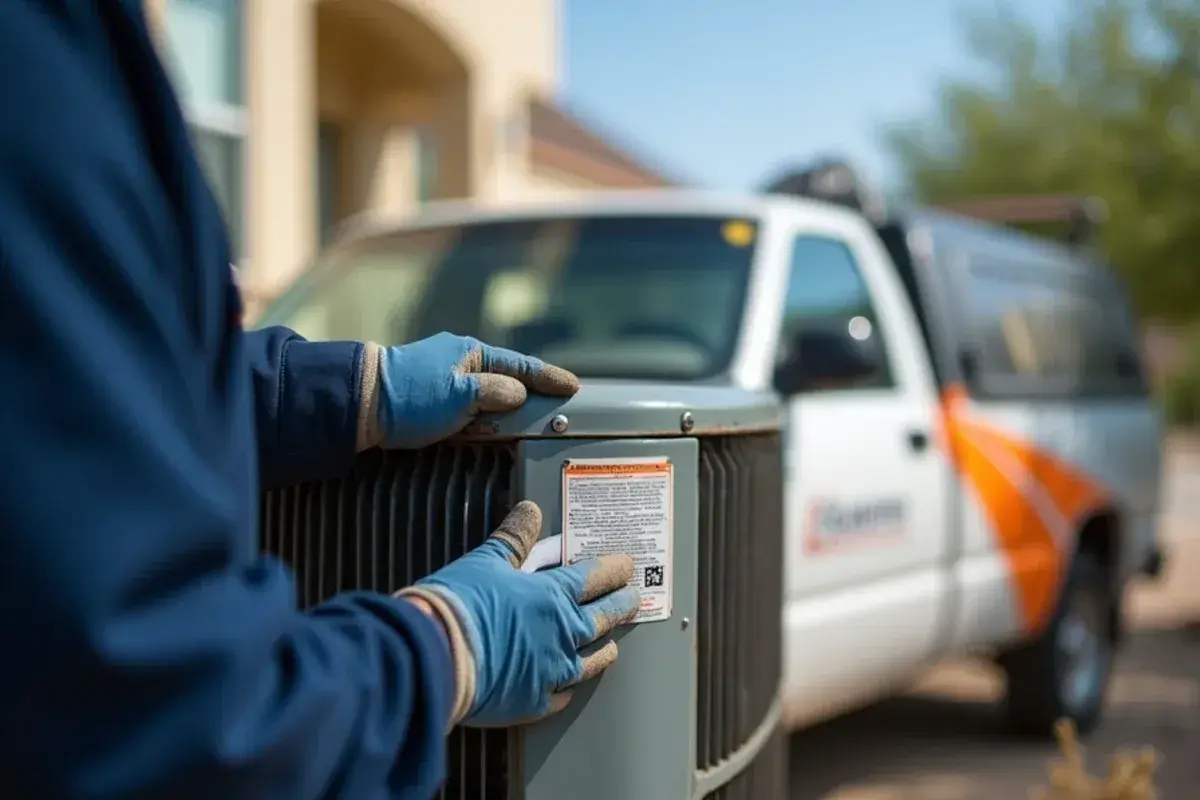
The rating plate on the outdoor unit usually includes a manufacture date or a serial number that encodes it. If you do not know the age, a technician can usually work it out.
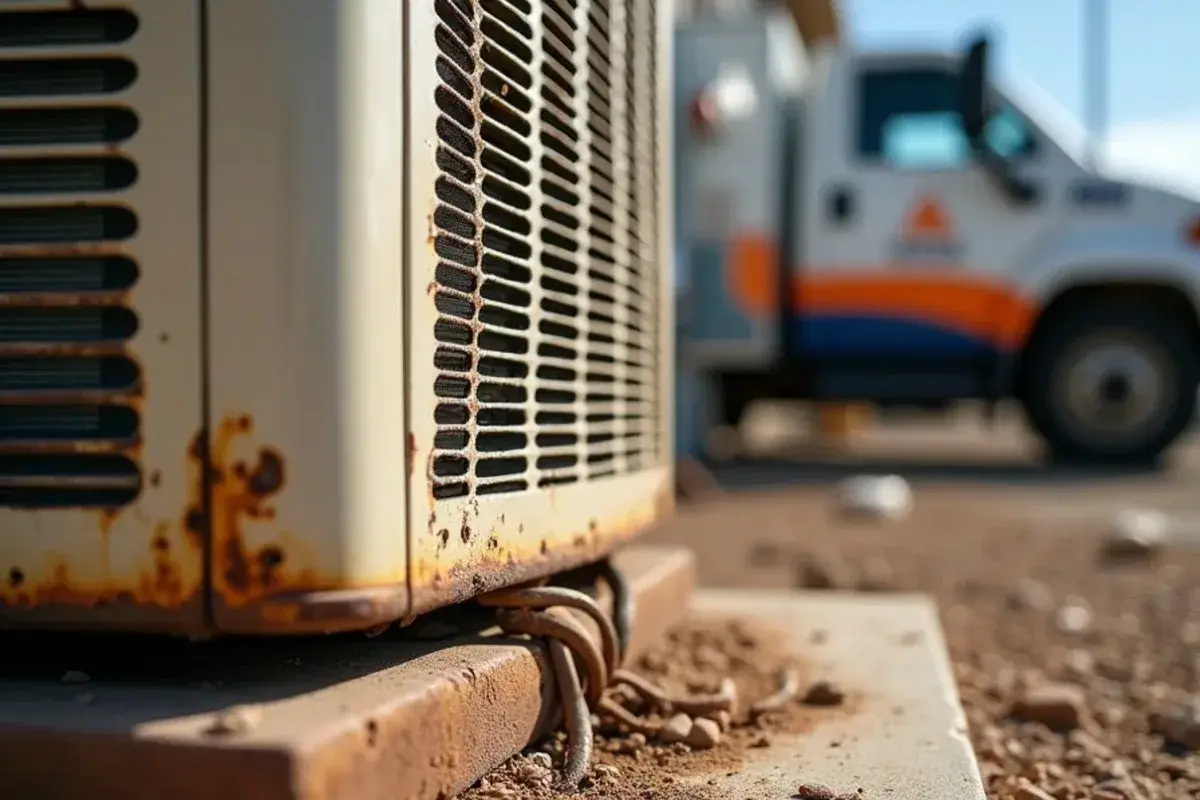
As a general pattern, a newer system with a major failure is worth repairing, especially if parts are still under the manufacturer's warranty. An older system with a major failure deserves a serious replacement quote.
Which refrigerant does it use?
This matters more than many homeowners realize.
- R-22 (Freon): Production in the US ended in 2020. Only reclaimed and stockpiled supply remains, so any repair that involves adding refrigerant is costly and gets harder to source. An R-22 system with a leak is usually a candidate for replacement.
- R-410A: Common in systems from roughly the 2010s until recent years. It is still available for servicing, though new residential systems have moved on to lower-GWP refrigerants.
- R-454B or R-32: Used in new residential systems from 2025 onward.
Many older ranch-style homes in Garceño, along US-83 east of Escobares, still run R-22 systems. When one of those develops a refrigerant leak, a replacement quote is almost always worth getting before paying for more R-22.
The 50 percent rule and other quick tests
A widely used rule of thumb: if the repair would cost about half or more of the price of a new system, replacement usually offers better value. It is a rough guide, and it works best combined with age. A big repair on a young system can still make sense; a moderate repair on a very old one may not.
Other quick tests:
- Repair history. Several repairs in the last couple of seasons suggest the system is wearing out as a whole.
- Comfort. Rooms that never cool, clammy air and long run times point to a system that no longer keeps up.
- Power bills. Steadily rising bills with similar usage often mean declining efficiency.
- Warranty. Check whether the manufacturer's parts warranty still covers the failed component; registration and maintenance records sometimes matter.
A simple decision table
| Situation | Usual direction |
|---|---|
| Newer system, small or moderate repair | Repair |
| Newer system, major repair still under parts warranty | Repair |
| Older system, small electrical repair, cools well | Repair and plan ahead for replacement |
| Older system, compressor or coil failure | Replace |
| R-22 system with a refrigerant leak | Replace |
| Frequent repairs and poor comfort | Replace |
| Repair near or above half the cost of a new system | Replace |
What gets measured before anyone says "replace"
A replacement recommendation should rest on readings, not on the age sticker. These are the tests that separate a tired system from one with a single bad part, and the honest trade-offs that come with each result.
Compressor tests. A compressor that will not start is not always a dead compressor. The technician checks the capacitor and contactor first, then measures the compressor's winding resistance and tests the windings for a short to ground. Amp draw compared with the nameplate rating shows whether a running compressor is struggling. A shorted or grounded compressor is finished, and our compressor repair page explains what replacing one involves. A weak one that starts hard can sometimes be helped with a hard-start kit, but that is a bridge for a season or two, not a cure.
Where the leak is. A leak at a service valve core or a flare fitting is a small repair on almost any system. Pinhole leaks spread across an older indoor coil are a different story, because fixing one often reveals the next. That is when a coil replacement or a full system becomes the realistic choice.
Compressor or coil only, versus a matched system. On a newer system, a compressor or coil still under the manufacturer's parts warranty is often worth replacing on its own, though labor and refrigerant are usually not covered. On an older one, putting a new part into a system with a tired coil, fan motor and contactor spends money on the strongest piece of a weak chain.
The condition around the equipment. Leaky attic ducts, a sinking pad or an undersized electrical circuit affect both choices. If a new system would need duct and electrical work anyway, that belongs in the comparison, not as a surprise later.
The age signal, used properly. ENERGY STAR suggests having a contractor assess an air conditioner or heat pump that is more than 10 years old, especially with rising bills and frequent repairs. With cooling seasons as long as ours, ten years is a fair moment to start comparing, but the readings above should make the final call.
Planning a replacement instead of reacting
If the decision leans toward replacing, you do not always have to do it the same day. If a small repair will get the system running, it can buy time to compare quotes and choose the right size. Our AC replacement service explains what a full replacement includes, from matched coil and line set to pad and thermostat.
This kind of planning is especially useful in neighborhoods where many systems were installed around the same time. In Palmview, subdivisions built in the 2000s and 2010s have builder-grade systems reaching replacement age together. Owners there often benefit from getting ahead of a summer failure instead of waiting for one.
What to ask before you decide
- What exactly failed, and why?
- Are other components showing wear?
- What refrigerant does the system use, and does the repair involve adding it?
- Is the failed part covered by the manufacturer's warranty?
- How does the repair estimate compare with a replacement quote for the right-sized system?
- If I repair now, what is likely to fail next?
Making the call
Small electrical repairs on a sound system are almost always worth doing. Major failures on older equipment, R-22 refrigerant leaks and repeated breakdowns usually point toward replacement. Get both options in writing, weigh them against the system's age and comfort, and if possible, plan a replacement before the next heat wave rather than during it. For a visit that prices both options side by side, call 956 Multi Service at (213) 423-7827 and tell us the system's age and what it is doing.