

Getting a winter-Texan RV or park model AC ready takes a few checks in your first days back: clear pests and debris from the outdoor unit, change the filter, flush the condensate drain, then test cooling and heat pump heating before the first norther. Leave capacitors, refrigerant and defrost testing to a technician.
If you spend the cooler months in the Rio Grande Valley, a park model AC service visit belongs in your first week back. Park model homes, mobile homes and RVs sit closed up through the hottest, most humid part of the year while their owners are away, and the equipment doesn't rest well. By October, the AC and heat pump have been baking in direct sun, collecting dust and providing shelter for every insect in the park.
Winter Texans also use their systems differently from year-round residents. You need cooling for warm fall afternoons, heat for the occasional norther, and both from the same unit. Here's what to check when you arrive, what to leave to a technician, and how a visit works inside a park.
What a Valley summer does to an empty home's AC
While you're gone, the Valley sees months of 90- and 100-degree days with heavy humidity. A home that's closed up, or kept at a high thermostat setting, goes through a few predictable changes.
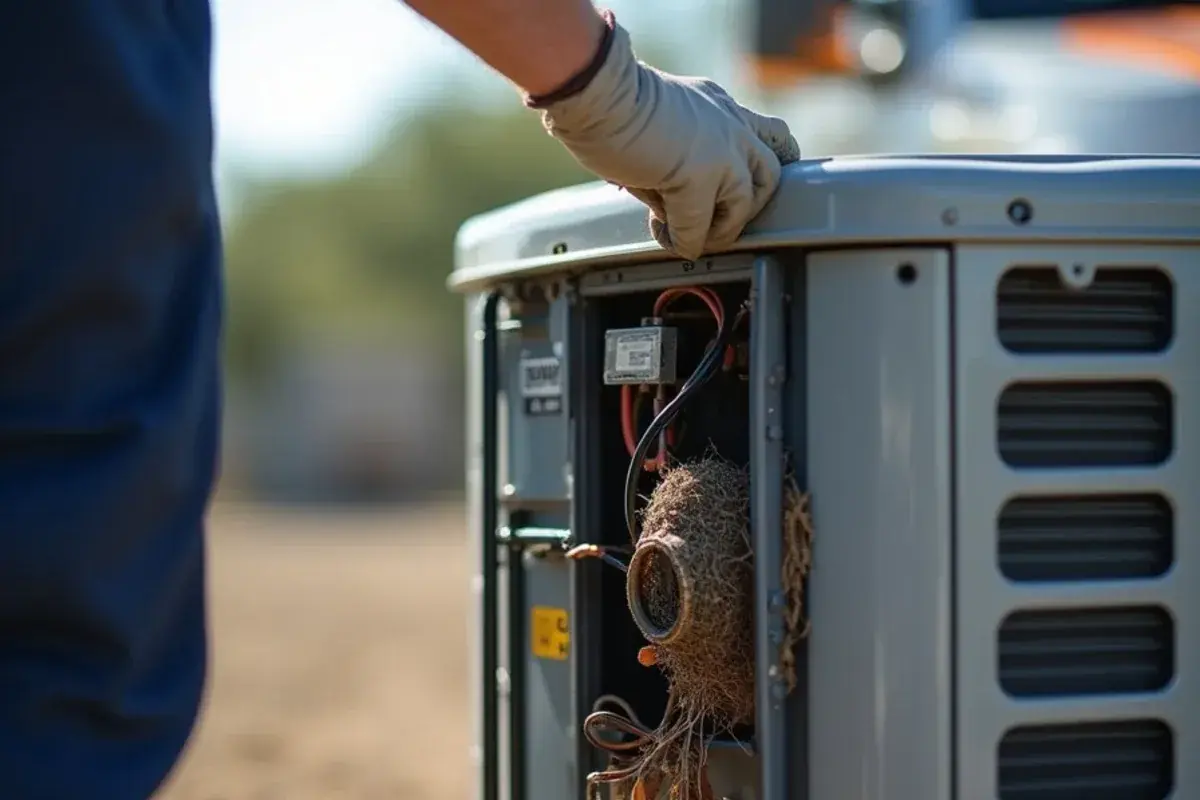
- Pests move in. Mud daubers, ants, wasps and mice find the electrical box and the space under the cover. Fire ants are drawn to the electrical contacts and can short them out.
- Drains grow algae. The condensate drain (the pipe that carries water pulled out of indoor air) stays damp and warm. Slime builds up, and the first few days of heavy use can back water into the pan.
- Capacitors weaken. The start and run capacitors that help motors start are sensitive to heat. One that limped through the summer may fail on the first hard start in the fall.
- Filters and coils get dusty. Even unused systems collect dust, especially near gravel lots and farm fields.
Your first-day checklist
These are safe steps any owner can handle before calling anyone.
- Look at the outdoor unit. Clear leaves, weeds and anything stacked against it. Leave about two feet of open space around it.
- Change the filter. Park models often use small or unusual filter sizes, so bring a spare from home or measure the old one first.
- Check the thermostat. Put in fresh batteries if it uses them, and confirm the clock and schedule are right.
- Run cooling for 15 minutes. Air at the vents should feel clearly cooler than room air, and the outdoor fan should be spinning.
- Then test heat. Switch to heat on a mild afternoon. A brief dusty smell is normal. A burning electrical smell is not, so shut it off at the breaker.
- Look at the drain outlet. Water should drip outside within a while of cooling. No water, or water inside, means the drain needs attention.
Stop and call if a breaker trips, the outdoor unit hums without the fan turning, or you see ice on the copper lines.

Heat pumps in park models and mobile homes
A park model RV is built to the ANSI A119.5 standard and, by the RV industry's definition, tops out at 400 square feet in setup mode, so its heating and cooling equipment is small and works hard for its size. Most park models and newer manufactured homes in the Valley use a heat pump rather than a separate heater. A mobile home heat pump cools all summer and then reverses in winter to pull heat from outdoor air. For a Valley winter, where most days stay mild, that is an efficient way to heat a small space.
What winter Texans should know about a park model heat pump:
- Steam is normal. On cold mornings the outdoor unit may stop, go quiet and puff steam for a few minutes. The unit is reversing briefly to clear frost from its coil, and it resumes heating on its own.
- Backup heat is electric. Many units have heat strips that help on the coldest nights. If the home only warms up slowly on a cold night, the strips may not be working.
- "Emergency heat" is not a boost button. It runs strips alone and costs more to operate. Use it only if the outdoor unit fails.
Our heat pump service page explains what a technician tests on both the heating and cooling sides.
Common problems by home type
| Home type | Usual system | What tends to go wrong after a summer away |
|---|---|---|
| Park model | Small split heat pump, packaged unit or mini-split | Weak capacitor, pest damage in the control box, clogged drain |
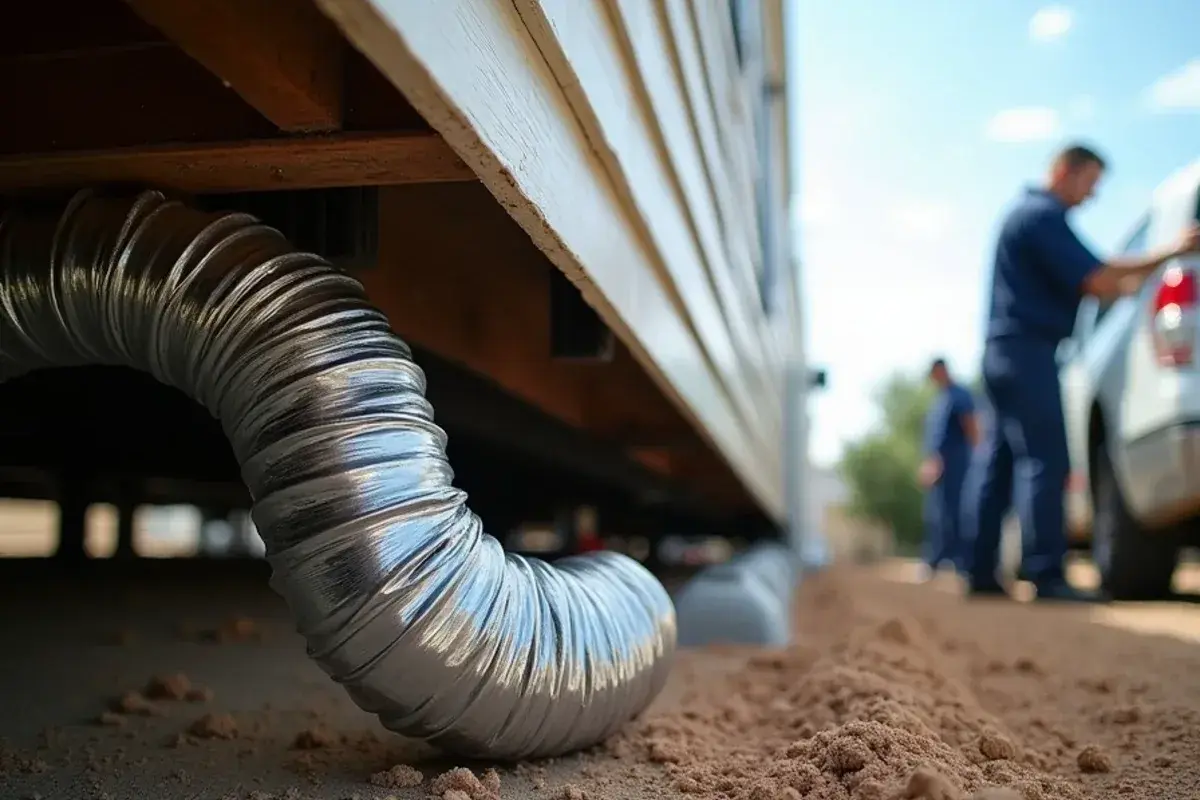
| Single-wide mobile home | Packaged unit or split system with belly ducts | Torn or disconnected under-floor ducts, dirty coil |
| Double-wide mobile home | Split system with crossover duct | Sagging or crushed crossover duct, uneven room temperatures |
| Travel trailer or fifth wheel | Rooftop RV air conditioner | Usually handled by an RV service shop rather than an HVAC contractor |
| Older home with a mini-split | Wall-mounted ductless heat pump | Mold in the blower wheel, blinking error codes, drain issues |
Under-floor ducts deserve a look
Manufactured homes run their supply ducts through the "belly," the insulated space under the floor. Rodents, storms and settling can tear the belly wrap or pull a duct loose. When that happens, cool or warm air pours into the crawlspace instead of your rooms. If one end of the home never gets comfortable, that's a likely cause. Our mobile home AC page covers repairs and replacement options built for these homes.
How a visit works inside a park
Many of the Valley's winter-resident parks are around Alamo, the gateway town to Santa Ana National Wildlife Refuge, and North Alamo, along with Mission, Donna and other towns across Hidalgo County. Parks have their own rules, and a good visit respects them.
- Access. Have your lot number, gate code and any office check-in steps ready.
- Parking. Service trucks need a place to park without blocking neighbors or narrow park roads.
- Timing. Many parks have work hours. Fall is the busiest time to book, so calling soon after you arrive helps.
The technician will check the outdoor and indoor units, clear the drain, test capacitors and contactors, measure temperature difference across the coil, run the heat pump through heating and defrost, and look at accessible ducts. Our Rio Grande City base is about an hour from the Alamo-area parks, so booking a week or two ahead gives us the best chance of a convenient slot.

What does a technician look for in a home that sat closed all summer?
A start-of-season visit on a winter-Texan home is less about cleaning and more about catching the parts that a summer of heat weakened but did not quite kill. These are the readings that usually tell the story.
- Capacitor values. Each capacitor is rated for a specific microfarad value. A meter reading well below that rating means the part is on its way out, even if the unit still starts today. Replacing a weak capacitor in October is far easier than finding one after it fails on a warm November afternoon.
- Contactor and wiring. The contactor is the relay that lets high voltage reach the compressor and fan when the thermostat calls. Pitted contacts, ant debris between them, or rodent chew marks on the thin thermostat wire are common after months of no traffic around the home.
- Drain flow, not just a clear opening. Water poured into the pan should run out the drain line quickly. A slow trickle means slime is still in the trap.
- Temperature split and amp draw. The difference between return and supply air, plus the compressor's current draw, shows whether the system is moving heat as it should or straining on low charge or a dirty coil.
- Heat mode and defrost. The technician switches to heat, checks that the reversing valve changes over, confirms warm supply air, and makes sure the backup strips come on when called.
A low refrigerant reading means a leak somewhere, so the next step is finding it, not just topping it off. On a small park model system, that leak search can decide whether a repair or a replacement makes more sense.
There is also a judgment call on closing up. Leaving the AC running at a moderate setting keeps humidity down, which protects cabinets, mattresses and the indoor coil from mold. The trade-off is that a system running unattended can leak water or fail with nobody home. A float switch on the drain, a thermostat that can send you a temperature or humidity alert, and a neighbor with a key cover most of that risk.
Before you head north again in spring
How you close up in March or April affects what you find in October.
- Clean or change the filter before leaving.
- Ask a neighbor or park staff to check the home occasionally.
- Discuss with your technician whether to leave the AC running at a moderate setting to control humidity, or to shut it off. Each choice has trade-offs for mold, power use and wear.
- Cover nothing tightly. A fully wrapped outdoor unit can trap moisture and invite pests.
A short visit at the start of your stay costs you an hour or two and can save you from a week of sweating through a warm November or shivering through a norther. Run your own checklist the first day, write down anything odd, and call for a full check before the parks get busy. Call 956 Multi Service at (213) 423-7827 with your park, lot number and what the unit is doing, and we will set up a time that fits the park's rules.