

Concrete patio cost in Starr County comes down to a handful of choices: slab size and thickness, reinforcement, how the caliche or clay base is prepared, truck access and the finish. Settle those first, pour at first light to beat the heat, keep the slab damp while it cures, and a small patio or pad lasts for many years.
Those same decisions shape how long the slab holds up, and the ground and the heat here add their own wrinkles, so a little planning goes a long way.
This guide is for homeowners planning patios, sidewalks, shed or tank slabs, steps, small carport pads and equipment pads.
Know your ground first
Most of Starr County sits on caliche, a calcium-rich layer that can be rock-hard in one spot and crumbly or full of voids a few feet away. There are also clay pockets, sandy river-bottom soils near the Rio Grande, and fill dirt left from earlier building. Each behaves differently under a slab.
- Caliche can make a good base when it is broken up evenly and compacted. Hard ledges and soft pockets under the same slab cause uneven support.
- Clay swells when wet and shrinks when dry. Slabs on clay crack if the base and drainage are not planned for that movement.
- Loose fill settles. Any slab poured on uncompacted fill will sink in spots.
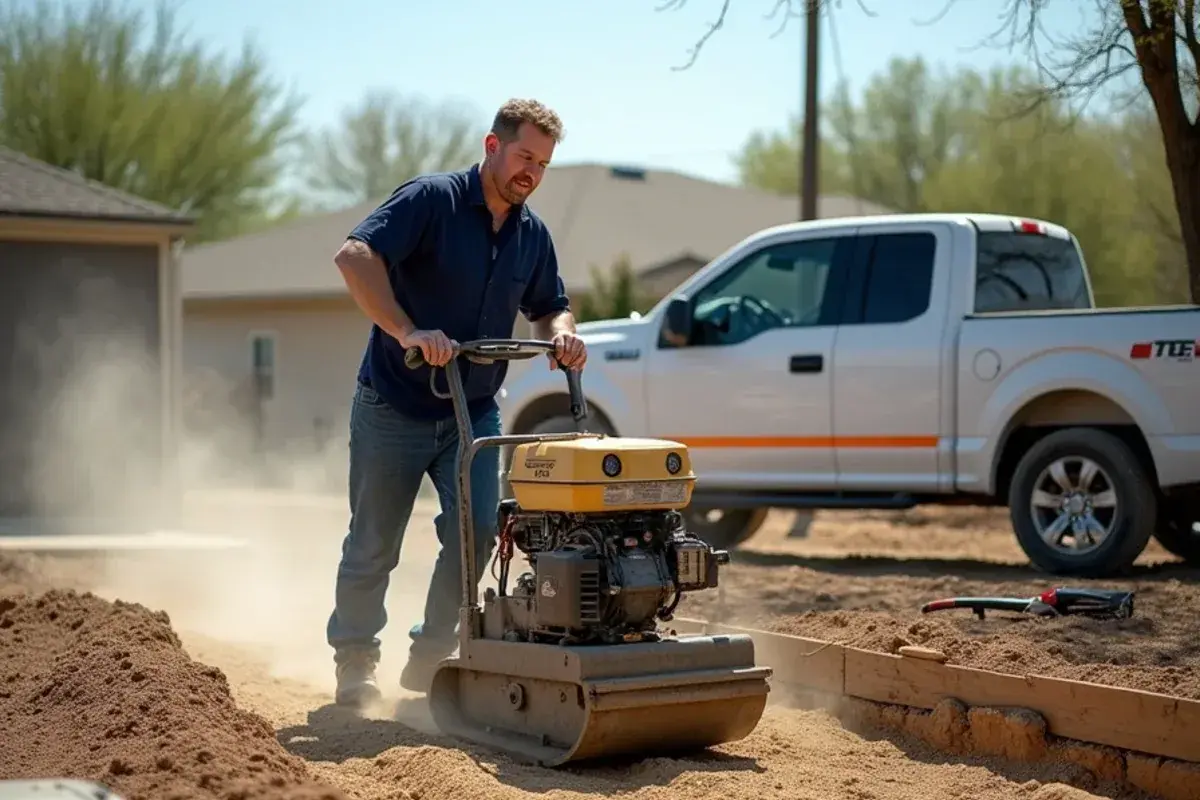
Good preparation means removing grass, roots and soft soil, adding and compacting a suitable base, and making sure water will run away from the slab and the house.
Thickness and reinforcement by project
| Project | Common thickness | Reinforcement | Watch-outs |
|---|---|---|---|
| Patio or sidewalk (foot traffic) | About 4 inches | Wire mesh, rebar or fiber | Slope for drainage, control joints |
| Shed or storage building slab | 4 inches or more | Rebar grid | Thickened edges under walls |
| Water tank or hot tub pad | Thicker than a patio | Rebar grid | Weight when full is very high |
| Carport or light vehicle pad | 5 to 6 inches | Rebar grid | Vehicle loads at edges |
| AC or equipment pad | About 4 inches | Light reinforcement | Height above grade, level surface |
| Steps and landings | Varies by rise | Rebar ties to existing slab | Even risers, non-slip finish |
These are general starting points. Heavier loads, soft soil or tight drainage call for more.
Mesh, rebar or fiber
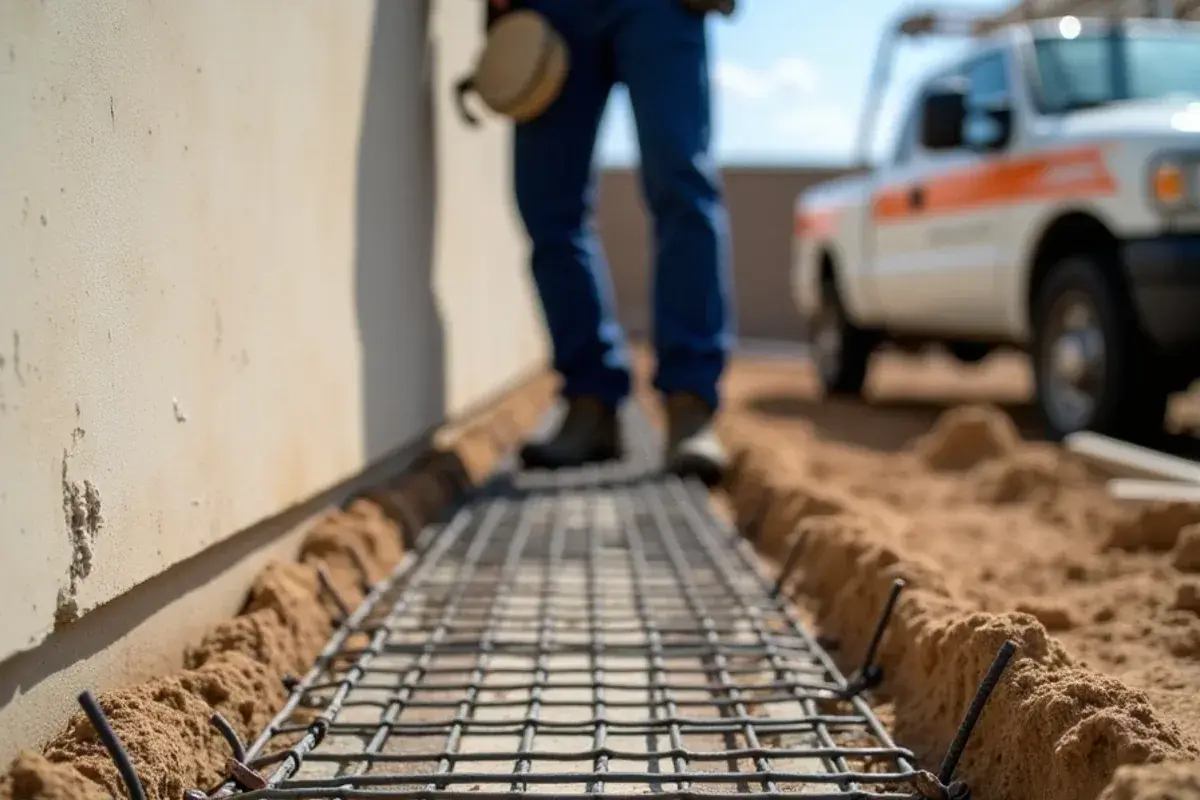
Welded wire mesh and rebar hold cracks tightly together so the slab stays in one piece. Both only work if they sit in the middle of the slab on supports, not at the bottom on the dirt. Fiber added to the mix helps control small shrinkage cracks on the surface but does not replace steel for heavier slabs.
Control joints
Concrete shrinks as it cures and will crack. Control joints, shallow grooves cut or tooled into the surface, tell it where to crack in a straight, tidy line. As a rough field guide, a 4-inch patio or walk gets a joint about every 8 to 12 feet, with thicker slabs allowing somewhat wider spacing.
Pouring and curing in South Texas heat
Hot weather is the biggest enemy of small concrete jobs here. When the air is near 100°F and the sun is on the slab, the surface loses water faster than the concrete can use it, which leads to weak, dusty surfaces and early cracking.
Good hot-weather practice includes:
- Pour early. Start at first light so finishing is done before the worst heat.
- Dampen the base before the pour so dry ground does not pull water out of the mix.
- Do not add extra water at the truck to make it easier to spread; it weakens the concrete.
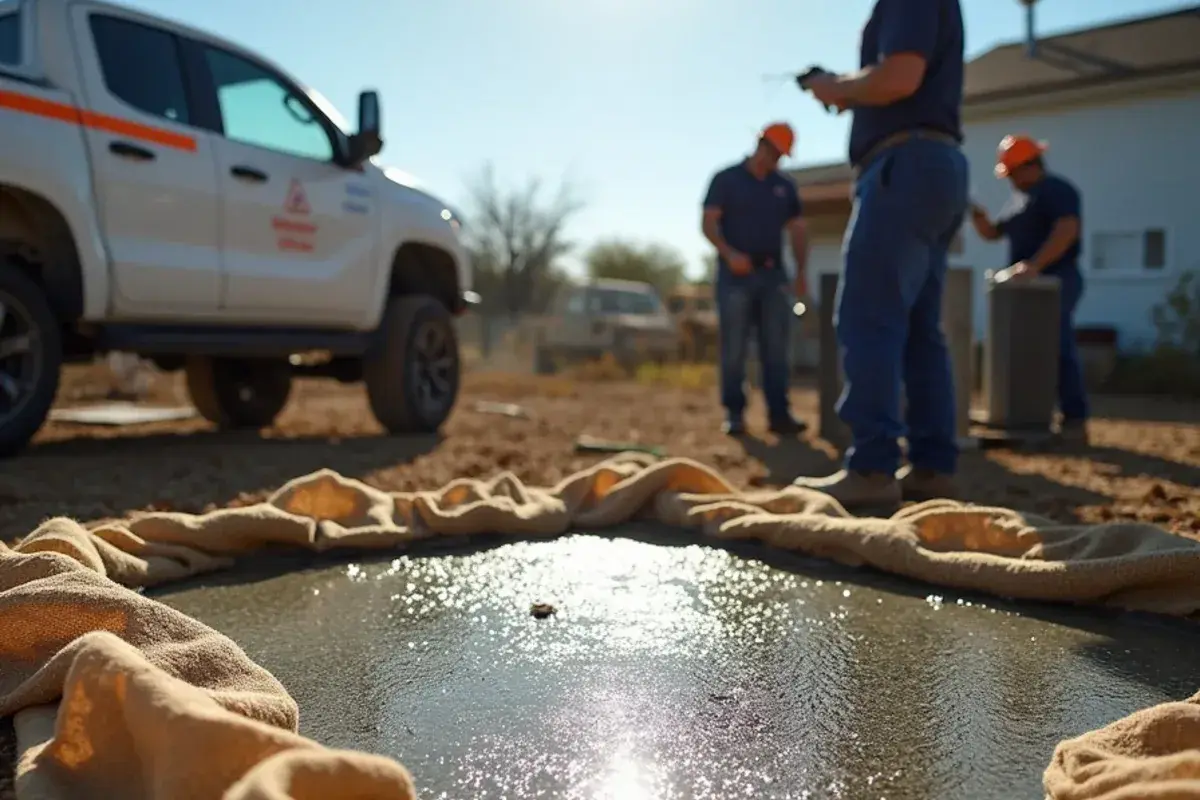
- Keep it damp for several days. Wet burlap, plastic sheeting or a curing compound slow evaporation.
- Shade and wind protection help on open lots where afternoon wind dries the surface quickly.
- Stay off it. Light foot traffic after a day or so, and wait longer for heavy loads like vehicles.
Cold snaps are short in the Valley, but a hard freeze like the one during Winter Storm Uri in 2021 can damage concrete in its first days. If a freeze is forecast, cover the slab or reschedule.
What drives the cost of a small concrete job
Rather than a single number, think in factors:
- Area and thickness set how much concrete is needed.
- Site preparation, including removing old concrete, digging out soft soil, hauling base material and compacting.
- Reinforcement type and amount.
- Access. Whether a truck can reach the forms or concrete has to be wheeled in or pumped.
- Finish. Plain broom finish is simplest; stamped, colored or exposed-aggregate finishes add labor.
- Edges and shapes. Curves, steps, thickened edges and tie-ins to existing slabs take more forming.
- Drainage work such as regrading or adding splash blocks.
- Minimum orders. Very small jobs may be mixed on site instead of delivered by truck.
Bundling small projects, like a patio plus a walkway and an AC pad, often uses a single setup and pour day more efficiently. Ask whether your town or the county requires a permit for your project; rules vary for flatwork, structures and work near property lines.
What separates a slab that lasts from one that cracks early
Patios and walks that crack early rarely suffer from bad concrete. They fail because of what happened before and right after the pour. Here is the order a careful crew works in, and why each step matters on Starr County ground.
- Probe the subgrade. A steel rod pushed into the dug-out area finds soft pockets and voids in the caliche. Those spots get dug out and refilled, not covered.
- Compact in thin lifts. Base material is spread and compacted a few inches at a time. One thick dump of fill compacted only on top settles later.
- Set the forms with fall. A gentle slope, commonly around a quarter inch per foot, carries rain away from the house and keeps water from sitting on the surface.
- Lift the steel. Mesh or rebar rests on chairs so it ends up inside the slab. Steel lying on the dirt does almost nothing.
- Finish at the right time. Bleed water rising to the surface has to evaporate before final troweling. Working it back in, or sprinkling water to make finishing easier, leaves a weak, dusty top layer.
- Joint and cure promptly. Control joints are tooled or cut early, and curing starts as soon as the surface can take it.
Hot-weather judgment calls
Industry guidance on hot-weather concreting flags extra precautions once surface evaporation gets high, and evaporation climbs with heat, wind and low humidity. Research has also found that strong sun dries a slab faster than the standard charts predict. On an open lot with a south wind, that can happen by mid-morning, which is why an early start and a curing plan matter more than the mix.
Trade-offs to weigh
- Fiber or steel. Fiber reduces small surface cracks and saves time, but steel holds a slab together over soft or shifting ground.
- Stamped or broom finish. Stamped and colored concrete looks finished, but it can get slick when wet and usually needs resealing over the years. A broom finish is plainer and grips better.
- Truck delivery or site mixing. A truck gives a consistent mix and a fast pour; mixing on site suits tiny jobs or tight backyards with no truck access.
- Thicker is not a substitute for base work. An extra inch of concrete on soft fill still cracks when the fill settles.
Fixing concrete you already have
Not every crack means a full replacement. Hairline shrinkage cracks are mostly cosmetic. Wider cracks, sections that have dropped, trip edges on sidewalks and broken steps often can be repaired, leveled or partially replaced. Our concrete repair work covers cracked walkways, broken corners and settled sections, and the cause, usually water or base problems, should be fixed along with the concrete.
Small concrete jobs around the county
Across Starr County, small slabs are common in owner-built homes that grow over time: a patio added after the house, a sidewalk to a new room, a pad for a water tank or a shed. On the small, closely spaced lots of Garza-Salinas II, a well-planned slab also has to respect property lines, drainage toward neighbors and access for the pour.
Our concrete installation service handles patios, sidewalks, pads and small slabs. Before you call, measure the area, note what the slab will hold, and take a photo of the access route from the street. Those three details make it much easier to plan the job and explain what affects its cost. Then call (213) 423-7827, tell us the town and the project, and we can set a time to look at the ground before anything is formed.