

An AC freezing up means the indoor coil has dropped below 32°F. Ice on AC lines almost always points to one of two things: not enough air moving across that coil, or a system low on refrigerant from a leak. Turn cooling off, run the fan to thaw it, replace a dirty filter, and call if the ice returns.
It sounds backwards in the middle of a South Texas summer, but it turns up on Valley service calls far more often than you might expect. You notice warm air from the vents, a white crust on the fat copper pipe at the outdoor unit, or water dripping from the ceiling around the air handler.
Both causes push the evaporator coil (the cold radiator inside your air handler that pulls heat and moisture out of the house air) below the freezing point. Humidity in the air then turns to frost, the frost blocks more air, and within a few hours the coil can turn into a solid block.
Thaw it first, the right way
Do these steps before anything else, and skip the ice pick.
- Set the thermostat to OFF for cooling and turn the fan to ON. The blower pushes room air over the coil and melts the ice far faster than shutting everything down.
- Leave the outdoor unit off. With cooling off at the thermostat, the condenser should stop. If it keeps running, switch off the outdoor disconnect.
- Put towels around the indoor unit. A thawing coil releases a lot of water at once, and a drain pan already holding debris can overflow.
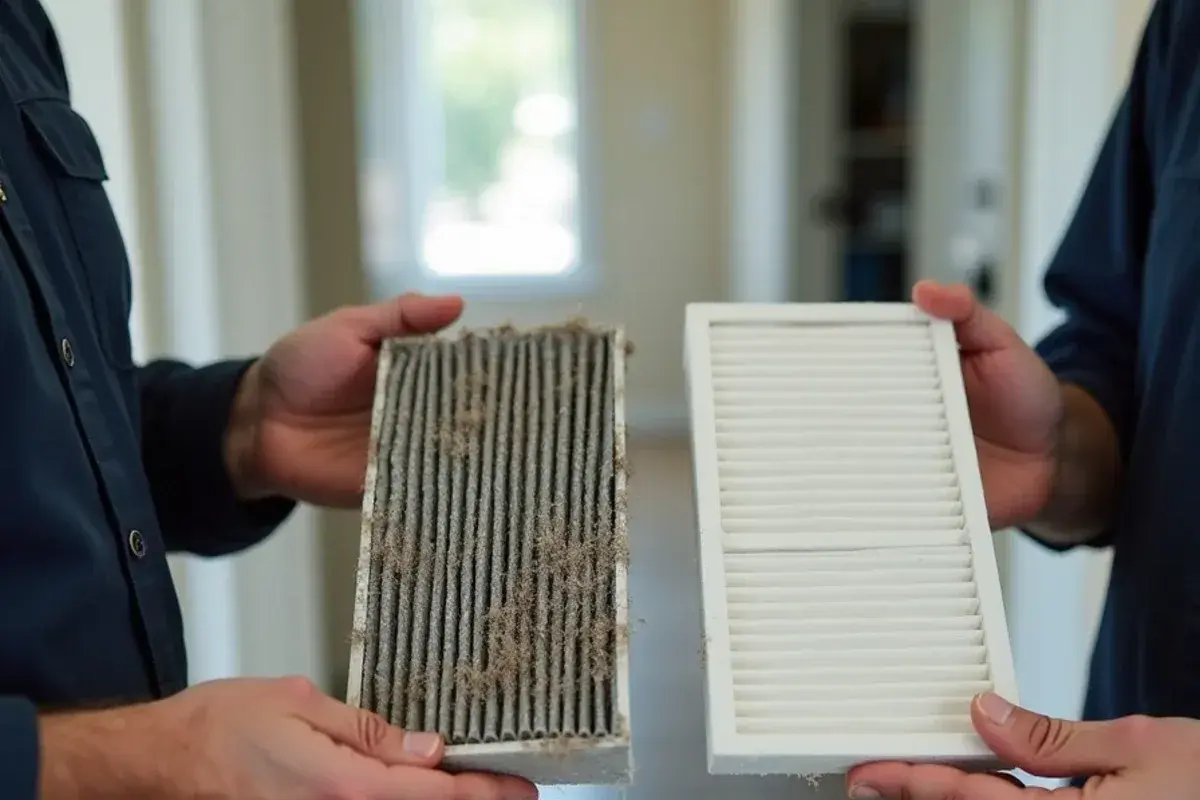
- Check the filter while you wait. If it is gray and matted, replace it now.
- Wait until the copper lines are dry to the touch before turning cooling back on.
Never chip, scrape or heat the coil with a torch or hair dryer. Aluminum fins bend easily and copper tubing punctures, which turns an airflow problem into a refrigerant leak.
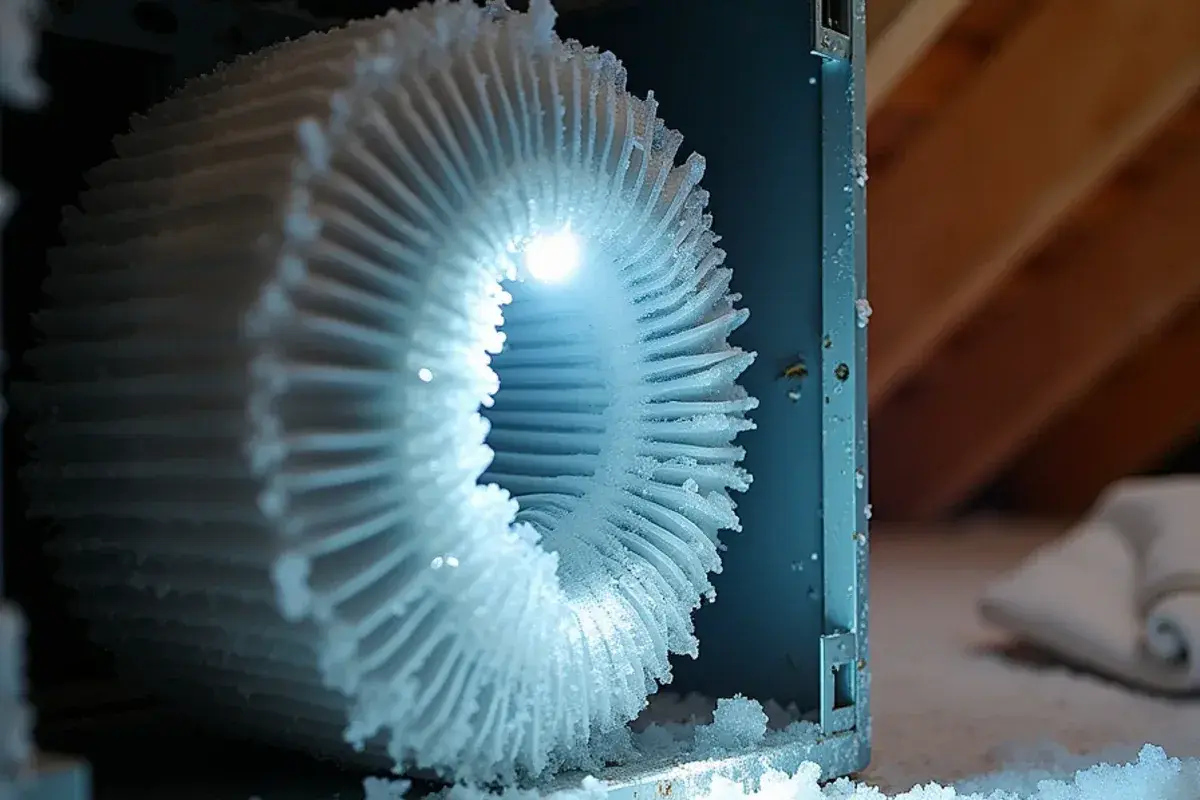
Why coils ice over in Valley homes
Here are the causes we look for, roughly in the order they show up.
| What you notice | Likely cause | Who can fix it |
|---|---|---|
| Ice covers the whole indoor coil, filter is dirty | Clogged return filter starving the coil of air | Homeowner (replace filter) |
| Several rooms closed off, supply vents shut | Too little air moving across the coil | Homeowner (reopen vents) |
| Weak airflow even with a clean filter | Dirty evaporator coil or blower wheel | Technician cleaning |
| Fan hums but barely turns, or will not start | Failed blower motor or blower capacitor | Technician repair |
| Frost mainly on the outdoor suction line and lower coil, filter is clean | Low refrigerant charge from a leak | Technician leak search and repair |
| Ice after a duct change or attic work | Crushed or disconnected flex duct on the return | Technician duct repair |
| Icing on cool nights with the thermostat set very low | Running at a low setpoint in mild weather | Adjust settings, have the system checked |
Airflow problems
Airflow is the cause in most cases, and much of it is preventable. Filters load up quickly in dusty summers with caliche roads and dry brush nearby, and households with pets go through them faster. A coil coated in dust behaves like a clogged filter even after you put in a new one. Weak blower motors are another culprit, since a slowing fan moves less air without stopping completely, so the house still feels like it is cooling a little.
Refrigerant problems
When the system is low on refrigerant, pressure in the coil drops and so does its temperature. The tell-tale sign is frost that starts on the suction line outside and the lower part of the indoor coil, even with a clean filter and good airflow. Refrigerant is not used up like fuel; if it is low, it leaked out somewhere. Topping it off without finding the leak just buys time. Our refrigerant leak repair work starts with locating the leak point rather than simply adding charge.
Restrictions and controls
A smaller group of frozen systems has neither a dirty filter nor a leak. A metering device (the valve that meters refrigerant into the indoor coil) can stick partly closed, a filter-drier can clog with debris, or a line set can get kinked during an install. Each one starves the coil of refrigerant at that spot, and frost often forms right at the restriction instead of across the whole coil. Controls play a part too. A thermostat set in the low 60s on a mild night keeps the compressor running long after the house has stopped needing it, and the coil slowly frosts over.
What a technician checks once the ice is gone
A frozen system cannot be diagnosed accurately while it is frozen. Pressures and temperatures read wrong until the coil is clear and the system has run for a while. On a typical visit, the technician will:
- Inspect the filter, return grilles and supply registers, and look at the blower wheel for packed dirt.
- Measure blower motor amperage and test its capacitor.
- Look at the coil face for dust matting and check the condensate pan and drain.
- Measure suction and liquid line pressures, then compare line temperatures to the readings (superheat and subcooling) to judge whether the charge is correct.
- If the charge is low, search for the leak with an electronic detector, bubble solution or a pressure test.
- Check the return duct in the attic for kinks or separations.
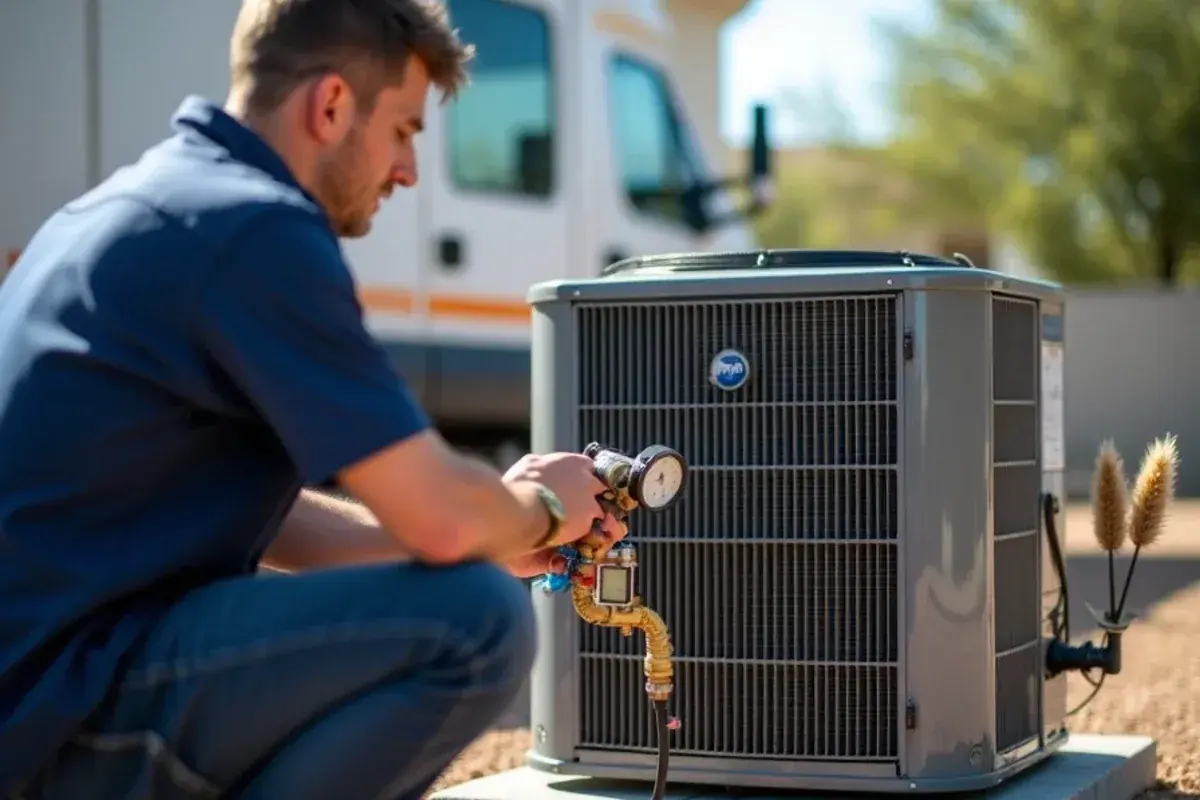
Most airflow fixes, such as a capacitor, motor or coil cleaning, can be handled in one visit. A leak repair may take longer if the leak sits inside the coil or somewhere along a buried line set. For a full rundown of how we approach diagnosis and repair, see our AC repair service.
Low airflow or low refrigerant: telling them apart
You cannot measure refrigerant without gauges, but where the ice forms and what happens after the thaw give useful clues.
| Clue | Points toward airflow | Points toward refrigerant |
|---|---|---|
| Where ice forms | Entire coil face, often heavy | Starts at coil inlet and suction line |
| Filter condition | Dirty or wrong size | Clean |
| Air from vents before freezing | Weak or barely moving | Normal volume but not cold |
| After thaw with a new filter | Problem stops | Ice returns within hours or days |
| Outdoor unit | Usually normal | May run long with little cooling |
Reading a frozen system: what the gauges and the meter really tell you
A frozen coil thaws by itself once cooling stops, but the cause stays. The useful work happens after the thaw.
A clean filter does not clear airflow. Filters are the usual answer, but a coil matted with dust on its entering face, a blower wheel with packed blades, or a return duct that is too small for the system all choke airflow just as badly. A technician can measure this instead of guessing: the temperature drop between return air and supply air, and the static pressure across the blower with a manometer. A temperature drop far larger than normal, together with high static pressure, points at airflow before anyone touches the refrigerant.
Adding refrigerant to an airflow problem makes it worse. When a starved coil reads low on the gauges, it is tempting to top it off. The pressures look better for a day, but once the airflow problem is fixed the system is overcharged. That is why charge is judged by superheat and subcooling only after airflow checks out.
Where the frost sits is evidence. Frost that starts at one fitting or one section of tubing suggests a restriction there. Frost that starts at the coil inlet and creeps outward suggests low charge. Heavy ice across the whole coil face usually means air.
Some fixes are a trade-off. A leak inside the evaporator coil can sometimes be found and repaired, but on an older coil with corrosion in several spots, a replacement coil is often the more reliable choice. A technician should explain both, including what each means for the manufacturer warranty.
When DIY stops being safe: once the filter is changed and vents are open, the rest involves refrigerant handling, live electrical testing or opening the air handler. If the ice comes back, leave it there.
Longer refrigerant runs and rental homes
The location of a home matters too. On rural lots in Olivia Lopez de Gutierrez, between Rio Grande City and La Grulla, outdoor units sometimes sit far from the house, and long line sets have more joints and more exposure where small leaks can start. Those slow leaks often appear first as an iced suction line. In larger rental markets such as Edinburg, coils tend to freeze when filters go unchanged between tenants. A filter schedule written into the lease and a quick check at each move-out prevents a lot of these calls.
Keeping the coil from freezing again
- Change or wash the filter on a schedule, and check it more often during dusty, dry stretches.
- Keep at least most supply vents open. Closing several rooms does not save much and starves the coil.
- Keep furniture and boxes away from return grilles.
- Have the indoor coil and blower wheel cleaned during routine maintenance, not only after a problem. Our AC coil cleaning service covers both the indoor and outdoor coils.
- If frost returns after a thaw with a clean filter, stop running cooling and call for a refrigerant check rather than waiting for it to get worse.
Thaw, check the filter, then get it looked at
When ice shows up, set cooling to off with the fan on, protect the floor from meltwater, and replace a dirty filter. If the system runs normally afterward and stays clear, airflow was probably the cause. If the ice comes back, or the filter was already clean, the coil, blower or refrigerant charge needs a technician's gauges. Catching it early usually means a smaller repair and keeps the compressor safe. If your coil iced over again, call 956 Multi Service at (213) 423-7827 and tell us where the frost formed and whether the filter was already clean.