

Fire ants can shut an AC unit down. Foraging ants crowd into the outdoor contactor, get shocked, and release signals that draw more ants until their bodies keep the switch from closing. Turn the system off at the disconnect, skip the bug spray, have the contactor cleaned or replaced, and bait the colonies in the yard.
Ant jams rank high among the reasons an outdoor condenser goes silent in South Texas. Red imported fire ants are attracted to electrical equipment, and the outdoor unit gives them shelter, warmth and buzzing electrical contacts. Once enough of them pile into the contactor (a spring-loaded electrical switch that closes to start the compressor and condenser fan), the outdoor side quits even though the thermostat is calling for cold air.
This article explains how that happens, how to spot it, what a homeowner can safely do, and how to keep ants and other pests out of the system.
Why fire ants go after AC equipment
Researchers have documented that fire ants are drawn to electrical fields. Once a few ants get between electrical contacts and are shocked, they release chemical signals that bring more ants in. Within days, the contactor can be packed solid with ant bodies and soil.
Outdoor units also sit on pads or ground that ants like to nest under, especially pads that have settled and left gaps. In brushy areas like El Chaparral, where thornscrub and huisache crowd right up to yards, mounds build against condenser cabinets every season.
Signs ants caused your AC to stop
- Indoor fan runs, outdoor unit is silent. The thermostat is working and the indoor blower moves air, but the condenser fan and compressor do not start.
- Visible ants around the unit. Trails on the cabinet, ants coming out of the electrical panel or a mound against the pad.
- A humming or clicking sound without the fan turning, if ants have only partly blocked the contacts.
- The problem appeared suddenly after a rain, when colonies often move.

A failed capacitor or a worn contactor causes the same symptoms, so ants are not always the cause. A technician checks for both, since ants can also damage the contacts and leave pitting that causes later failures.
What to do safely right now
- Set the thermostat to off. That ends the repeated start attempts that heat up a jammed contactor.
- Shut off power at the outdoor disconnect and the breaker. The electrical compartment carries 230 volts, and capacitors can hold a charge after power is off.
- Do not spray insecticide into the unit. Liquids and aerosols can damage electrical parts and do nothing about the colony.
- Stay clear of the mound. Fire ant stings can cause serious allergic reactions in some people. Call 911 for trouble breathing, swelling of the face or throat, or dizziness after stings.
- Call for service. Describe what you see so the technician knows to check the contactor first.
What the repair visit looks like
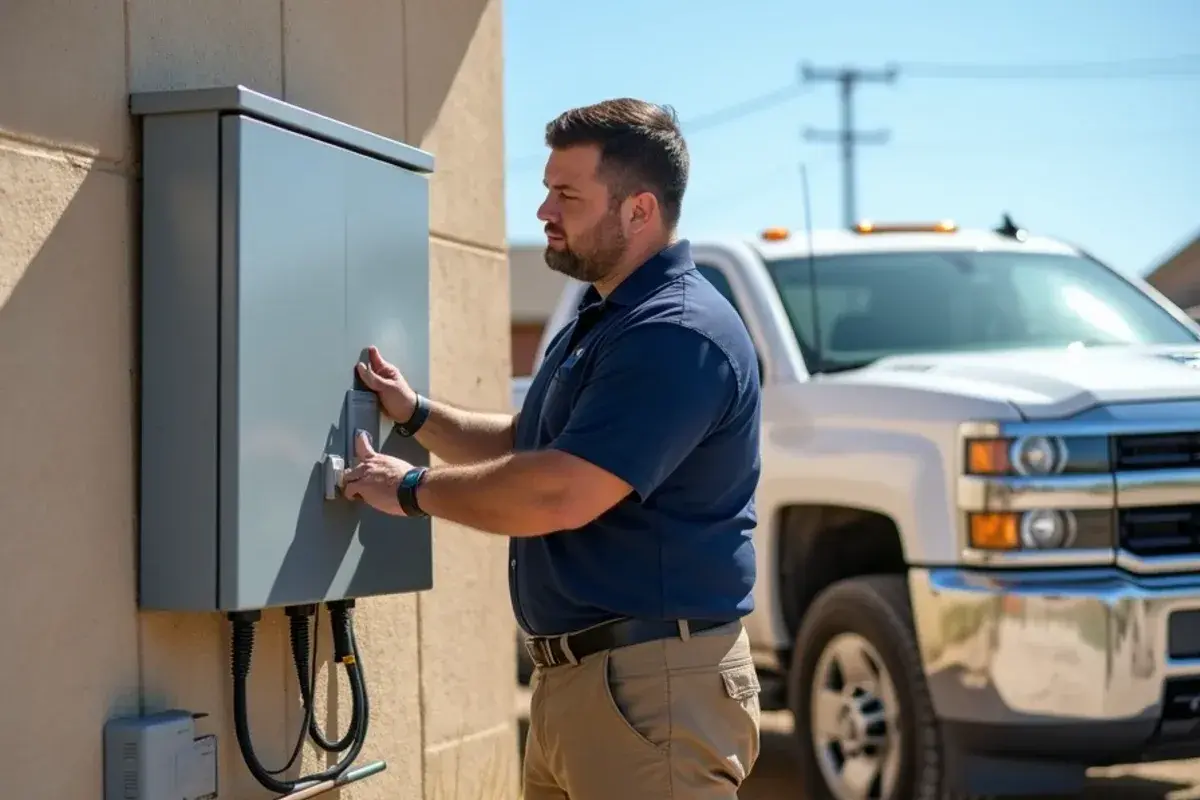
An AC repair visit for ant damage usually includes confirming power is off, removing the electrical cover, cleaning ants and debris from the contactor, terminals and control board, and checking whether the contact points are pitted or burned. A damaged contactor is replaced. The technician then tests the capacitor and the motors, restores power, and confirms the unit starts and cools normally.
The visit should also include a look at the pad, the ground underneath and any openings in the cabinet where ants are getting in.
Pests that cause HVAC trouble in Valley homes
| Pest | Where it shows up | What it damages | Common fix |
|---|---|---|---|
| Fire ants | Outdoor condenser, contactor, under pads | Contactors, control boards, wiring | Clean and repair unit, yard bait treatment |
| Rodents | Attic air handlers, duct runs, outdoor cabinets | Thermostat wire, duct insulation, fan motors | Seal entry points, trap, repair wiring and ducts |
| Roaches | Air vents, return grilles, drain pans | Drain lines, odors, droppings in ducts | Clean drain pan and returns, structural treatment |
| Wasps and mud daubers | Outdoor cabinets, vent caps | Block airflow, sting risk during service | Remove nests carefully, screen openings |
| Lizards and frogs | Outdoor units, near contactors | Short circuits, blocked contacts | Clean unit, seal gaps at the base |
Rodents in HVAC equipment are a growing complaint in rural and brush-edge homes. Mice and rats nest in air handler cabinets, chew low-voltage wires and leave droppings in return ducts. Roaches in air vents usually come from a damp drain pan, a gap around the return or a nearby infestation in walls.

Keeping ants and pests out of the system
Treat the yard, not just the unit
The Texas A&M AgriLife Extension approach often called the Two-Step Method combines broadcasting a fire ant bait over the whole yard with treating individual mounds that are a problem, such as those against the AC pad. Bait works because foragers carry it back and feed it to the colony, including the queen. Read and follow the product label exactly; it is the law for pesticide use.

Protect the equipment
- Level and seal the pad. A settled or cracked condenser pad leaves voids that colonies love; replacing a broken one with a new AC condenser pad closes those gaps.
- Keep the area clear. Trim brush, weeds and mulch back from the unit.
- Close openings. Seal gaps where line sets and wires enter the cabinet and the house.
- Check the electrical compartment at every AC maintenance visit for early ant activity.
On caliche lots in Las Lomas, wind-blown dust and loose soil build up around unit bases and give ants an easy place to start; brushing that away during routine coil cleaning helps.
What a technician checks beyond the dead ants
Clearing ant bodies out of a contactor takes minutes. The real work is finding out what the ants left behind and how they got in, because an ant-jammed unit that is simply brushed off and restarted often fails again within weeks.
- Contact faces. Ant bodies hold the contacts partly open, so they arc. Pitted or blackened contact faces mean the contactor gets replaced, not cleaned.
- Terminals and wire ends. Colonies carry soil into the compartment. That damp soil corrodes lugs and terminal screws, which later shows up as a loose, overheated connection.
- Capacitor and motor readings. A contactor that chattered for days stresses the capacitor and the fan motor, so both get tested before the unit goes back in service.
- The disconnect box. Texas A&M AgriLife notes that colonies move into outdoor disconnects and junction boxes for warmth in winter and a dry spot during heavy rains, and that nesting ants defend those boxes hard.
- Entry points. AgriLife research found ants can pass through openings about as thin as a paper-clip wire. Unsealed knockouts, missing grommets and gaps where wiring enters the control box are the usual routes.
- The pad and the ground. Voids under a settled pad, or a mound against the cabinet, tell you where the next colony will come from.
Trade-offs worth knowing
- You cannot seal the whole unit. A condenser has to pull air through its sides, so exclusion focuses on the electrical compartment, not the cabinet.
- Gravel is not a proven barrier. Rock and pea gravel seem to be less attractive to nesting ants, but AgriLife notes how deep or wide it must be has not been well studied.
- Raised pads draw colonies after storms. When soil is saturated, colonies migrate to higher, drier spots, and a pad is often the highest point in the yard. Expect a check after heavy rain.
- Some insecticides are labeled for electrical housings, and most are not. AgriLife warns against liquid drenches or sprays near electrical fixtures, which is why bait in the yard and a technician in the panel is the safer split.
Professional pest treatment
We handle the AC side: clearing ants out of the electrical compartment and replacing a damaged contactor or capacitor through AC repair. For treatment of the yard and the foundation, hire a licensed pest control company. In Texas, structural pest control for hire is licensed by the Texas Department of Agriculture, and you can confirm any company's licence on the TDA website before work starts. Ask what product will be used, where it will be applied and how long to keep children and pets off treated areas.
Stopping the next shutdown
Ants find AC units every warm season, so think in terms of habits: bait the yard in spring and fall, keep the pad level and the area around the unit clear, and have the electrical compartment checked during maintenance. If the outdoor unit suddenly goes quiet and you see ants, turn it off at the disconnect and call before trying to clean it yourself. Call (213) 423-7827, tell us your town and that ants are involved, and the technician will come ready to replace a contactor if the old one is burned.