

A sinking or cracked AC pad matters because the condenser was built to sit level. As the slab tilts, it strains the copper refrigerant lines, adds vibration, can affect how compressor oil returns, and may send water toward your foundation. Small tilts can be shimmed; a cracked or undermined pad needs replacing on a compacted base.
The problem is easy to ignore because the air conditioner usually keeps running. The unit sits a little crooked, the slab has a crack across one corner, and life goes on. But the condenser is a heavy box with a compressor full of oil and copper lines bolted to it, and it was designed to sit level. Over months, a tilt adds stress to parts that are expensive to replace and can send water toward your foundation.
How to tell your pad has failed
Walk around your outdoor unit and look for:
- A visible lean. Set a small level on top of the condenser. If the bubble is off, the unit is no longer level.
- Cracks or broken corners on the slab, especially a corner that has dropped below the rest.
- Gaps under the pad edge where soil has washed or settled away.
- Refrigerant lines pulled tight or bent where they leave the unit or enter the wall.
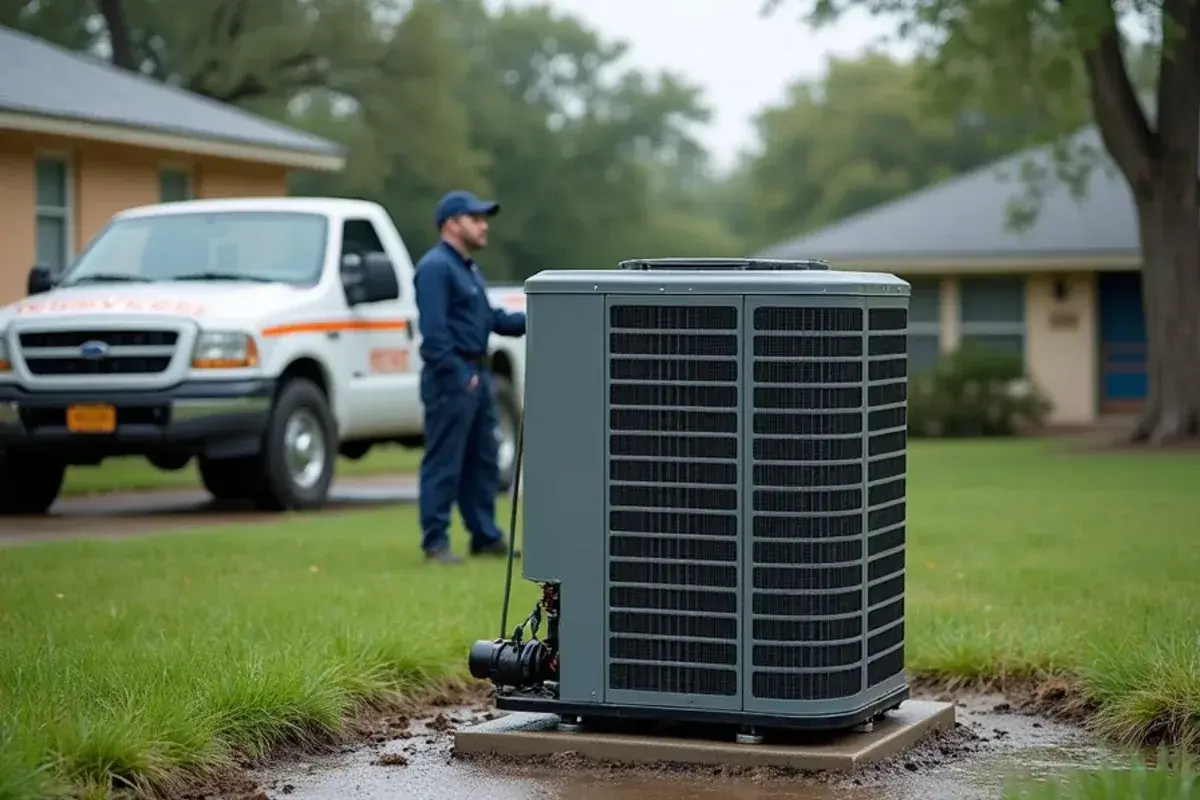
- Water pooling around or under the pad after rain.
- More vibration or rattling than usual when the unit runs.
- Ant mounds or burrows under the slab, which hollow out support.
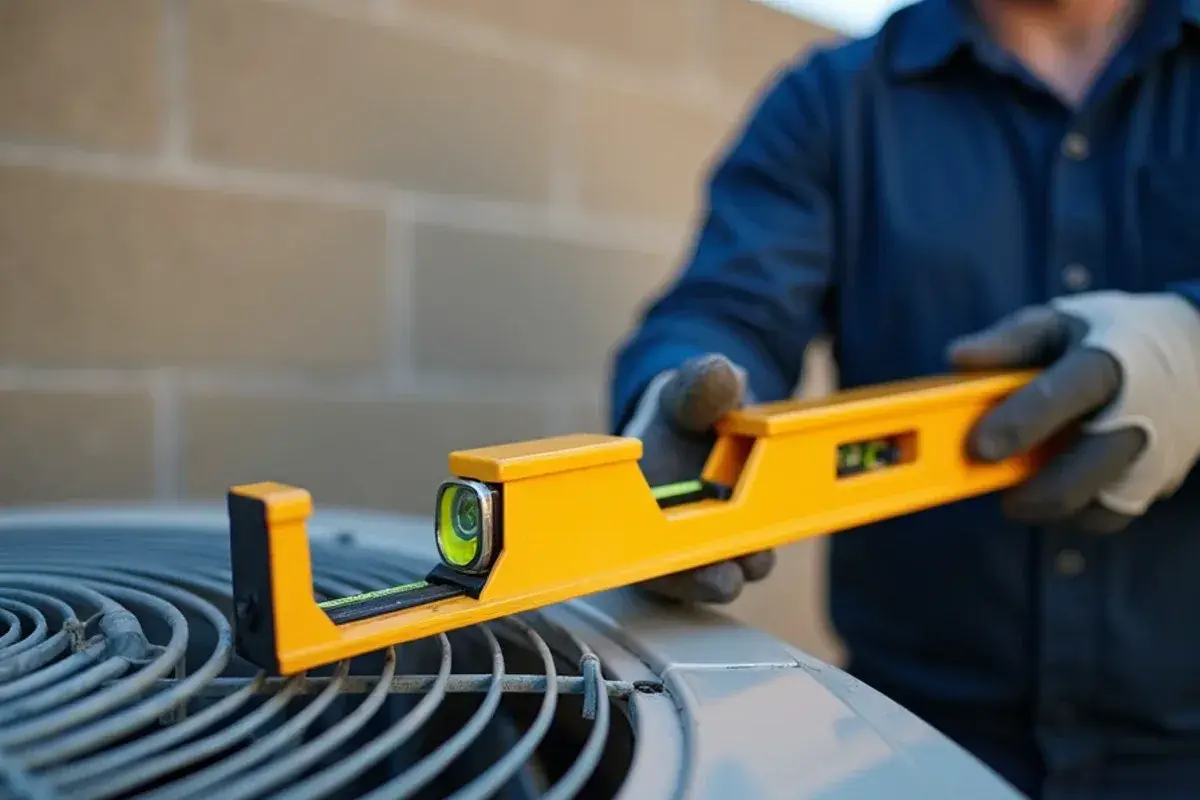
Why a condenser needs to sit level
Manufacturers specify that the outdoor unit be installed level within a tolerance listed in the installation instructions, and there are practical reasons for it.
Compressor oil and wear
The compressor relies on oil that circulates with the refrigerant and returns to the compressor's sump. A unit that sits tilted can affect how that oil collects and how internal parts are supported. Over time, that adds wear to the most expensive part of the system.
Line set stress
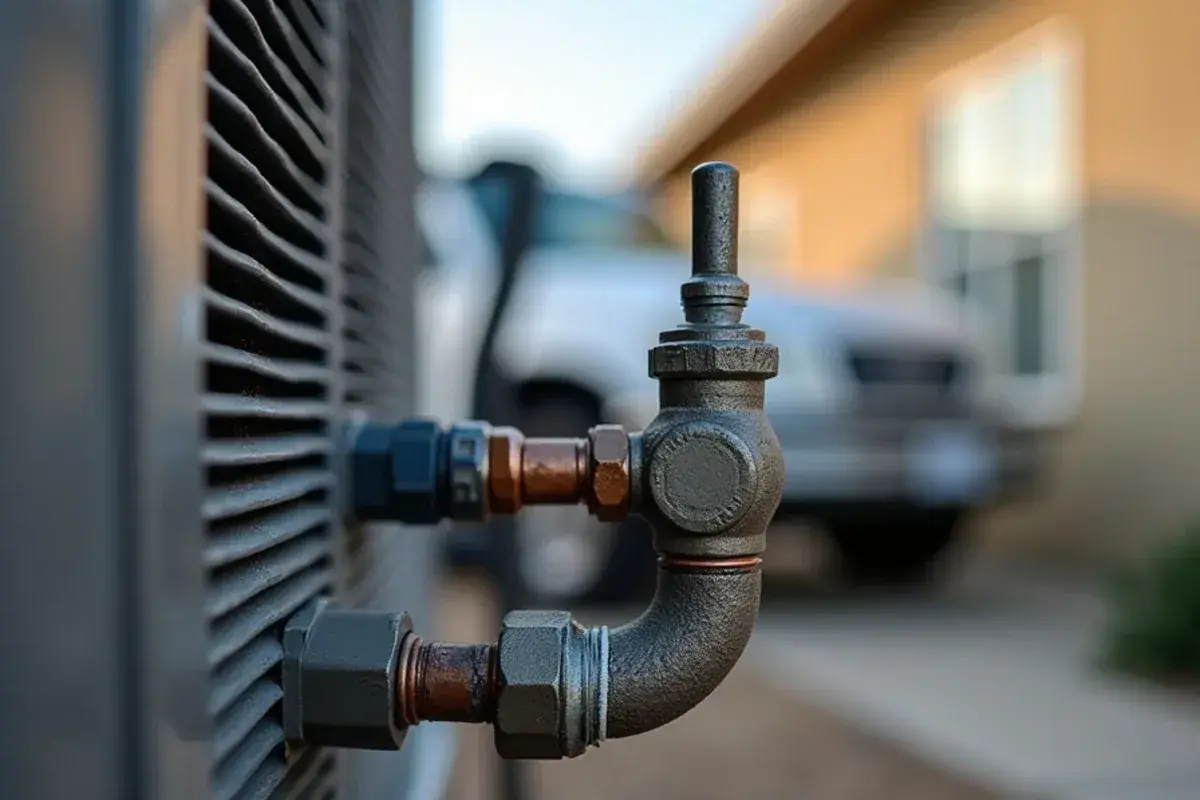
As the pad drops, the copper lines take the strain. Bends and stretched joints at the service valves and the wall penetration can crack, chafe or loosen fittings and eventually leak refrigerant. A refrigerant leak means lost cooling and a repair that requires a licensed technician.
Vibration and noise
An uneven unit rocks slightly as the compressor starts and stops. That movement loosens fasteners, wears isolation feet and passes vibration into the lines and the house.
Drainage
Heat pumps drain water from the outdoor coil during defrost cycles, and rain runs off the cabinet. A pad tilted toward the house sends that water to the foundation instead of away from it.
What makes pads sink in Starr and Hidalgo counties
Local soils and building habits explain most failures.
- Loose fill and poor compaction. Many pads were set on dirt that was never compacted, or on fill from a nearby trench.
- Clay soils that swell and shrink. Clay areas move with wet and dry seasons, lifting and dropping a thin slab.
- Water from roofs and drains. A downspout, a missing gutter or the AC condensate line dumping water at the pad edge washes soil out.
- Plastic or composite pads. Light pads on soft ground settle unevenly and shift.
- Ant colonies and burrowing animals hollowing out the ground underneath.
- Low, flood-prone lots. Heavy rain events like Hurricane Hanna in 2020 left standing water across parts of both counties, softening soil under pads.
Signs, causes and fixes at a glance
| What you see | Likely cause | Typical fix |
|---|---|---|
| Unit slightly off level, pad intact | Minor settling | Shim or level the unit, watch for further movement |
| Pad cracked across, one corner dropped | Poor base, washout | Remove and pour a new pad |
| Gap under the slab edge | Erosion from roof or condensate water | New pad plus redirect the water |
| Pad tilted toward the house | Settled soil near the foundation | New pad set with slope away from the wall |
| Plastic pad sunk into the soil | Soft ground, no base | Concrete pad on compacted base |
| Water standing at the unit after rain | Low lot, pad too low | Raised pad above grade |
How a new concrete AC pad is built
A proper AC condenser pad replacement follows a simple order:
- Protect the unit. The system is shut off at the breaker and disconnect. The condenser is lifted or moved aside, usually with its lines still connected, and supported safely.
- Remove the old pad and any loose soil underneath.
- Build and compact a base of suitable fill so the new slab sits on firm ground.
- Set forms slightly larger than the unit, leaving room around the cabinet for service and airflow.
- Add reinforcement and pour the concrete to an adequate thickness, finished level, with a slight slope away from the house if the site calls for it.
- Let it cure before setting the unit back on, then level the condenser, check the lines and restart the system.
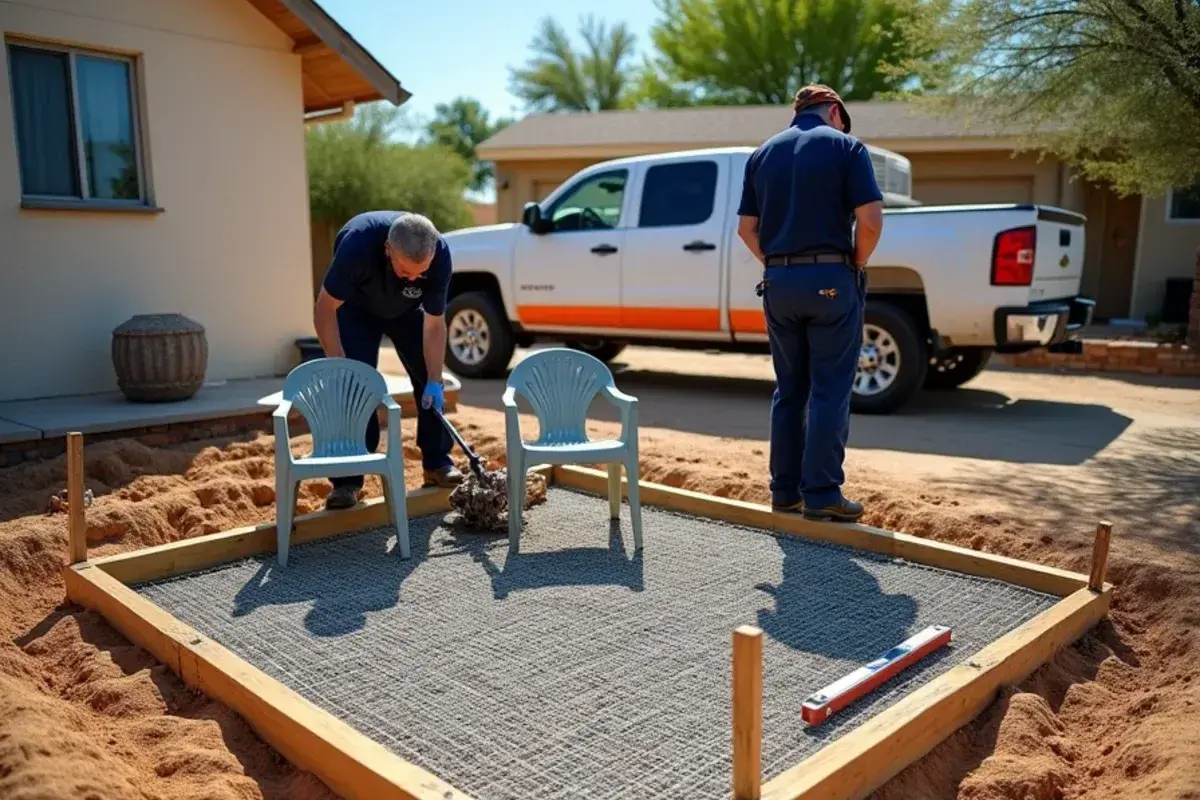
For homes in low areas near the river levee, such as Granjeno in southern Hidalgo County, the pad can be raised further above grade so standing water stays below the cabinet. In compact colonias like Garza-Salinas II, where lots are tight, a well-sized pad also needs to fit the space without blocking service access or a neighbor's walkway.
Shim, lift or pour new? How the repair gets decided
Not every leaning unit needs a new slab. The call depends on a few measurements and an honest look at what is under the concrete.
What gets checked first
- Tilt in both directions. A level across the top of the cabinet, front to back and side to side, shows how far off it is and which corner dropped.
- The line set at the service valves. Copper pulled tight, a kinked insulation sleeve or an oily spot at a brazed joint suggests the lines have already taken strain. An oily stain often marks a refrigerant leak.
- Voids under the slab. A probe or a pry bar slid under the edge finds washed-out soil, ant galleries or a hollow corner.
- The water source. A downspout, a condensate line or a low spot in the yard that keeps feeding water to the pad has to be fixed, or a new slab sinks the same way.
- Height above grade. The International Residential Code, which many Texas jurisdictions adopt, calls for ground-mounted equipment to sit level on a slab or approved base at least 3 inches above the adjoining ground, following the manufacturer's instructions.
The honest trade-offs
- Shims are quick and cheap, and they suit a sound pad that dropped slightly. Use rot-proof composite or rubber shims rather than scrap wood, and expect to recheck after the next wet season.
- Lifting a small slab with foam or grout injection works on driveways but rarely makes sense under a condenser, where a new pad costs little more and fixes the base underneath.
- Precast or composite pads go down fast, but on soft or wet ground they settle just like the old one unless the base is compacted first.
- Raising the pad higher protects the unit from standing water, yet the refrigerant lines may not reach. Extending or re-routing lines is HVAC work, done by a technician who recovers and handles refrigerant under EPA rules, not a concrete task.
Mini-split condensers and pads
Mini-split outdoor units are lighter, but the same rules apply. They need a level, stable base, whether a small concrete pad, a rated ground stand or a wall bracket. A mini-split condenser left on blocks or soft soil will tilt over time and strain its flare connections, which are a common leak point.
Cost factors for pad replacement
What changes the price of a new pad: the size of the unit and pad, how hard the old pad is to remove, how much base material is needed, whether the site needs drainage changes, whether the unit has to be disconnected, how high the pad needs to be raised, and access to the work area. Combining a pad with other concrete work around the house, like a short walkway or downspout splash blocks, can make the visit more efficient.
When to act
If your condenser is visibly leaning, the pad is cracked or the lines look stressed, plan the repair before the next long cooling season. Pouring a new pad in mild weather means less downtime and easier curing, and catching it early protects the compressor and the copper lines. Put a level on your unit this week; it takes ten seconds and tells you if there is anything to worry about. If the bubble is off or the slab is cracked, call (213) 423-7827 and describe the lean, the cracks and where rainwater runs; the same crew that pours the pad can reset and check the condenser.